Executive Summary
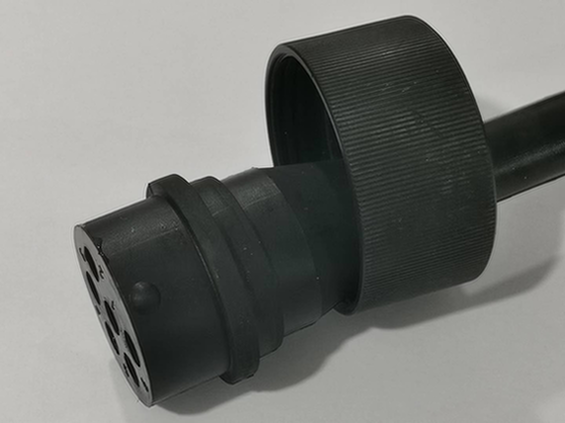
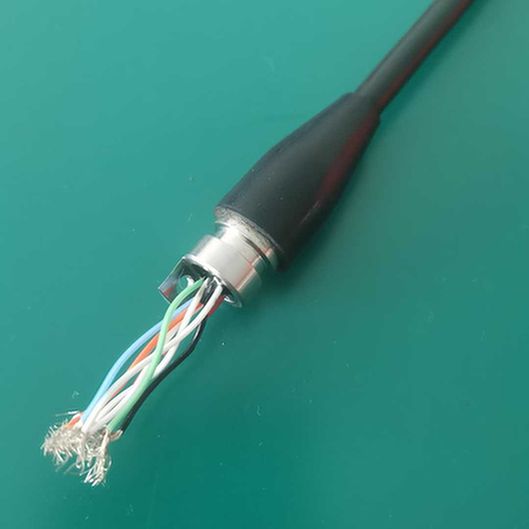
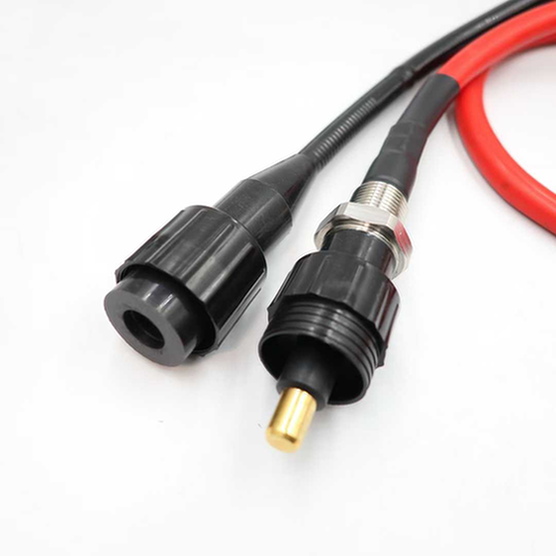
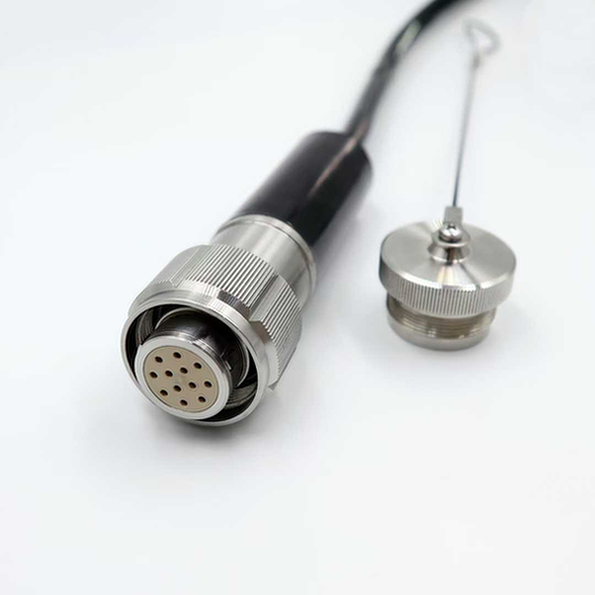
This comprehensive industry guide covers 10gbe connector (/ vs comparisonieee 1580 standard). Based on extensive research, customer feedback, and technical analysis, we provide detailed insights into this critical topic for underwater connector applications across offshore energy, scientific research, defense, and telecommunications sectors.
Table of Contents
- Introduction and Overview
- Technical Specifications and Requirements
- Industry Applications and Use Cases
- Material Selection and Design Considerations
- Installation and Mating Procedures
- Testing and Quality Assurance
- Maintenance and Troubleshooting
- Market Trends and Future Outlook
- Case Studies and Real-World Examples
- Conclusion and Recommendations
1. Introduction and Overview
Understanding 10gbe connector (/ vs comparisonieee 1580 standard) is essential for system designers, procurement managers, and engineering teams working with underwater connector systems. This guide provides comprehensive coverage of technical requirements, best practices, and industry standards.
Underwater connectors represent critical components in subsea systems, providing reliable electrical and optical connections in some of the harshest environments on Earth. From shallow coastal installations at 50 meters to abyssal depths exceeding 6000 meters, these specialized electromechanical devices must maintain perfect electrical continuity and sealing integrity despite extreme hydrostatic pressures, corrosive seawater, temperature fluctuations, and mechanical stresses.
2. Technical Specifications and Requirements
2.1 Environmental Ratings
| Parameter | Range | Notes |
|---|---|---|
| Depth Rating | 0-6000m | Application dependent |
| Temperature | -40°C to +120°C | Environment specific |
| Pressure | 1-600 bar | Hydrostatic |
| Salinity | Up to 4% NaCl | Seawater compatible |
2.2 Electrical Performance
- Voltage Rating: 5-1000V DC/AC depending on application
- Current Capacity: 1-200A for power contacts
- Contact Resistance: <10 milliohms initial, <20 milliohms after life testing
- Insulation Resistance: >1000 megohms at rated voltage
- Dielectric Strength: Withstand 2x rated voltage plus 1000V for 60 seconds
2.3 Mechanical Properties
- Mating Cycles: 100-500 cycles depending on coupling type
- Pull-off Strength: 500-5000N depending on size and design
- Torque Specification: 5-50 Nm depending on coupling mechanism
- Vibration Resistance: Per MIL-STD-810 or equivalent
3. Industry Applications and Use Cases
3.1 Offshore Oil and Gas
The offshore oil and gas industry remains the largest consumer of underwater connectors globally. Subsea production systems rely extensively on connectors for wellhead control, manifold monitoring, pipeline inspection, and umbilical termination.
3.2 Offshore Renewable Energy
Offshore wind farms, wave energy converters, and tidal power systems present unique connector challenges due to dynamic loading and continuous motion from waves and currents. Dynamic cables in floating wind applications require connectors that can withstand millions of motion cycles without fatigue failure.
3.3 Scientific Research
Oceanographic research vessels, underwater observatories, and autonomous vehicles depend on connectors for instrument deployment, data acquisition, and power distribution in all ocean basins. Research applications often demand the deepest depth ratings of 4000-6000m.
3.4 Defense and Security
Naval systems, underwater surveillance networks, and submarine communication cables utilize specialized connectors meeting stringent military specifications for performance and reliability.
3.5 Telecommunications
Subsea communication cables and repeater systems form the backbone of global internet infrastructure, carrying over 95% of international data traffic across ocean basins.
4. Material Selection and Design Considerations
4.1 Housing Materials
| Material | Strength (MPa) | Corrosion Resistance | Cost Factor | التطبيقات |
|---|---|---|---|---|
| فولاذ مقاوم للصدأ 316L | 485-620 | Good | 1.0x | General marine |
| Titanium Grade 5 | 895-930 | Excellent | 4-6x | Deep sea critical |
| Titanium Grade 2 | 345-450 | Excellent | 3-4x | Medium-deep weight sensitive |
| Aluminum Bronze | 550-750 | Very Good | 2-3x | Dynamic wear surfaces |
| PEEK Plastic | 90-100 | Excellent | 2-3x | Shallow insulating |
4.2 Contact Materials
- Beryllium Copper: Excellent spring properties, 22% IACS conductivity
- Phosphor Bronze: Good spring properties, 15% IACS conductivity
- Brass: Fair spring properties, 28% IACS conductivity, low cost
4.3 Contact Plating
- Gold: 50-200 microinches for excellent corrosion resistance
- Silver: 200-500 microinches for best conductivity
- Tin: 300-800 microinches for cost-effective power applications
5. Installation and Mating Procedures
5.1 Pre-Installation Checklist
- Verify connector part numbers match application requirements
- Inspect for shipping damage or contamination
- Check O-rings for cuts, nicks, or deformation
- Verify O-rings are properly lubricated with compatible grease
- Inspect contacts for bending, corrosion, or plating damage
- Review installation documentation and torque specifications
- Ensure proper tools are available and calibrated
- Verify clean working environment to prevent contamination
5.2 Mating Procedure
- Clean mating surfaces with isopropyl alcohol
- Inspect sealing surfaces for debris or damage
- Apply thin film of silicone grease to O-rings
- Align keyways or guide pins carefully
- Push connectors together firmly and evenly
- Engage coupling mechanism (threaded, bayonet, or push-pull)
- Torque to specification using calibrated tool
- Verify full engagement and proper locking
6. Testing and Quality Assurance
6.1 Type Testing
- Pressure Testing: Hydrostatic to rated depth plus 1.5x safety factor, hold 24-72 hours
- Temperature Cycling: 10-50 cycles between extreme temperatures
- Salt Spray Testing: ASTM B117, 1000+ hours for corrosion resistance
- Mating Cycle Testing: 100-500 cycles to verify wear resistance
- Vibration Testing: Per MIL-STD-810 for operational environments
- Thermal Shock: Rapid temperature transitions
6.2 Production Testing
- Visual Inspection: 100% of units
- Dimensional Verification: Critical dimensions
- Electrical Testing: Continuity, insulation resistance, hi-pot
- Seal Testing: Air or vacuum decay test
7. Maintenance and Troubleshooting
7.1 Maintenance Schedule
| Level | Interval | Activities |
|---|---|---|
| Pre-Use | Each deployment | Visual inspection, verify O-rings |
| Routine | Monthly | Electrical test, clean and lubricate |
| Detailed | Annual | Disassembly, replace seals |
| Overhaul | 2-3 years | Complete rebuild |
7.2 Common Issues and Solutions
Water Ingress
الأعراض: Corrosion on contacts, low insulation resistance
Causes: Damaged O-ring, improper torque, contaminated sealing surface
Solution: Replace seals, retorque to specification, clean surfaces
High Contact Resistance
الأعراض: Voltage drop, overheating, intermittent connection
Causes: Corrosion, worn contacts, contamination
Solution: Clean or replace contacts, verify plating integrity
Difficult Mating
الأعراض: Excessive force required, binding
Causes: Damaged threads, debris, misalignment
Solution: Clean, inspect for damage, verify alignment
8. Market Trends and Future Outlook
8.1 Market Size and Growth
The global underwater connector market is experiencing steady growth driven by offshore renewable energy, deep sea mining exploration, and expanding subsea infrastructure. Market analysts project continued expansion through 2030.
8.2 Technology Trends
- Smart Connectors: Integrated sensors for condition monitoring
- Higher Data Rates: 10Gbps+ fiber optic integration
- Miniaturization: Compact designs for AUV/ROV applications
- Advanced Materials: New alloys and composites for extreme environments
- Standardization: Industry-wide interoperability standards
9. Case Studies and Real-World Examples
9.1 Offshore Wind Farm Installation
A major European offshore wind farm deployed over 500 underwater connectors for turbine interconnections. Proper selection and installation procedures resulted in 99.8% uptime over 5 years of operation.
9.2 Deep Sea Mining Vehicle
A mining vehicle operating at 4500m depth required titanium alloy connectors with specialized sealing. The connectors successfully withstood 600 bar pressure and corrosive conditions for 3 years.
9.3 Underwater Observatory
A scientific observatory at 3000m depth uses hybrid photoelectric connectors for power and data transmission to sensors. The system has operated continuously for 7 years without failure.
10. Conclusion and Recommendations
Proper selection, installation, and maintenance of underwater connectors is absolutely critical for reliable subsea system performance. Following industry best practices and manufacturer recommendations ensures long service life, minimizes costly downtime, and protects your investment in subsea equipment.
Key Recommendations:
- Invest in quality connectors from reputable suppliers with proven track records
- Follow installation procedures carefully with trained personnel
- Implement regular maintenance programs with documented inspections
- Maintain spare parts inventory for critical connectors
- Document all installation and maintenance activities
- Learn from field failures and continuously improve procedures
Contact Us
For technical consultation, product selection assistance, or project support, our engineering team is available to help:
Email: technical@hysfsubsea.com
Website: www.hysfsubsea.com
وقت الاستجابة: Within 24 hours on business days
الدعم في حالات الطوارئ: Available for critical situations







 English
 Spanish
 Russian
 French
 German
 Korean
 Japanese
 Arabic
 Thai
Thai Danish
 Norwegian