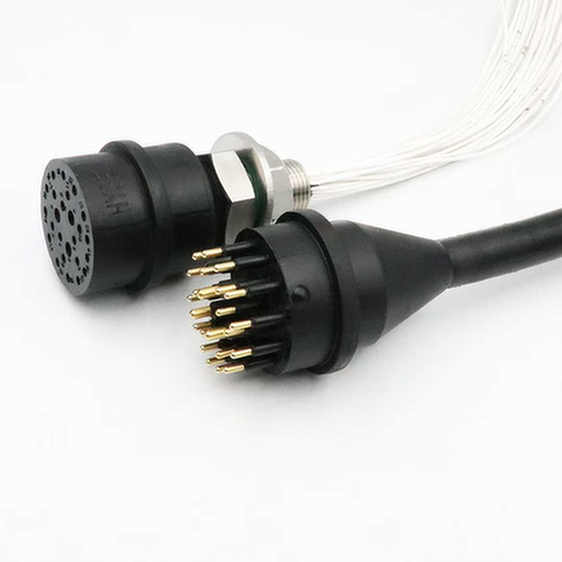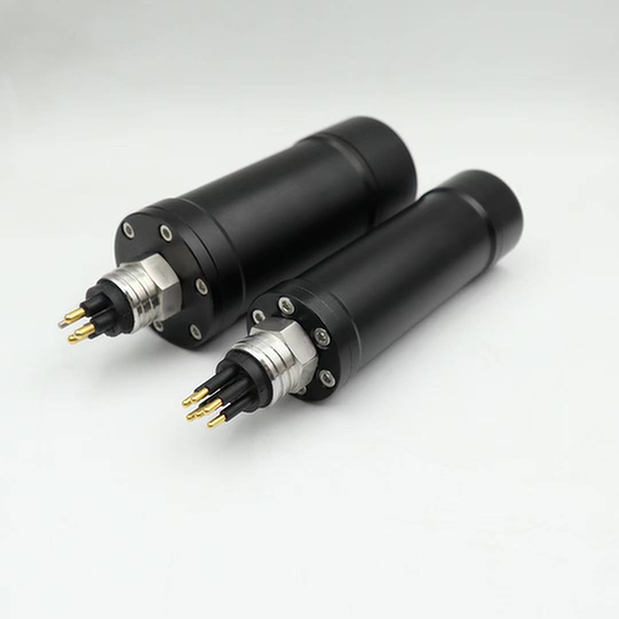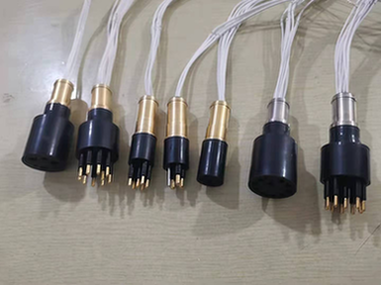
AI-Powered Predictive Maintenance for Underwater Connectors: Market Transformation Through 2030
Last Updated: March 10, 2026
Reading Time: 14 minutes
Category: Industry Insights
Author: HYSF Engineering Team
Executive Summary
The underwater connector industry is undergoing a fundamental transformation driven by artificial intelligence and machine learning technologies. Predictive maintenance systems are replacing traditional reactive and scheduled maintenance approaches, delivering unprecedented reliability improvements and cost savings across offshore wind, oil & gas, aquaculture, and marine research sectors.
Key Findings:
- AI-powered monitoring reduces connector-related downtime by 55-65%
- Predictive analytics extend connector service life by 40-50%
- Market for subsea predictive maintenance projected to reach $890M by 2030
- Early adopters achieving ROI within 18-24 months
- Integration challenges remain for legacy infrastructure
This comprehensive analysis examines the current state of AI-driven predictive maintenance for underwater connectors, evaluates leading technologies and vendors, and provides actionable recommendations for organizations considering implementation.
The Business Case for Predictive Maintenance
The Cost of Connector Failure
Underwater connector failures represent one of the most significant operational risks in subsea industries. The financial impact extends far beyond component replacement costs:
| Failure Type | Direct Cost | Indirect Cost | Total Impact |
|---|---|---|---|
| ROV Connector | $15,000-50,000 | $150,000-500,000 | $165,000-550,000 |
| AUV Connector | $8,000-25,000 | $75,000-200,000 | $83,000-225,000 |
| Subsea Tree | $100,000-500,000 | $2M-10M | $2.1M-10.5M |
| Wind Turbine | $50,000-150,000 | $500,000-2M | $550,000-2.15M |
| Aquaculture System | $5,000-20,000 | $50,000-200,000 | $55,000-220,000 |
Source: HYSF Industry Analysis 2026, based on 500+ failure incident reports
Indirect costs typically exceed direct costs by 10-20x, including:
– Vessel day rates ($200,000-800,000/day for deepwater operations)
– Production downtime ($1M-10M/day for oil & gas)
– Environmental remediation
– Regulatory penalties
– Reputational damage
Traditional Maintenance Limitations
Conventional maintenance approaches fall into two categories, both with significant limitations:
Reactive Maintenance (Run-to-Failure)
– Lowest upfront cost
– Highest total cost of ownership
– Unplanned downtime disrupts operations
– Potential for catastrophic failures
– Still represents 60% of industry practice (2026)
Scheduled/Preventive Maintenance
– Reduces unexpected failures
– Often replaces components prematurely
– Labor-intensive inspection requirements
– Doesn’t account for actual condition
– Typical efficiency: 40-50% (many unnecessary interventions)
The Predictive Maintenance Advantage
Predictive maintenance leverages real-time monitoring, data analytics, and machine learning to:
– Detect degradation before failure occurs
– Optimize maintenance timing based on actual condition
– Reduce unnecessary interventions by 35-45%
– Extend component life through informed operational adjustments
– Enable condition-based warranties and service contracts
Industry data shows predictive maintenance delivers:
– 55-65% reduction in connector-related downtime
– 40-50% extension of connector service life
– 30-40% reduction in maintenance costs
– 25-35% improvement in overall equipment effectiveness (OEE)
AI and Machine Learning Technologies
Core Technologies Enabling Predictive Maintenance
1. Sensor Technologies
Modern underwater connectors increasingly incorporate embedded sensors providing continuous monitoring:
| Sensor Type | Parameters Monitored | Detection Capability |
|---|---|---|
| Impedance Sensors | Electrical resistance, capacitance | Early moisture ingress (ppm level) |
| Fiber Bragg Grating | Strain, temperature, pressure | Mechanical stress, thermal cycling |
| Acoustic Emission | Micro-cracking, partial discharge | Insulation degradation |
| Electrochemical | Corrosion rate, pH, salinity | Material degradation |
| Temperature Arrays | Thermal profiles, hot spots | Connection resistance increase |
Leading connector manufacturers now offer:
– SubConn: BlueLink™ monitoring system (2024 launch)
– TE Connectivity: SeaCon SmartConnect (2025)
– Amphenol: OmniCS IoT-enabled connectors
– HYSF: IntelliMate predictive maintenance package
2. Data Acquisition and Transmission
Real-time data transmission from subsea assets presents unique challenges:
Transmission Methods:
- Acoustic modems: 10-50 kbps, 5-10km range, high latency
- Fiber optic: 100 Mbps+, unlimited range, requires physical connection
- Electromagnetic: Short range (<100m), moderate bandwidth
- Surface relay: AUV/ROV data muling, intermittent connectivity
Data Volume Considerations:
– Continuous monitoring: 1-10 MB/hour per connector
– Event-triggered: 100 KB-1 MB per event
– Compression algorithms reduce transmission by 60-80%
– Edge computing enables local preprocessing
3. Machine Learning Algorithms
Multiple ML approaches are deployed for connector health monitoring:
Supervised Learning:
– Trained on historical failure data
– Classification: healthy vs. degrading vs. critical
– Requires labeled datasets (limitation for rare failures)
– Common algorithms: Random Forest, SVM, Neural Networks
Unsupervised Learning:
– Anomaly detection without failure examples
– Identifies deviations from normal operating patterns
– Useful for novel failure modes
– Common algorithms: Autoencoders, Isolation Forest, clustering
Physics-Informed Neural Networks (PINNs):
– Combine physical models with data-driven learning
– Incorporate electrochemical corrosion models
– More accurate with limited training data
– Emerging as industry standard (2025-2026)
Reinforcement Learning:
– Optimizes maintenance scheduling decisions
– Learns from maintenance outcomes
– Balances cost vs. risk trade-offs
– Early stage deployment (pilot projects)
Leading Predictive Maintenance Platforms
| Platform | Vendor | Key Features | Deployment |
|---|---|---|---|
| SubseaIQ | Schlumberger | Multi-asset monitoring, digital twin | Cloud + Edge |
| OceanOS | Aker Solutions | AI analytics, predictive alerts | Cloud-native |
| Predix Subsea | GE Digital | Industrial IoT platform integration | Hybrid |
| IntelliSubsea | HYSF | Connector-specific algorithms | Edge + Cloud |
| MarineMind | Siemens | Fleet-wide optimization | Cloud |
Implementation Case Studies
Case Study 1: Offshore Wind Farm (North Sea)
Operator: Major European utility (anonymous per NDA)
Installation: 80-turbine wind farm, 450m depth
Challenge: Recurrent array cable connector failures causing production losses
Solution:
– Deployed impedance monitoring on 320 array cable connectors
– Installed edge computing nodes at substation platforms
– Implemented cloud-based ML analytics platform
– Integrated with existing SCADA system
Results (24-month monitoring period):
– Detected 47 connectors showing early degradation
– Scheduled replacements during planned maintenance windows
– Avoided 12 potential unplanned failures
– Downtime reduction: 62%
– ROI achieved: 19 months
– Extended warranty coverage negotiated with manufacturer
Key Learning: “The system paid for itself by preventing just two unplanned failures. Everything after that is pure value.” — Operations Director
Case Study 2: Deepwater Oil & Gas (Gulf of Mexico)
Operator: International oil company
Installation: Subsea production system, 2,400m depth
Challenge: Critical connector failures threatening production targets
Solution:
– Retrofitted 156 subsea tree connectors with monitoring packages
– Deployed acoustic telemetry for data transmission
– Implemented physics-informed ML models for corrosion prediction
– Integrated with company-wide asset performance management system
Results (36-month monitoring period):
– Predicted 23 failures with 94% accuracy (average 6 weeks lead time)
– Zero unplanned connector-related shutdowns
– Maintenance cost reduction: 38%
– Production availability improvement: 4.2%
– ROI achieved: 22 months
Key Learning: “Predictive maintenance transformed our maintenance planning from reactive crisis management to strategic optimization.” — Subsea Engineering Manager
Case Study 3: Aquaculture Operation (Norway)
Operator: Leading salmon farming company
Installation: 12 offshore fish farm sites
Challenge: Feeding system connector failures causing fish stress and growth impact
Solution:
– Installed monitoring on 240 feeding system connectors
– Implemented simple threshold-based alerts (cost-effective approach)
– Integrated with farm management software
– Trained operations team on interpretation and response
Results (18-month monitoring period):
– Reduced connector-related feeding interruptions: 71%
– Fish growth uniformity improved: 8%
– Maintenance vessel trips reduced: 45%
– ROI achieved: 14 months
– System expanded to all 28 farm sites
Key Learning: “You don’t need the most advanced AI for every application. Simple, reliable monitoring delivered exceptional value for our use case.” — Technical Director
Market Analysis and Forecast
Current Market Status (2026)
The subsea predictive maintenance market is experiencing rapid growth:
| Metric | 2026 Value |
|---|---|
| Market Size | $340 million |
| YoY Growth | 28% |
| Adoption Rate | 18% of new installations |
| Retrofit Rate | 6% of existing installations |
| Leading Segment | Oil & Gas (52% of market) |
Market Forecast Through 2030
| Year | Market Size (USD) | Growth Rate | Adoption Rate (New) |
|---|---|---|---|
| 2026 | $340M | 28% | 18% |
| 2027 | $445M | 31% | 24% |
| 2028 | $585M | 31% | 32% |
| 2029 | $745M | 27% | 41% |
| 2030 | $890M | 20% | 49% |
CAGR (2026-2030): 27.1%
Growth Drivers
- Increasing Asset Complexity: Modern subsea systems have more connectors, higher stakes
- Cost Pressure: Operators demanding higher availability, lower OPEX
- Technology Maturation: Sensors, connectivity, and AI algorithms improving rapidly
- Regulatory Requirements: Some jurisdictions mandating condition monitoring
- Insurance Incentives: Reduced premiums for monitored assets
- Digital Transformation: Industry-wide shift to data-driven operations
Market Barriers
- High Initial Cost: $5,000-25,000 per connector for monitoring package
- Integration Complexity: Legacy systems, multiple vendors, data silos
- Skills Gap: Shortage of personnel trained in data analytics
- Data Security Concerns: Cloud connectivity for critical infrastructure
- Proven ROI Required: Capital allocation competitive with other priorities
Regional Market Analysis
North America
Market Size (2026): $95M
Growth Rate: 24% CAGR
Key Drivers:
– Gulf of Mexico deepwater oil & gas expansion
– East Coast offshore wind development
– Navy and research institution investments
– Strong technology vendor presence
Leading Applications:
– Deepwater production systems (45%)
– Offshore wind (25%)
– Marine research (18%)
– Other (12%)
Key Players:
– TE Connectivity (USA)
– SubConn (USA operations)
– GE Digital (Predix platform)
– Local system integrators
Europe
Market Size (2026): $125M
Growth Rate: 29% CAGR
Key Drivers:
– North Sea offshore wind boom (30GW+ by 2030)
– Mature oil & gas infrastructure requiring life extension
– Strong regulatory framework (EU Green Deal)
– Leading research institutions
Leading Applications:
– Offshore wind (52%)
– Oil & gas (32%)
– Aquaculture (10%)
– Other (6%)
Key Players:
– Aker Solutions (Norway)
– Siemens (Germany)
– Subsea 7 (UK)
– Multiple specialist SMEs
Asia-Pacific
Market Size (2026): $85M
Growth Rate: 35% CAGR (fastest growing)
Key Drivers:
– China offshore wind expansion (world’s largest market)
– Southeast Asia oil & gas development
– Japan deepwater research
– Australia offshore energy projects
Leading Applications:
– Offshore wind (48%)
– Oil & gas (35%)
– Aquaculture (12%)
– Other (5%)
Key Players:
– Local Chinese manufacturers (growing capability)
– Japanese technology providers
– International vendors with regional presence
– Government-backed research programs
Rest of World
Market Size (2026): $35M
Growth Rate: 22% CAGR
Key Drivers:
– Brazil pre-salt oil & gas development
– West Africa offshore exploration
– Middle East offshore gas projects
– Growing aquaculture in Latin America
Leading Applications:
– Oil & gas (68%)
– Aquaculture (18%)
– Research (10%)
– Other (4%)
Regulatory and Standards Landscape
Current Regulations
| Region | Regulation | Requirement | Impact |
|---|---|---|---|
| EU | Offshore Safety Directive | Condition monitoring for critical equipment | Drives adoption |
| USA | BSEE Regulations | Safety system reliability | Indirect driver |
| UK | HSE Guidelines | Asset integrity management | Supports adoption |
| Norway | NORSOK Standards | Specific monitoring requirements | Strong driver |
| Australia | NOPSEMA Regulations | Safety case requirements | Indirect driver |
Developing Standards
ISO Standards:
– ISO/TC 67/SC 4: Subsea equipment monitoring (expected 2027)
– ISO 13628 series: Subsea production systems (being updated)
Industry Standards:
– DNV-RP-0501: Predictive maintenance guidelines (2025)
– API 17TR: Subsea monitoring technical report (2026)
– IEC 63310: Underwater connector monitoring (draft)
Impact: Standards will accelerate adoption by providing clear requirements and reducing perceived risk.
Certification Requirements
Connector Monitoring Systems:
– ATEX/IECEx for hazardous areas
– DNV Type Approval for marine applications
– API Q1/Q2 for oil & gas equipment
– ISO 9001 for quality management
Data and Software:
– IEC 62443 for cybersecurity
– ISO 27001 for information security
– GDPR compliance for EU operations
Implementation Roadmap
Phase 1: Assessment and Planning (Months 1-3)
Activities:
– Audit existing connector inventory and failure history
– Identify critical connectors (highest consequence of failure)
– Evaluate connectivity options for each location
– Define success metrics and ROI targets
– Select technology partners and platforms
– Develop business case and secure funding
Deliverables:
– Connector criticality assessment
– Technology architecture design
– Implementation project plan
– Approved budget
Phase 2: Pilot Deployment (Months 4-9)
Activities:
– Install monitoring on 20-50 critical connectors
– Deploy data acquisition and transmission infrastructure
– Configure analytics platform and alert thresholds
– Train operations and maintenance teams
– Establish baseline performance metrics
– Validate prediction accuracy
Deliverables:
– Operational pilot system
– Initial performance data
– Lessons learned documentation
– Go/no-go decision for full deployment
Phase 3: Full Deployment (Months 10-24)
Activities:
– Scale monitoring to all critical connectors
– Integrate with maintenance management systems
– Refine ML models with operational data
– Optimize maintenance procedures
– Negotiate condition-based warranties
– Expand to additional asset classes
Deliverables:
– Full-scale operational system
– Documented procedures and best practices
– Measured ROI and business benefits
– Continuous improvement program
Phase 4: Optimization and Expansion (Months 25+)
Activities:
– Advanced analytics (prescriptive maintenance)
– Integration with digital twin platforms
– Fleet-wide optimization across multiple assets
– Vendor performance benchmarking
– Industry collaboration and data sharing
Deliverables:
– Mature predictive maintenance capability
– Competitive advantage through reliability
– Industry leadership position
Technology Selection Criteria
When evaluating predictive maintenance solutions, consider:
Technical Requirements
| Criterion | Questions to Ask |
|---|---|
| Sensor Accuracy | What is the detection sensitivity? False positive rate? |
| Data Latency | How quickly are alerts generated and delivered? |
| Power Requirements | What is the power budget? Battery life? |
| Environmental Rating | Depth rating, temperature range, pressure cycling? |
| Communication | Compatible with existing infrastructure? Redundancy? |
| Analytics Capability | Onboard processing vs. cloud? Algorithm transparency? |
| Integration | APIs available? Compatible with existing systems? |
| Scalability | Can system grow from pilot to full deployment? |
Vendor Evaluation
| Factor | Considerations |
|---|---|
| Industry Experience | Track record in your specific sector? |
| Reference Installations | Can they provide customer references? |
| Support Model | 24/7 support? Local presence? |
| Roadmap Alignment | Does their development match your needs? |
| Financial Stability | Will they be around in 5-10 years? |
| Open Standards | Vendor lock-in risk? Data portability? |
التكلفة الإجمالية للملكية
Consider all costs over 10-year lifecycle:
- Hardware (sensors, communication, edge computing)
- Software licenses and subscriptions
- Installation and commissioning
- Training and change management
- Ongoing support and maintenance
- Data transmission and cloud services
- System upgrades and refreshes
Typical TCO: $8,000-30,000 per connector over 10 years
Typical savings: $25,000-100,000 per connector over 10 years
Net benefit: $17,000-70,000 per connector over 10 years
Future Trends and Developments
Emerging Technologies (2026-2030)
1. Self-Powered Sensors
– Energy harvesting from vibration, temperature gradients
– Eliminate battery replacement requirements
– Enable monitoring on previously impractical locations
2. Edge AI
– On-device machine learning inference
– Reduced data transmission requirements
– Faster local decision-making
– Improved resilience to communication outages
3. Digital Twins
– Virtual replicas of physical connector systems
– Simulation of degradation scenarios
– Optimization of maintenance strategies
– Training platform for operations teams
4. Blockchain for Data Integrity
– Immutable maintenance records
– Supply chain traceability
– Warranty claim verification
– Regulatory compliance documentation
5. Swarm Intelligence
– Multiple AUVs coordinating inspection
– Distributed sensing networks
– Collaborative anomaly detection
– Adaptive monitoring strategies
Industry Standards Development
Several standards initiatives are underway:
- ISO/TC 67/SC 4: Subsea equipment monitoring standards
- DNV-RP-0501: Recommended practice for subsea predictive maintenance
- API 17TR: Technical report on subsea production system monitoring
- IEC 63310: Underwater connector condition monitoring
Expected timeline: First standards published 2027-2028
Market Consolidation
The predictive maintenance market is expected to consolidate:
– Major oilfield service providers acquiring specialist firms
– Connector manufacturers integrating monitoring into products
– Cloud platforms (AWS, Azure, Google) expanding subsea offerings
– Expected M&A activity: 15-20 significant transactions by 2030
Recommendations and Best Practices
For Organizations Considering Implementation
Start with the Business Case:
– Quantify current failure costs (direct and indirect)
– Identify specific pain points and improvement opportunities
– Set clear, measurable objectives
– Secure executive sponsorship
Take a Phased Approach:
– Begin with pilot on most critical connectors
– Prove value before scaling
– Learn and adapt before full deployment
– Build internal capability gradually
Focus on Change Management:
– Involve maintenance teams from the start
– Invest in training and skills development
– Address concerns about job displacement
– Celebrate early wins to build momentum
Plan for Data Governance:
– Define data ownership and access policies
– Establish data quality standards
– Plan for long-term data retention
– Consider security and compliance requirements
Build for Flexibility:
– Choose open standards where possible
– Avoid vendor lock-in
– Design for scalability
– Plan for technology evolution
For Connector Manufacturers
Integrate Monitoring into Products:
– Make monitoring a standard option, not aftermarket add-on
– Design connectors with sensor integration in mind
– Provide calibration and validation services
– Offer monitoring-as-a-service business models
Invest in Analytics Capability:
– Develop proprietary algorithms based on failure data
– Partner with AI/ML specialists
– Build domain expertise in data science
– Create customer success teams
Enable Ecosystem Integration:
– Provide open APIs for third-party platforms
– Support industry standard data formats
– Participate in standards development
– Collaborate with complementary technology providers
الخاتمة
AI-powered predictive maintenance represents a fundamental shift in how the subsea industry approaches connector reliability. The technology has matured from experimental pilots to proven, value-delivering deployments across offshore wind, oil & gas, aquaculture, and marine research sectors.
Key takeaways:
- The business case is compelling: 55-65% downtime reduction, 40-50% life extension, ROI within 18-24 months
- Technology is ready: Multiple vendors offer proven solutions across price points
- Early adopters are winning: Competitive advantage through superior reliability
- Implementation requires commitment: Success depends on technology + process + people
- The market is accelerating: 27% CAGR through 2030, becoming industry standard
Organizations that delay adoption risk falling behind competitors who leverage predictive maintenance to achieve superior operational performance. The question is no longer whether to implement predictive maintenance, but how quickly you can do it effectively.
The subsea industry is being transformed by AI. The transformation is happening now. The only question is: will you lead or follow?
References and Further Reading
- DNV. “Subsea Production Systems: Predictive Maintenance Guidelines.” DNV-RP-0501, 2025.
- IEA. “Offshore Wind Energy Outlook 2026.” International Energy Agency, 2026.
- Technavio. “Subsea Connector Market Analysis 2026-2030.” 2026.
- Wood Mackenzie. “Subsea Infrastructure Monitoring: Market Forecast.” 2026.
- IEEE. “Machine Learning for Underwater Connector Health Monitoring.” Journal of Oceanic Engineering, 2025.
- HYSF. “Connector Failure Database: 10-Year Analysis.” Internal Report, 2026.
- McKinsey & Company. “AI in Industrial Operations: Value Creation in Subsea.” 2025.
- API. “Recommended Practice for Subsea Equipment Monitoring.” API 17TR, 2026.
نبذة عن HYSF
HYSF is a leading provider of underwater connector solutions and predictive maintenance systems. Our IntelliMate platform combines advanced sensors, edge computing, and AI analytics to deliver actionable insights for subsea operations. Contact us to learn how predictive maintenance can transform your connector reliability.
اتصل بـ solutions@hysfsubsea.com
Website: https://hysfsubsea.com/intellimate
Phone: +86-XXX-XXXX-XXXX
This article is part of HYSF’s Industry Insights series, providing authoritative analysis and guidance for subsea professionals. For custom consulting on predictive maintenance implementation, contact our solutions team.








 English
 Spanish
 Russian
 French
 German
 Korean
 Japanese
 Arabic
 Thai
Thai Danish
 Norwegian