ROV Connector Selection Ultimate Guide: From Depth Rating to Material Choice
Last Updated: March 5, 2026
Executive Summary
Selecting the right connector for Remotely Operated Vehicle (ROV) applications represents one of the most critical engineering decisions in subsea system design. The wrong choice can lead to catastrophic failures, costly downtime, and mission-critical system losses. This comprehensive guide provides a systematic framework for evaluating and selecting ROV connectors based on depth requirements, environmental conditions, electrical specifications, and operational constraints.
With ROV operations expanding from shallow coastal waters to abyssal depths exceeding 6,000 meters, connector selection has become increasingly complex. This guide distills decades of field experience and engineering best practices into actionable decision criteria that will help you navigate the selection process with confidence.
Understanding ROV Connector Requirements
ROV connectors operate in one of the most demanding environments on Earth. Unlike terrestrial or even aerospace applications, underwater connectors face simultaneous challenges from pressure, corrosion, biofouling, and mechanical stress.
Primary Operating Environments
ROV missions span dramatically different depth ranges, each with distinct requirements:
| Depth Class | Range | Pressure | Typical Applications |
| Shallow Water | 0-200m | 0-20 bar | Inspection, aquaculture, harbor security |
| Mid-Water | 200-1000m | 20-100 bar | Pipeline inspection, offshore wind |
| Deep Water | 1000-3000m | 100-300 bar | Oil & gas, scientific research |
| Ultra-Deep | 3000-6000m | 300-600 bar | Deep-sea mining, hadal research |
Environmental Stressors
Beyond pressure, ROV connectors must withstand:
- Salinity: Seawater’s 3.5% salt content creates aggressive corrosion conditions
- Temperature Extremes: From tropical surface waters (30°C+) to deep ocean (2-4°C)
- UV Exposure: Surface operations degrade polymers and coatings
- Biofouling: Marine organisms colonize surfaces, affecting performance
- Sediment and Abrasion: Bottom contact and currents introduce particulate matter
- Chemical Exposure: Drilling muds, hydraulic fluids, and pollutants
Depth Rating: The Foundation of Selection
Depth rating is the first and most fundamental selection criterion. Operating beyond rated depth risks catastrophic implosion and total system loss.
Understanding Depth Ratings
Manufacturers specify depth ratings with varying safety margins:
- Operating Depth: Maximum depth for continuous operation
- Test Depth: Depth at which units are pressure tested (typically 1.25x operating depth)
- Crush Depth: Theoretical failure point (typically 1.5-2.0x operating depth)
Best Practice: Select connectors with operating depth at least 20% greater than maximum planned depth to provide safety margin for unexpected conditions.
Pressure Compensation Mechanisms
Three primary approaches manage pressure differentials:
Pressure-Balanced Oil-Filled Designs
These connectors use internal oil chambers that equalize pressure across seals:
- Advantages: Excellent depth capability, proven reliability, cost-effective
- القيود: Oil leakage risk, temperature-dependent viscosity changes
- Best For: Depths to 6,000m, long-duration deployments
Pressure-Resistant Solid Designs
Solid construction resists pressure through material strength:
- Advantages: No leakage risk, minimal maintenance
- القيود: Weight penalty, depth limitations (~1,500m typical)
- Best For: Shallow to mid-depth applications, weight-sensitive ROVs
Hybrid Approaches
Combining pressure-balanced and pressure-resistant elements optimizes performance:
- Advantages: Balances depth capability with weight
- القيود: Increased complexity, higher cost
- Best For: Specialized applications with unique requirements
Material Selection: Balancing Performance and Cost
Material choice directly impacts connector performance, longevity, and total cost of ownership. Understanding material properties enables informed trade-offs.
Housing Materials
Titanium (Grade 5 / Ti-6Al-4V)
The premium choice for demanding applications:
- Strength: 900 MPa ultimate tensile strength
- مقاومة التآكل: Virtually immune to seawater corrosion
- الوزن: 4.43 g/cm³ (60% of steel)
- التكلفة: High (3-5x stainless steel)
- Best Applications: Deep water, long-duration, critical systems
Stainless Steel (316L / 17-4PH)
Cost-effective for moderate conditions:
- Strength: 316L: 570 MPa, 17-4PH: 1000+ MPa (precipitation hardened)
- مقاومة التآكل: Good, but susceptible to pitting in stagnant conditions
- الوزن: 7.9 g/cm³
- التكلفة: Moderate
- Best Applications: Shallow to mid-depth, cost-sensitive projects
Super Duplex Stainless (UNS S32750)
Enhanced corrosion resistance for harsh environments:
- Strength: 800 MPa ultimate tensile strength
- مقاومة التآكل: Excellent (PREN > 40)
- الوزن: 7.8 g/cm³
- التكلفة: Moderate-high
- Best Applications: High-chloride environments, sour service
Engineering Plastics (PEEK, PEKK)
Non-metallic options for specific applications:
- Strength: 100 MPa (significantly lower than metals)
- مقاومة التآكل: Excellent, no galvanic concerns
- الوزن: 1.3 g/cm³ (very light)
- التكلفة: Moderate
- Best Applications: Shallow water, weight-critical ROVs, non-structural
Contact Materials
Electrical contacts require careful material selection for conductivity and corrosion resistance:
- Gold Plating: Standard for signal contacts (50-100 microinches typical). Provides excellent conductivity and corrosion resistance.
- Silver Plating: Used for power contacts. Higher conductivity than gold but tarnishes.
- Copper Alloys: Beryllium copper for springs, phosphor bronze for machined contacts.
Seal Materials
Elastomer selection critical for long-term sealing:
- Viton (FKM): Standard choice, -20°C to +200°C, excellent chemical resistance
- EPDM: Good for hot water, poor oil resistance
- Silicone: Wide temperature range, lower mechanical strength
- Perfluoroelastomer (FFKM): Premium option for extreme conditions
Electrical Configuration and Performance
Matching electrical requirements to ROV systems ensures reliable operation and prevents damage.
Voltage and Current Ratings
ROV connectors handle diverse electrical loads:
| Application | Voltage | Current | نوع الموصل |
| Control Signals | 5-48V DC | < 1A | Multi-pin signal |
| Camera/Video | 12-48V DC | 1-5A | Hybrid electro-optical |
| Thruster Power | 400-3000V AC/DC | 50-500A | High-power wet-mate |
| Tooling Power | 400-1000V AC/DC | 20-200A | Wet-mate or dry-mate |
Signal Integrity Considerations
High-frequency signals require special attention:
- Impedance Control: Maintain consistent characteristic impedance (typically 50Ω or 75Ω)
- Shielding: Multi-layer shielding prevents EMI/RFI interference
- Grounding: Proper ground schemes prevent ground loops
- Crosstalk Isolation: Physical separation and shielding between circuits
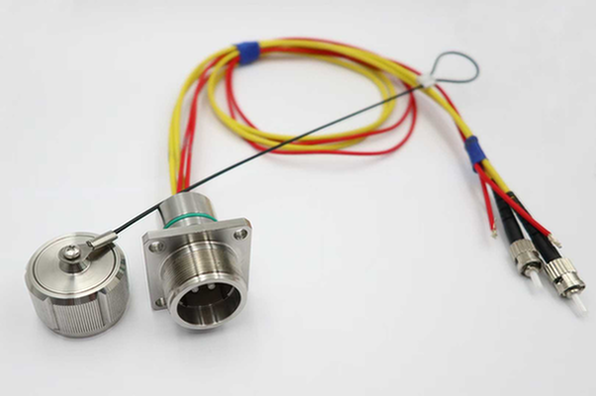
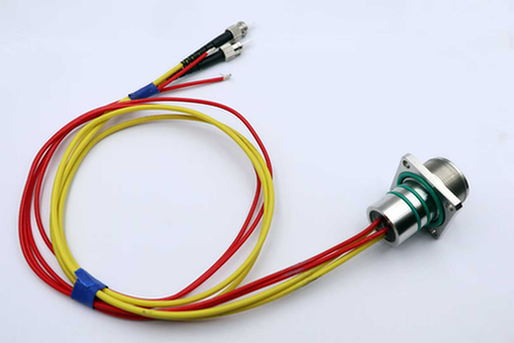
Fiber Optic Integration
Modern ROVs increasingly use fiber for high-bandwidth data:
- Single-Mode Fiber: Long-distance, high-bandwidth (10km+, 10Gbps+)
- Multi-Mode Fiber: Shorter distances, cost-effective (500m, 1-10Gbps)
- Expanded Beam: More tolerant of contamination, lower loss
- Physical Contact: Lower loss, requires cleaner conditions
Connection Type: Wet-Mate vs Dry-Mate
One of the most fundamental decisions is whether connectors must mate underwater or only in dry conditions.
Dry-Mate Connectors
Designed for connection only in dry environments:
- Advantages: Lower cost, simpler design, higher reliability
- القيود: Requires dry environment for connection
- Applications: ROV-to-tether connections made on deck, permanent installations
- Cost Range: $500 – $5,000 typical
Wet-Mate Connectors
Engineered for underwater connection and disconnection:
- Advantages: Enables underwater reconfiguration, tool changes, emergency disconnect
- القيود: Higher cost, more complex, requires maintenance
- Applications: Tool interfaces, modular ROV systems, emergency release
- Cost Range: $5,000 – $50,000+ depending on depth and complexity
Wet-Mate Technology Comparison
| Technology | Depth Rating | Cycles | Cost |
| Oil-Filled Piston | 3,000m | 500+ | Medium |
| Pressure-Balanced | 6,000m | 1000+ | Medium-High |
| Magnetic Coupling | 1,000m | Unlimited | High |
| Inductive | 500m | Unlimited | Very High |
Mechanical Considerations
Physical constraints often drive connector selection as much as electrical requirements.
Size and Weight
ROV payload capacity is limited. Connector selection impacts overall system design:
- Diameter: Ranges from 12mm (miniature) to 150mm+ (high-power)
- Length: Consider both connector and strain relief
- الوزن: Titanium saves 40% vs steel, plastics save 80%+
- Bend Radius: Cable entry must accommodate minimum bend radius
Keying and Polarization
Preventing mis-mating is critical:
- Keyways: Physical features ensure correct orientation
- Pin Patterns: Asymmetric arrangements prevent rotation
- Color Coding: Visual identification aids
- Size Coding: Different diameters for different functions
Strain Relief and Cable Entry
Proper cable termination prevents failure:
- Boot Strain Relief: Flexible boots protect cable bend
- Kevlar Termination: Tensile members anchored to connector body
- Overmolding: Integrated strain relief for permanent installations
- Grip Factors: Ensure adequate cable grip (typically 5x cable weight)
Installation and Maintenance Best Practices
Even the best connector will fail if improperly installed or maintained.
Installation Procedures
- Visual Inspection: Check for damage, contamination, seal integrity
- Cleanliness: Use appropriate cleaners (isopropyl alcohol for most)
- Lubrication: Apply specified lubricant to seals and threads
- Torque: Use calibrated torque wrenches to manufacturer specifications
- Continuity Test: Verify electrical connections before deployment
- Insulation Test: Megger test to verify insulation resistance
Maintenance Schedules
Preventive maintenance extends connector life:
- After Each Dive: Freshwater rinse, visual inspection
- Monthly: Detailed inspection, contact resistance measurement
- Annually: Complete overhaul, seal replacement, pressure testing
- After Any Fault: Immediate inspection and testing
Common Installation Mistakes
- Overtightening (crushes seals, damages threads)
- Under-tightening (allows water ingress)
- Wrong lubricant (incompatible with seal material)
- Cross-threading (permanent damage)
- Ignoring torque sequence (uneven loading)
- Skipping testing (undetected faults)
Cost Analysis and Total Cost of Ownership
Initial purchase price is only part of the economic equation.
Cost Components
- Initial Purchase: Connector unit cost
- Installation: Labor, tooling, testing
- الصيانة: Scheduled service, seal kits, spare parts
- Downtime: Cost of ROV out of service during maintenance
- Failure Cost: Recovery operations, lost missions, damage
Cost-Benefit Analysis Example
Consider two options for a 2,000m ROV:
| Factor | Option A (Stainless) | Option B (Titanium) |
| Initial Cost | $3,000 | $8,000 |
| Expected Life | 3 years | 10+ years |
| Annual Maintenance | $1,500 | $500 |
| 5-Year TCO | $10,500 | $10,500 |
| 10-Year TCO | $21,000 | $13,000 |
Titanium’s higher initial cost pays back over time through longevity and reduced maintenance.
Selection Decision Framework
Use this systematic approach for connector selection:
Step 1: Define Requirements
- Maximum operating depth
- Electrical configuration (voltage, current, signals)
- Connection type (wet-mate vs dry-mate)
- Environmental conditions (temperature, chemicals)
- Mechanical constraints (size, weight)
Step 2: Identify Candidates
- Research manufacturers with relevant products
- Request detailed specifications
- Verify certifications and test reports
- Check field references
Step 3: Evaluate Trade-offs
- Create comparison matrix
- Score against weighted criteria
- Calculate total cost of ownership
- Assess risk factors
Step 4: Validate Selection
- Order sample units for testing
- Conduct application-specific tests
- Verify compatibility with existing systems
- Document selection rationale
الخاتمة
ROV connector selection is a complex engineering decision requiring careful analysis of depth requirements, environmental conditions, electrical specifications, and economic factors. By following the systematic approach outlined in this guide, you can make informed decisions that balance performance, reliability, and cost.
Remember: the cheapest connector is rarely the most economical over the system’s lifetime. Invest in quality, follow proper installation procedures, and maintain connectors according to best practices. Your ROV’s reliability depends on it.
When in doubt, consult with manufacturers’ application engineers. Their experience with similar applications can prevent costly mistakes and optimize your selection.
Additional Resources
- ISO 13628-8: Petroleum and natural gas industries — Subsea production systems
- DNV-ST-F101: Submarine pipeline systems
- IEEE Standard for Underwater Connector Testing
- Manufacturer application guides and technical manuals








 English
 Spanish
 Russian
 French
 German
 Korean
 Japanese
 Arabic
 Thai
Thai Danish
 Norwegian