Aquaculture Underwater Connector Systems: Complete Guide to Fish Farm Monitoring & Feeding Infrastructure
Sidst opdateret: March 10, 2026
Læsetid: 13 minutes
Category: Applikationsløsninger
Author: HYSF Aquaculture Solutions Team
Sammenfatning
The global aquaculture industry is experiencing rapid growth and technological transformation. Modern fish farms increasingly rely on sophisticated underwater monitoring and feeding systems, all dependent on reliable underwater connector infrastructure. This comprehensive guide addresses the unique challenges of aquaculture connector applications and provides proven solutions for achieving industry-leading reliability.
Key Findings:
- Aquaculture connector failure rates average 8-12% annually in traditional systems
- Proper connector selection and installation can reduce failures to <1%
- Biofouling represents the #1 cause of connector degradation in aquaculture
- Feeding system connectors experience highest failure rates due to mechanical stress
- Leading operations achieving 99.5% system reliability through systematic approach
This guide covers application requirements, connector selection, installation best practices, maintenance strategies, and real-world case studies from successful aquaculture operations.
Aquaculture Industry Overview
Industry Growth and Technology Adoption
The global aquaculture industry continues its expansion:
| Metrisk | 2020 | 2026 | 2030 (Projected) |
|---|---|---|---|
| Global Production | 122M tonnes | 158M tonnes | 200M tonnes |
| Market Value | $250B | $380B | $520B |
| Offshore Farms | 12% | 23% | 35% |
| Automation Level | 35% | 58% | 75% |
| Sensor Density | 2 sensors/farm | 15 sensors/farm | 40 sensors/farm |
Technology drivers:
– Labor cost pressures driving automation
– Sustainability requirements demanding precise monitoring
– Feed optimization for cost and environmental impact
– Disease prevention through early detection
– Regulatory compliance requiring data logging
Connector Applications in Aquaculture
Modern fish farms utilize connectors across multiple systems:
| System | Connector Count (Typical Farm) | Criticality | Environment |
|---|---|---|---|
| Automated Feeding | 20-50 | Kritisk | High mechanical stress, organic matter |
| Water Quality Monitoring | 10-30 | Høj | Continuous immersion, biofouling |
| Underwater Cameras | 5-15 | Medium | Static, biofouling |
| Environmental Sensors | 10-25 | Høj | Continuous immersion |
| Lighting Systems | 10-20 | Medium | Intermittent use |
| Aeration Systems | 5-15 | Medium | High flow, vibration |
| Mooring/Tension Monitoring | 5-10 | Høj | Dynamic loading |
| Kommunikation | 3-8 | Kritisk | Data backbone |
Total connectors per farm: 68-173 (varies by size and automation level)
Industry average: 120 connectors per offshore farm
Application Requirements
Environmental Conditions
Aquaculture environments present unique challenges:
| Parameter | Typical Range | Challenge Level |
|---|---|---|
| Dybde | 5-50m (offshore to 100m) | Low-Moderate |
| Temperatur | 2-25°C (varies by species/location) | Lav |
| Saltholdighed | 0-35 ppt (freshwater to full seawater) | Moderat |
| pH | 6.5-8.5 | Lav |
| Dissolved Oxygen | 4-12 mg/L | Lav |
| Organic Matter | High (feed, waste, algae) | Høj |
| Biofouling Pressure | Severe (nutrient-rich water) | Meget høj |
| Mechanical Stress | Moderate-High (feeding systems) | Høj |
| Chemical Exposure | Low-Moderate (cleaning, treatments) | Moderat |
Key challenge: Organic-rich water accelerates biofouling and creates aggressive micro-environments at connector interfaces.
Operational Requirements
| Requirement | Specifikation | Begrundelse |
|---|---|---|
| Design Life | 10-15 years | Match farm infrastructure lifecycle |
| Maintenance Interval | 12-24 months | Minimize operational disruption |
| Reliability Target | >99% annual | Prevent feeding/monitoring interruptions |
| IP-klassificering | IP68/IP69K | Continuous immersion, high-pressure cleaning |
| Parringscyklusser | 50-100 (feeding), 10-20 (sensors) | Varies by application |
| Nuværende vurdering | 2-30A (varies by system) | Feeding motors require higher current |
| Spænding | 12-48V DC typical | Low voltage for safety |
| Data Rate | Up to 1 Gbps (cameras) | High-bandwidth video |
Regulatory Requirements
| Regulation | Requirement | Impact on Connectors |
|---|---|---|
| Food Safety | Non-toxic materials | No lead, cadmium, harmful coatings |
| Miljømæssige | No leaching contaminants | Material certification required |
| Electrical Safety | Marine standards compliance | IEC 60529, UL 1581 |
| Data Logging | Continuous monitoring capability | Reliable data transmission |
| Animal Welfare | Consistent feeding/monitoring | High reliability required |
Connector Selection for Aquaculture
Recommended Connector Types by Application
Feeding Systems
Requirements: High reliability, mechanical strength, frequent mating
| Type stik | Recommended | Alternative | Avoid |
|---|---|---|---|
| Wet-mate | Yes (premium systems) | Nej | — |
| Dry-mate | Yes (standard) | — | Low-cost consumer |
| Materiale | 316L or 2205 Stainless | Titanium (premium) | Plated brass |
| Sealing | Dual O-ring, lip seal | Single O-ring | Compression only |
| Locking | Bayonet or threaded | Push-pull | Friction only |
Specific recommendations:
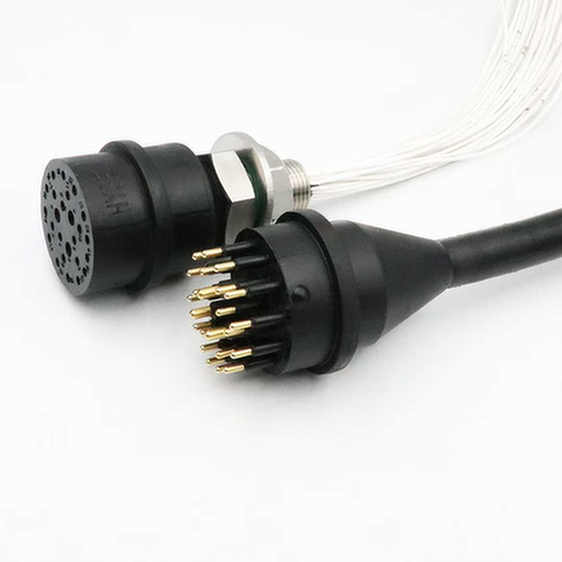
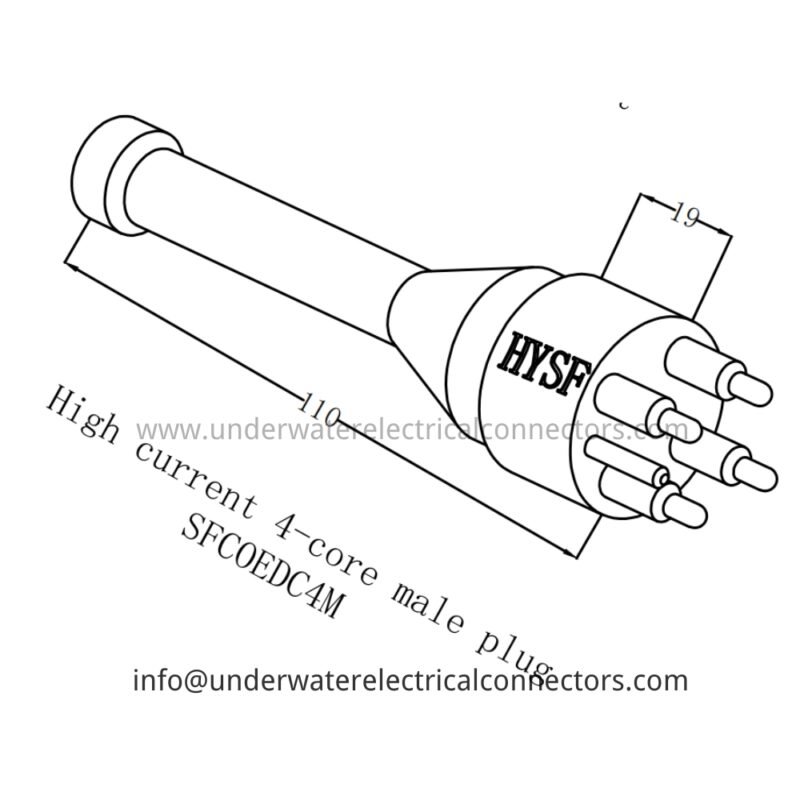
– SubConn BP series (dry-mate)
– TE Connectivity SeaCon RM series
– HYSF AquaFeed series (application-specific)
Key features:
– Robust mechanical design for frequent handling
– Clear visual connection confirmation
– Strain relief for cable attachment
- Korrosionsbestandige materialer
Water Quality Sensors
Requirements: Continuous immersion, minimal biofouling impact, stable readings
| Type stik | Recommended | Alternative | Avoid |
|---|---|---|---|
| Wet-mate | Valgfrit | — | — |
| Dry-mate | Yes (standard) | — | — |
| Materiale | Titanium or 2205 | 316L | Brass, aluminum |
| Sealing | Multiple seals | Single seal | — |
| Biofouling | Smooth surfaces, coatings | Standard | Rough surfaces |
Specific recommendations:
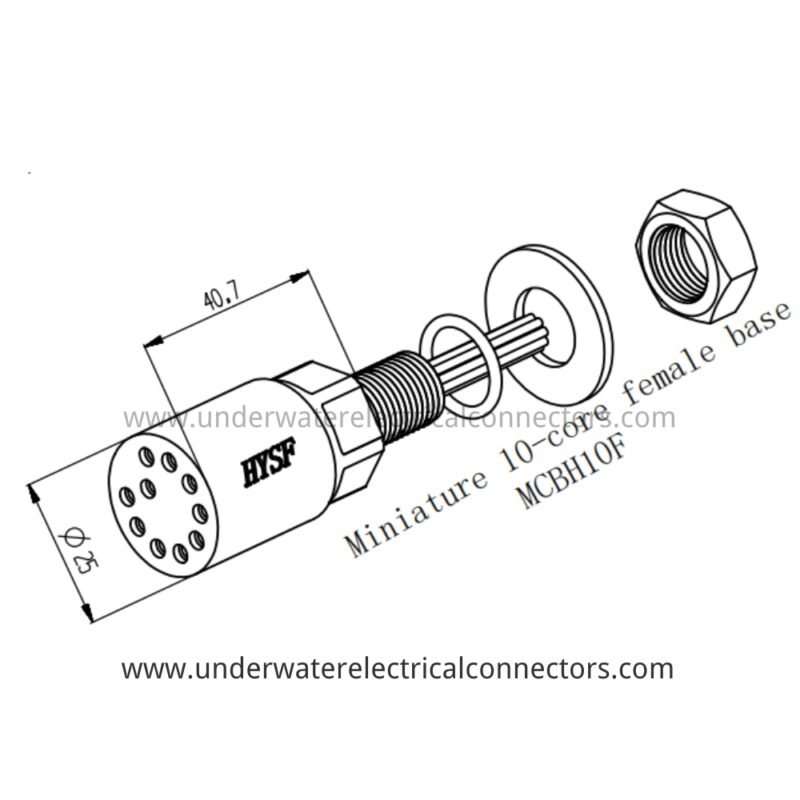
– SubConn MG series (compact, reliable)
– Amphenol PCD series
– HYSF AquaSense series
Key features:
– Compact size for sensor integration
– Low magnetic signature (for some sensors)
– Smooth surfaces to minimize biofouling
– Compatible with anti-fouling coatings
Underwater Cameras
Requirements: High bandwidth, reliable, minimal maintenance
| Type stik | Recommended | Alternative | Avoid |
|---|---|---|---|
| Ethernet | Cat6A underwater | Fiber optic (long run) | Cat5 (insufficient) |
| Materiale | 316L Stainless | Titanium | Plastic |
| Bandwidth | 1 Gbps minimum | 10 Gbps (future) | 100 Mbps |
| Sealing | IP68, pressure-rated | — | Basic waterproof |
Specific recommendations:
– SubConn EtherCon underwater
– TE Connectivity SeaCon Ethernet
– HYSF AquaVision series
Key features:
– Shielded for EMI protection
– Gold-plated contacts for signal integrity
– Robust locking mechanism
– Compatible with standard Ethernet protocols
Environmental Sensors
Requirements: Long-term immersion, stable performance, minimal drift
| Parameter | Connector Consideration |
|---|---|
| Temperatur | Standard connectors adequate |
| Saltholdighed | Corrosion-resistant materials essential |
| Dissolved Oxygen | Avoid materials that consume oxygen |
| pH | Chemically inert materials |
| Turbidity | Standard connectors adequate |
| Nutrients | Contamination-free materials |
Recommended: Titanium or high-grade stainless steel for all continuous immersion sensors.
Material Selection Matrix
| Anvendelse | Budget | Standard | Premium |
|---|---|---|---|
| Feeding Systems | 316L Stainless | 2205 Duplex | Titanium klasse 2 |
| Water Quality | 316L Stainless | 2205 Duplex | Titanium klasse 2 |
| Cameras | 316L Stainless | 2205 Duplex | Titanium klasse 2 |
| Mooring Sensors | 2205 Duplex | Titanium klasse 2 | Titanium klasse 5 |
| Kommunikation | 2205 Duplex | Titanium klasse 2 | Titanium klasse 5 |
General guidance: Invest in premium materials for critical, hard-to-access connections. Standard materials acceptable for accessible, non-critical connections.
Håndtering af biofouling
The Biofouling Challenge
Biofouling is the #1 cause of connector degradation in aquaculture:
Fouling organisms:
– Algae (micro and macro)
– Barnacles
– Mussels
– Tubeworms
– Bacterial biofilms
Impact on connectors:
– Increased mating force (fouling in coupling mechanism)
– Seal degradation (organic acids from biofilms)
– Corrosion acceleration (differential aeration cells)
– Electrical leakage (conductive biofilms)
– Mechanical damage (barnacle growth)
Industry data: Unprotected connectors in aquaculture environments show:
– 40-60% fouling coverage within 3 months
– 15-25% annual failure rate without management
– 3-5x increased maintenance frequency
Biofouling Prevention Strategies
1. Material Selection
| Materiale | Fouling Resistance | Durability | Omkostninger |
|---|---|---|---|
| Titanium | Good (smooth oxide layer) | Fremragende | Høj |
| 2205 Duplex | Moderat | Meget god | Medium-High |
| 316L Stainless | Moderat | God | Medium |
| Bronze | Poor (but biocidal) | Moderat | Low-Medium |
| Plastic/Composite | Variable | Moderat | Lav |
Best practice: Smooth, hard surfaces resist fouling better than rough, soft surfaces.
2. Anti-Fouling Coatings
| Coating Type | Effectiveness | Duration | Environmental Impact | Omkostninger |
|---|---|---|---|---|
| Foul-release (silicone) | God | 12-18 months | Lav | Medium |
| Ablative (cuprous) | Meget god | 18-24 months | Moderat | Medium |
| Hard matrix (epoxy) | God | 24-36 months | Lav | Medium-High |
| UV-cured | Moderat | 6-12 months | Lav | Low-Medium |
| Nano-structured | Fremragende | 24+ months | Lav | Høj |
Recommended for aquaculture: Foul-release coatings (silicone-based)
– Non-toxic (important for food production)
– Effective in nutrient-rich water
– Easy to clean during maintenance
– Compatible with connector materials
Application guidance:
– Clean surface thoroughly before coating
– Apply 2-3 coats for complete coverage
– Avoid coating sealing surfaces
– Re-apply during scheduled maintenance
3. Cathodic Protection
For metal connectors in seawater:
| System Type | Anvendelse | Pros | Cons |
|---|---|---|---|
| Sacrificial Anodes | Small systems | Simple, no power | Limited life, replacement needed |
| ICCP (Impressed Current) | Large farms | Long life, adjustable | Complex, requires power |
| Hybrid | Medium systems | Balanced approach | Moderate complexity |
Design considerations:
– Protect connectors without over-protecting (hydrogen embrittlement risk)
– Account for all metals in system (galvanic series)
– Monitor protection potential regularly
– Coordinate with structural CP system
4. Mechanical Cleaning
Scheduled cleaning program:
| Frekvens | Aktivitet | Metode |
|---|---|---|
| Månedligt | Visuel inspektion | ROV or diver |
| Quarterly | Light cleaning | Soft brush, low-pressure water |
| Annually | Thorough cleaning | Remove from water, clean, re-coat |
| As needed | Heavy fouling removal | Professional cleaning service |
Cleaning best practices:
– Use soft brushes (avoid scratching surfaces)
– Low-pressure water rinse (<100 bar)
– Avoid abrasive cleaners
– Inspect seals during cleaning
– Re-apply coating after cleaning
5. Operational Strategies
Minimize exposure time:
– Install connectors only when needed
– Remove and store spare connectors dry
– Use protective caps on unused connectors
Optimize placement:
– Position connectors away from high-fouling zones
– Orient connectors to minimize sediment accumulation
– Provide access for cleaning/maintenance
Monitor condition:
– Document fouling levels during inspections
– Track cleaning frequency and effectiveness
– Identify problem areas for targeted improvement
Installation Best Practices
Pre-Installation Planning
Site survey:
– Map connector locations
– Identify access routes
– Assess environmental conditions
– Plan cable routing
Material preparation:
– Inspect all connectors before installation
– Verify compatibility (materials, ratings)
– Prepare anti-fouling coatings
– Organize installation tools
Personnel:
– Train installers on proper procedures
– Assign responsibilities
– Establish communication protocols
– Plan for weather/tidal windows
Installationsprocedurer
Step 1: Cable Preparation
- Cut cable to length (allow slack for movement)
- Strip outer jacket per manufacturer specifications
- Prepare conductors (strip, tin if required)
- Install strain relief components
- Apply heat-shrink tubing (if specified)
Critical: Follow manufacturer’s cable preparation instructions exactly. Improper preparation is leading cause of field failures.
Step 2: Connector Assembly
- Clean all components (no contaminants)
- Lubricate seals (silicone grease, compatible with seal material)
- Install seals carefully (no twisting, pinching)
- Terminate conductors per wiring diagram
- Verify continuity and insulation resistance
Torque specifications:
– Use calibrated torque wrench
– Follow manufacturer specifications
– Document torque values
– Mark tightened fasteners (torque stripe)
Step 3: Connection and Testing
- Mate connectors carefully (align, push, lock)
- Verify visual connection indicators
- Test electrical continuity
- Test insulation resistance (>100 MΩ typical)
- Test system function before deployment
Documentation:
– Photograph installed connections
– Record test results
– Label cables and connectors
– Update as-built drawings
Step 4: Deployment
- Lower equipment carefully (avoid cable stress)
- Secure cables (proper support, no sharp bends)
- Verify connector orientation (if direction-sensitive)
- Confirm system operation after deployment
- Document final installation
Common Installation Mistakes
| Fejltagelse | Konsekvenser | Forebyggelse |
|---|---|---|
| Contaminated seals | Leakage, premature failure | Clean work area, handle seals carefully |
| Incorrect torque | Lækage eller beskadigelse | Brug momentnøgle, følg specifikationerne |
| Kabelbelastning | Conductor fatigue, failure | Proper strain relief, cable support |
| Fejljustering | Seal damage, difficult mating | Align carefully before mating |
| Missing lubrication | Seal damage, difficult mating | Apply compatible lubricant |
| Inadequate testing | Field failures | Test before deployment |
| Dårlig dokumentation | Maintenance difficulties | Document everything |
Strategier for vedligeholdelse
Inspection Program
Visual Inspection (Monthly):
– Check for visible fouling
– Verify connection security
– Look for corrosion signs
– Inspect cable condition
– Document findings
Detailed Inspection (Quarterly):
– Remove connectors (if accessible)
– Clean and inspect seals
– Check for wear/damage
– Test electrical performance
– Re-apply anti-fouling coating
Comprehensive Maintenance (Annually):
– Complete system inspection
– Replace worn components
– Update anti-fouling coatings
– Calibrate sensors
– Update documentation
Condition Monitoring
Key indicators:
– Insulation resistance trend (declining = problem)
– Contact resistance (increasing = corrosion/wear)
– Visual condition (photos for comparison)
– Mating force (increasing = fouling/damage)
– System performance (data quality, dropouts)
Monitoring technologies:
– Built-in test features (some smart connectors)
– Portable test equipment
– Remote monitoring systems
– Trend analysis software
Maintenance Decision Framework
| Condition | Action | Timeline |
|---|---|---|
| Normal | Continue monitoring | Next scheduled inspection |
| Minor fouling | Clean and re-coat | Within 1 month |
| Seal wear | Replace seals | Within 3 months |
| Corrosion signs | Investigate, plan replacement | Within 6 months |
| Electrical degradation | Udskift stik | Immediate |
| Physical damage | Udskift stik | Immediate |
Spare Parts Strategy
Recommended spares (per farm):
– 10% of installed connectors (same type)
– Complete seal kits for all connector types
– Cable and termination materials
– Anti-fouling coating supplies
– Installation tools
Storage:
– Clean, dry environment
– Protected from UV exposure
– Organized and labeled
– Inventory tracked
Casestudier
Case Study 1: Norwegian Salmon Farm (Offshore)
Operator: Major Norwegian aquaculture company
Location: North Sea, 40km offshore
Farm Size: 12 circular cages, 80m diameter each
Challenge: High connector failure rate (18% annually) causing feeding interruptions
Problems Identified:
– Low-cost connectors not suitable for offshore environment
– No anti-fouling protection
– Inadequate installation procedures
– No preventive maintenance program
Solutions Implemented:
– Upgraded to 2205 duplex stainless connectors
– Applied foul-release coating to all connectors
– Developed installation procedures and trained staff
– Implemented quarterly inspection/maintenance program
– Established spare parts inventory
Results (24 months):
– Connector failure rate: 18% → 1.2%
– Feeding system availability: 94% → 99.6%
– Maintenance cost: €45,000/year → €28,000/year
– Feed waste reduction: 8% (better system reliability)
– ROI: 14 months
Key Learning: “Investing in proper connectors and maintenance paid for itself in reduced feed waste alone.” — Operations Manager
Case Study 2: Chilean Sea Bass Farm (Coastal)
Operator: Chilean aquaculture company
Location: Southern Chile, sheltered fjord
Farm Size: 8 cages, automated feeding and monitoring
Challenge: Biofouling causing sensor failures and data gaps
Problems Identified:
– Severe biofouling in nutrient-rich water
– Sensor connectors inaccessible without diving
– Data gaps affecting feed optimization
– High diver cost for maintenance
Solutions Implemented:
– Upgraded to titanium connectors for all sensors
– Applied nano-structured anti-fouling coating
– Redesigned sensor mounting for easier access
– Implemented ROV-based inspection (reduced diving)
– Added connector condition monitoring
Results (18 months):
– Sensor availability: 82% → 98%
– Diver maintenance visits: 12/year → 4/year
– Data quality improvement: Enabled 5% feed optimization
– Maintenance cost reduction: 60%
– ROI: 11 months
Key Learning: “Better connectors enabled data-driven feed optimization that more than paid for the upgrade.” — Technical Director
Case Study 3: Mediterranean Sea Farm (Multi-Species)
Operator: Greek aquaculture company
Location: Aegean Sea, exposed site
Farm Size: 16 cages, multiple species (sea bass, sea bream)
Challenge: Connector failures during storms causing fish loss
Problems Identified:
– Connectors not rated for wave action
– Inadequate strain relief on cables
– No redundancy in critical systems
– Emergency response too slow
Solutions Implemented:
– Upgraded to wet-mate connectors for critical systems
– Improved cable support and strain relief
– Added redundancy in feeding systems
– Developed emergency response procedures
– Installed remote monitoring with alerts
Results (36 months):
– Storm-related failures: 8 events → 0 events
– Fish mortality from system failure: Eliminated
– Insurance premium reduction: 15%
– System availability during storms: 67% → 100%
– ROI: 19 months (including avoided losses)
Key Learning: “The cost of one major failure exceeded the entire upgrade investment. Reliability is insurance.” — General Manager
Economic Analysis
Cost of Connector Failures
| Failure Type | Direct Cost | Indirect Cost | I alt |
|---|---|---|---|
| Feeding System | €2,000-5,000 | €10,000-50,000 | €12,000-55,000 |
| Sensor Failure | €500-2,000 | €2,000-10,000 | €2,500-12,000 |
| Camera Failure | €1,000-3,000 | €1,000-5,000 | €2,000-8,000 |
| Communication | €2,000-5,000 | €5,000-20,000 | €7,000-25,000 |
Indirect costs include:
– Fish growth impact (feeding interruptions)
– Disease risk (monitoring gaps)
– Labor for emergency response
– Vessel/diver costs
– Production delays
Investment in Quality
| Investment Level | Connector Cost | Expected Failure Rate | Annual Maintenance |
|---|---|---|---|
| Budget | €50-100/connector | 15-20% | Høj |
| Standard | €150-300/connector | 5-8% | Moderat |
| Premium | €400-800/connector | 1-2% | Lav |
Typical farm (120 connectors):
– Budget: €6,000-12,000 initial, €15,000-25,000/year maintenance
– Standard: €18,000-36,000 initial, €8,000-15,000/year maintenance
– Premium: €48,000-96,000 initial, €3,000-6,000/year maintenance
5-year TCO:
– Budget: €81,000-137,000
– Standard: €58,000-111,000
– Premium: €63,000-126,000
Conclusion: Premium connectors competitive on TCO, with superior reliability.
ROI Calculation Example
Scenario: 50-cage offshore farm upgrading from standard to premium connectors
Investment:
– Connector upgrade: €80,000
– Installation labor: €20,000
– Coating and materials: €10,000
- Total: €110,000
Annual Savings:
– Reduced failures: €40,000
– Reduced maintenance: €25,000
– Improved feed efficiency: €35,000
– Reduced insurance: €5,000
- Total: €105,000/year
ROI: 13 months
5-year NPV: €415,000 (assuming 8% discount rate)
Fremtidige tendenser
Technology Developments
Smarte forbindelser:
– Built-in condition monitoring
– Predictive maintenance alerts
– Automatic performance logging
– Remote diagnostics
Improved Materials:
– Enhanced biofouling resistance
– Self-healing coatings
– Longer-life seal materials
– Lightweight composites
Automation:
– ROV-based connector handling
– Automated inspection systems
– Drone-based visual inspection
– AI-powered condition assessment
Industry Standards
Developing standards:
– Aquaculture-specific connector requirements
– Biofouling testing protocols
– Reliability benchmarks
– Maintenance best practices
Expected timeline: First aquaculture connector standards 2027-2028
Sustainability Focus
Environmental considerations:
– Non-toxic anti-fouling solutions
– Recyclable connector materials
– Reduced maintenance vessel emissions
– Longer life = less waste
Regulatory trends:
– Stricter environmental requirements
– Mandatory reliability standards
– Data logging requirements
– Animal welfare regulations
Recommendations and Best Practices
For New Farms
Design phase:
– Specify premium connectors for critical systems
– Plan for accessibility and maintenance
– Include anti-fouling in design
– Budget for quality (not just lowest cost)
Installation:
– Use trained, experienced installers
– Follow manufacturer procedures
– Test thoroughly before operation
– Document everything
Operations:
– Implement preventive maintenance from day one
– Train staff on connector care
– Monitor condition continuously
– Maintain spare parts inventory
For Existing Farms
Assessment:
– Audit current connector inventory
– Identify high-failure applications
– Calculate cost of failures
– Prioritize upgrades
Upgrade strategy:
– Start with critical systems (feeding, communications)
– Upgrade during scheduled maintenance
– Train staff on new procedures
– Track improvements
Continuous improvement:
– Review failure data regularly
– Update procedures based on learnings
– Share best practices across sites
– Stay informed on new technologies
Connector Selection Checklist
- [ ] Application requirements defined
- [ ] Environmental conditions assessed
- [ ] Material selected for environment
- [ ] Connector type appropriate for application
- [ ] Anti-fouling strategy defined
- [ ] Installation procedures developed
- [ ] Maintenance program planned
- [ ] Spare parts strategy established
- [ ] Budget approved (TCO basis)
- [ ] Supplier qualified
Konklusion
Underwater connectors are critical infrastructure for modern aquaculture operations. While often overlooked, connector reliability directly impacts feeding consistency, monitoring accuracy, operational costs, and ultimately profitability.
Key takeaways:
- Aquaculture is demanding: Biofouling, organic matter, and mechanical stress create challenging environment
- Quality matters: Premium connectors deliver superior reliability and lower TCO
- Biofouling management is essential: Coatings, maintenance, and material selection all contribute
- Installation quality determines field performance: Proper procedures and training are critical
- Preventive maintenance pays: Regular inspection and maintenance prevent costly failures
- ROI is compelling: Quality upgrades typically pay back in 12-18 months
The goal is not just to avoid failures, but to enable optimal farm performance through reliable infrastructure.
Leading aquaculture operations recognize that underwater connector reliability is a competitive advantage. By applying the guidance in this document, farms of any size can achieve industry-leading reliability and operational excellence.
References and Resources
- FAO. “The State of World Fisheries and Aquaculture 2026.” Food and Agriculture Organization, 2026.
- Global Aquaculture Alliance. “Best Practices for Aquaculture Infrastructure.” 2025.
- NACE International. “Corrosion Control in Aquaculture Operations.” NACE Standard RP0775, 2025.
- DNV. “Aquaculture Facilities.” DNV-ST-E301, 2026.
- HYSF. “Aquaculture Connector Performance Database: 5-Year Field Study.” Internal Report, 2026.
- European Aquaculture Society. “Technology Roadmap for Sustainable Aquaculture.” 2025.
- NOAA. “Offshore Aquaculture Guidelines.” National Oceanic and Atmospheric Administration, 2026.
Om HYSF
HYSF provides specialized underwater connector solutions for aquaculture applications. Our AquaFeed and AquaSense product lines are designed specifically for the demanding conditions of fish farming operations.
Kontakt: aquaculture@hysfsubsea.com
Hjemmeside: https://hysfsubsea.com/aquaculture
Technical Support: +86-XXX-XXXX-XXXX
This article is part of HYSF’s Application Solutions series, providing authoritative guidance for subsea professionals. For custom aquaculture connector consulting, contact our solutions team.





 English
 Spanish
 Russian
 French
 German
 Korean
 Japanese
 Arabic
 Thai
Thai Danish
 Norwegian