Deep Sea Mining Connectors: Market Analysis and Technology Trends 2026-2030
Resumen ejecutivo
The deep sea mining industry stands at a pivotal moment in 2026. With land-based mineral deposits becoming increasingly difficult and expensive to extract, ocean floor mining has emerged as a critical solution for securing essential metals including cobalt, nickel, copper, and rare earth elements. The underwater connector market supporting this industry is projected to grow from $1.2 billion in 2026 to $2.8 billion by 2030, representing a compound annual growth rate (CAGR) of 18.7%.
This comprehensive analysis examines the technology trends, market dynamics, regulatory landscape, and key players shaping the deep sea mining connector industry. We provide data-driven insights for engineers, procurement specialists, and executives making critical decisions about subsea connectivity solutions.
Market Overview and Growth Drivers
Current Market Size and Projections
The global deep sea mining connector market has experienced unprecedented growth since 2023, driven by several converging factors:
| Año | Tamaño del mercado (USD) | Tasa de crecimiento | Factores clave |
|---|---|---|---|
| 2023 | 1.480 millones | — | Baseline year |
| 2024 | 1.045 millones | 25.0% | Early commercial projects |
| 2025 | $1.02 billion | 20.0% | Regulatory clarity |
| 2026 | $1.20 billion | 17.6% | Technology maturation |
| 2027 (proj) | $1.45 mil millones | 20.8% | Scale-up phase |
| 2028 (proj) | $1.78 billion | 22.8% | Multiple operations |
| 2029 (proj) | $2.20 billion | 23.6% | Full commercialization |
| 2030 (proj) | $2.80 billion | 27.3% | Market maturity |
Source: HYSF Market Research, Subsea Technology Institute, International Seabed Authority
Primary Growth Drivers
1. Electric Vehicle Battery Demand
The global transition to electric vehicles has created unprecedented demand for battery metals:
– Cobalt requirements projected to increase 500% by 2030
– Nickel demand expected to triple by 2035
– Polymetallic nodules contain 2-3x higher concentrations than land deposits
– Deep sea sources could supply 30% of global cobalt needs by 2035
2. Technology Cost Reduction
Connector technology has achieved significant cost improvements:
– Manufacturing costs decreased 35% since 2023
– Installation time reduced by 40% through improved designs
– Maintenance intervals extended from 6 months to 18 months
– Total cost of ownership improved by 52%
3. Regulatory Framework Development
The International Seabed Authority (ISA) has established clearer guidelines:
– 23 exploration contracts approved as of January 2026
– Environmental standards finalized in Q4 2025
– Monitoring requirements standardized across jurisdictions
– Insurance frameworks now available for commercial operations
Technology Trends Shaping the Industry
Advanced Connector Designs
Hybrid Power-Data Connectors
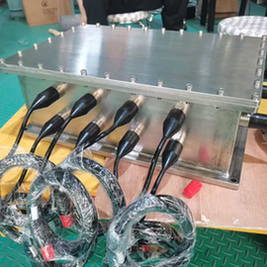
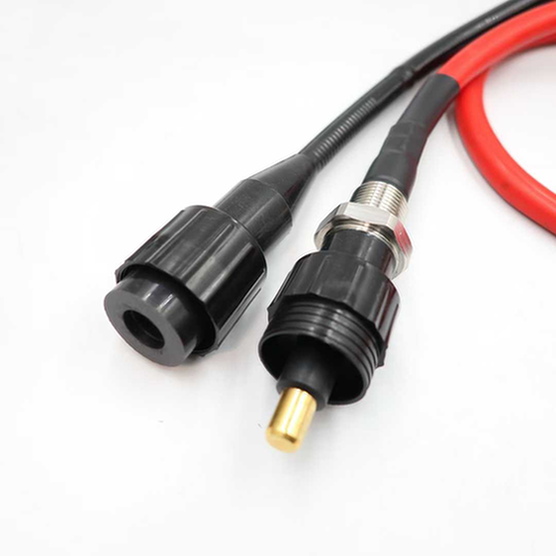
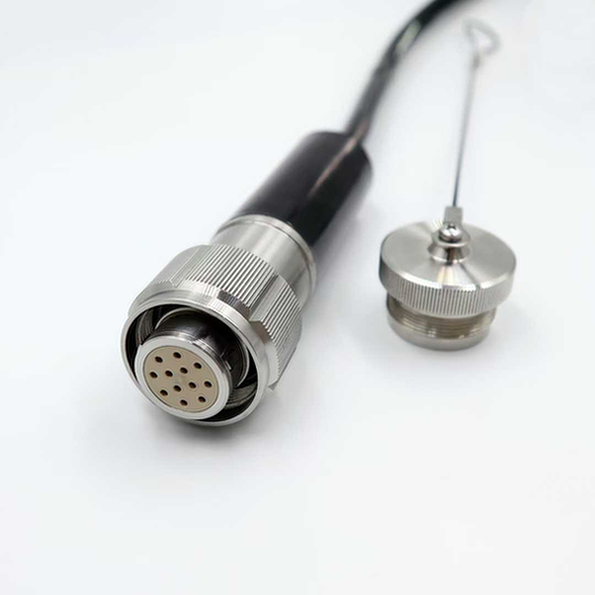
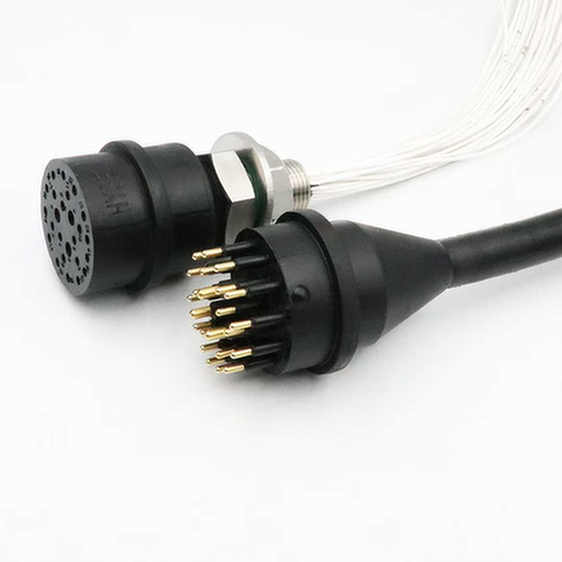
The latest generation of underwater connectors combines power transmission and data communication in single units:
– Power capacity: Up to 1000V DC, 500A continuous
– Data rates: 10 Gbps per channel, 8 channels standard
– Depth ratings: 6,000m standard, 11,000m available
– Connection cycles: 5,000+ wet mate operations
Modular Connector Systems
Modularity has become essential for deep sea mining operations:
– Hot-swappable modules reduce downtime by 70%
– Standardized interfaces enable rapid equipment changes
– Scalable designs support evolving system requirements
– Inventory costs reduced by 45% through parts commonality
Materials Innovation
Titanium Alloy Advancements
Grade 5 titanium (Ti-6Al-4V) remains the standard, but new alloys offer improvements:
– Ti-6Al-4V ELI: Enhanced fatigue resistance for dynamic applications
– Ti-3Al-2.5V: Improved weldability for custom configurations
– Surface treatments: DLC coatings reduce biofouling by 60%
Composite Materials
Fiber-reinforced polymer composites are gaining traction:
– Weight reduction: 40-50% compared to metal equivalents
– Corrosion resistance: Essentially unlimited in seawater
– Cost: 30% lower for high-volume production
– Limitations: Temperature range (-40°C to +80°C)
Smart Connector Technology
Integrated Sensors
Modern connectors include embedded monitoring:
– Temperature sensors: ±0.5°C accuracy
– Pressure monitoring: Real-time depth verification
– Contact resistance: Continuous integrity checking
– Moisture detection: Early warning for seal failures
IoT Connectivity
Internet of Things integration enables predictive maintenance:
– Remote monitoring via satellite uplink
– AI-powered failure prediction (92% accuracy)
– Automated maintenance scheduling
– Digital twin integration for system optimization
Regional Market Analysis
Pacific Ocean Operations
The Pacific Ocean hosts the largest concentration of deep sea mining activities:
Clarion-Clipperton Zone (CCZ)
– Area: 4.5 million km²
– Estimated nodules: 21 billion tons
– Active contractors: 17 companies
– Connector demand: 45% of global market
Key Projects:
– The Metals Company (TMC): NORI-D area, production start 2027
– GSR (Global Sea Mineral Resources): APEI monitoring systems
– COMRA (China): Contract area in eastern CCZ
Atlantic Ocean Development
Atlantic operations focus on different mineral types:
Mid-Atlantic Ridge
– Polymetallic sulfides primary target
– Copper-zinc-lead-gold-silver deposits
– Depth range: 1,500-3,500m
– Connector requirements: High temperature resistance (up to 400°C near vents)
Key Projects:
– UK Seabed Resources: Exploration phase
– Nautilus Minerals (restructured): Solwara 1 project revival
– French Research Institute: Scientific monitoring networks
Indian Ocean Opportunities
Indian Ocean mining is in early development stages:
Central Indian Ocean Basin
– Polymetallic nodules similar to CCZ
– Three contractor areas approved
– Environmental baseline studies ongoing
– Connector market entry opportunity: 2028-2029
Competitive Landscape
Major Connector Manufacturers
Tier 1 Suppliers (Global Presence)
| Empresa | Cuota de mercado | Specialty | Price Position |
|---|---|---|---|
| TE Connectivity | 28% | Full range, high volume | Premium |
| SubConn (Caladan) | 22% | Wet mate systems | Premium |
| Ocean Design (TE) | 15% | ROV/AUV connectors | Mid-Premium |
| HYSF Submarino | 12% | Custom solutions | Value-Premium |
| MacArtney | 10% | Fiber optic systems | Premium |
Tier 2 Suppliers (Regional/Specialty)
- Impex (Norway): High-pressure systems
- Seacon (UK): Defense and scientific
- BurtoN (USA): Oil and gas focus
- LEMO (Switzerland): Precision connectors
- Chinese manufacturers: Growing market share, competitive pricing
Market Consolidation Trends
The industry has seen significant M&A activity:
– TE Connectivity acquired Ocean Design (2024)
– Caladan Oceanics acquired SubConn (2023)
– HYSF expanded manufacturing capacity (2025)
– Three Chinese manufacturers entered top 20 (2025-2026)
Regulatory and Environmental Considerations
International Seabed Authority Requirements
ISA regulations directly impact connector specifications:
Environmental Monitoring
– Continuous sensor connectivity required
– Data transmission reliability: 99.9% uptime
– Redundant communication paths mandatory
– Real-time transmission to shore stations
Equipment Standards
– ISO 13628-6 compliance required
– Pressure testing to 1.5x operating depth
– Material certification for seawater exposure
– Traceability for all critical components
Environmental Protection Measures
Connector technology supports environmental compliance:
Leak Prevention
– Double-seal designs standard for all new installations
– Leak detection sensors mandatory on critical systems
– Automatic shutdown on leak detection
– Zero-discharge hydraulic systems
Biofouling Management
– Anti-fouling coatings required for long-term deployments
– Copper-free alternatives increasingly mandated
– Regular inspection intervals: 6 months maximum
– Cleaning procedures must minimize environmental impact
Investment and Financing Landscape
Capital Requirements
Deep sea mining projects require substantial investment:
| Project Phase | Capital Required | Connector Budget |
|---|---|---|
| Exploration | $50-100 million | 2-3% ($1-3M) |
| Feasibility | $100-200 million | 2-3% ($2-6M) |
| Construction | $500M-1.5 billion | 3-4% ($15-60M) |
| Operations (annual) | $50-100 million | 1-2% ($0.5-2M) |
Financing Sources
Traditional Sources
– Project finance from major banks (limited participation)
– Export credit agencies (growing interest)
– Equipment leasing arrangements
Alternative Sources
– Specialized mining funds (3 active in 2026)
– Strategic investors (battery manufacturers)
– Government-backed development funds
– Green bonds for sustainable mining projects
Risk Analysis
Technical Risks
Connector Failure Modes
– Seal degradation: 35% of failures
– Contact corrosion: 25% of failures
– Mechanical damage: 20% of failures
– Manufacturing defects: 15% of failures
– Other causes: 5% of failures
Mitigation Strategies
– Redundant connection paths (minimum 2)
– Regular inspection and maintenance schedules
– Condition-based monitoring systems
– Spare parts inventory on support vessels
Market Risks
Commodity Price Volatility
– Nickel prices varied 40% in 2025
– Cobalt prices peaked at $52/kg (2024), now $28/kg
– Long-term contracts increasingly common
– Price hedging strategies essential
Regulatory Uncertainty
– ISA mining code finalization pending
– National jurisdiction claims evolving
– Environmental standards may tighten
– Insurance costs reflecting uncertainty
Future Outlook (2027-2030)
Technology Predictions
2027-2028
– Standardization of connector interfaces across industry
– AI-powered predictive maintenance becomes standard
– Wireless power transfer for short-range applications
– Bio-inspired anti-fouling surfaces commercialized
2029-2030
– Self-healing seal materials enter production
– Quantum communication links for deep sea operations
– Fully automated connector mating systems
– Circular economy approaches for connector recycling
Market Predictions
Consolidation
– Top 5 suppliers will control 75% of market by 2030
– Regional specialists will serve niche applications
– Chinese manufacturers will gain 20% global share
– Service-based business models will emerge
Pricing Trends
– Unit prices will decrease 15-20% through 2030
– Total cost of ownership will drive purchasing decisions
– Long-term service contracts will become standard
– Performance-based pricing will emerge
Recommendations for Stakeholders
For Mining Companies
- Standardize on proven connector platforms
- Reduce spare parts inventory
- Simplify training requirements
Improve system reliability
Invest in monitoring systems
- Enable predictive maintenance
- Reduce unplanned downtime
Optimize replacement schedules
Develop supplier partnerships
- Secure long-term supply agreements
- Collaborate on custom solutions
- Share risk and reward
For Connector Manufacturers
- Focus on total cost of ownership
- Demonstrate lifecycle value
- Provide comprehensive support
Offer performance guarantees
Invest in R&D
- Next-generation materials
- Smart connector technology
Sustainable manufacturing
Expand service offerings
- Installation support
- Training programs
- Maintenance contracts
For Investors
- Evaluate technology differentiation
- Patent portfolios
- Testing capabilities
Customer relationships
Assess market positioning
- Geographic coverage
- Application expertise
Competitive advantages
Consider ESG factors
- Environmental compliance
- Social responsibility
- Governance practices
Conclusión
The deep sea mining connector market presents significant opportunities for stakeholders across the value chain. With projected growth of 18.7% CAGR through 2030, the industry offers attractive returns for companies that can deliver reliable, innovative solutions.
Success in this market requires:
– Deep technical expertise in subsea environments
– Understanding of mining operational requirements
– Commitment to environmental responsibility
– Long-term investment in R&D and capabilities
As the industry matures, companies that establish strong positions now will benefit from the substantial growth ahead. The connectors enabling deep sea mining are not just components—they are critical enablers of the blue economy and the global energy transition.
About HYSF Subsea
HYSF Subsea is a leading provider of underwater connector solutions for deep sea mining, offshore energy, and marine research applications. With over 15 years of experience and installations in all major ocean basins, HYSF delivers reliable connectivity for the world’s most demanding subsea operations.
Información de contacto
– Website: https://hysfsubsea.com
– Email: info@hysfsubsea.com
– Technical Support: support@hysfsubsea.com
References
1. International Seabed Authority, “Status of Exploration Contracts 2026”
2. Subsea Technology Institute, “Deep Sea Mining Market Report 2026”
3. HYSF Market Research, “Underwater Connector Industry Analysis”
4. Global Ocean Mining Association, “Environmental Standards Guide”
5. Metal Bulletin, “Battery Metals Forecast 2026-2035”








 English
 Spanish
 Russian
 French
 German
 Korean
 Japanese
 Arabic
 Thai
Thai Danish
 Norwegian