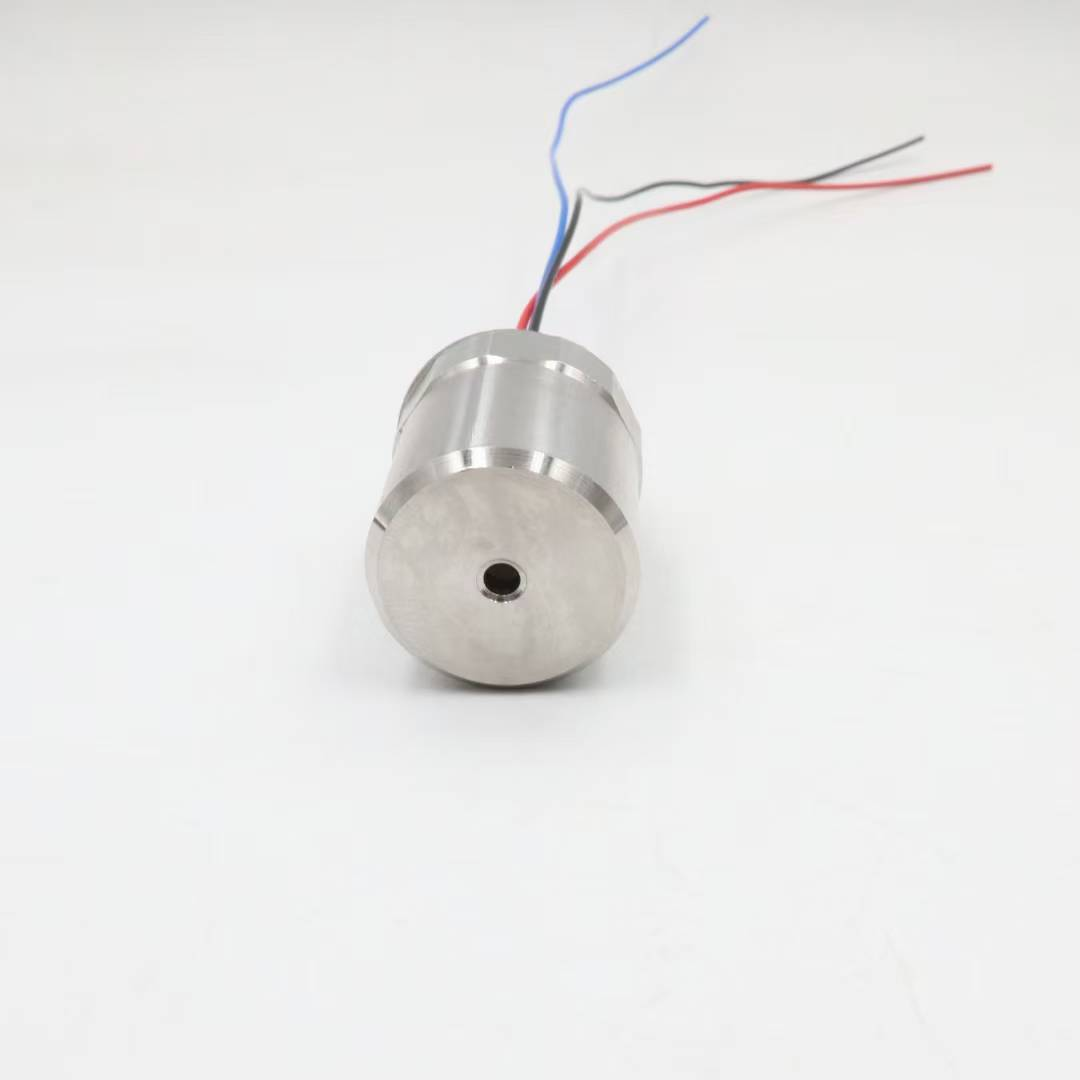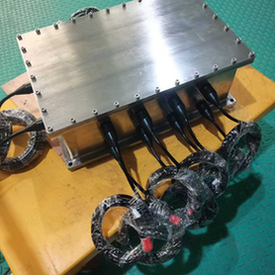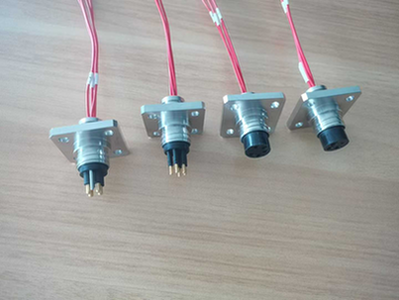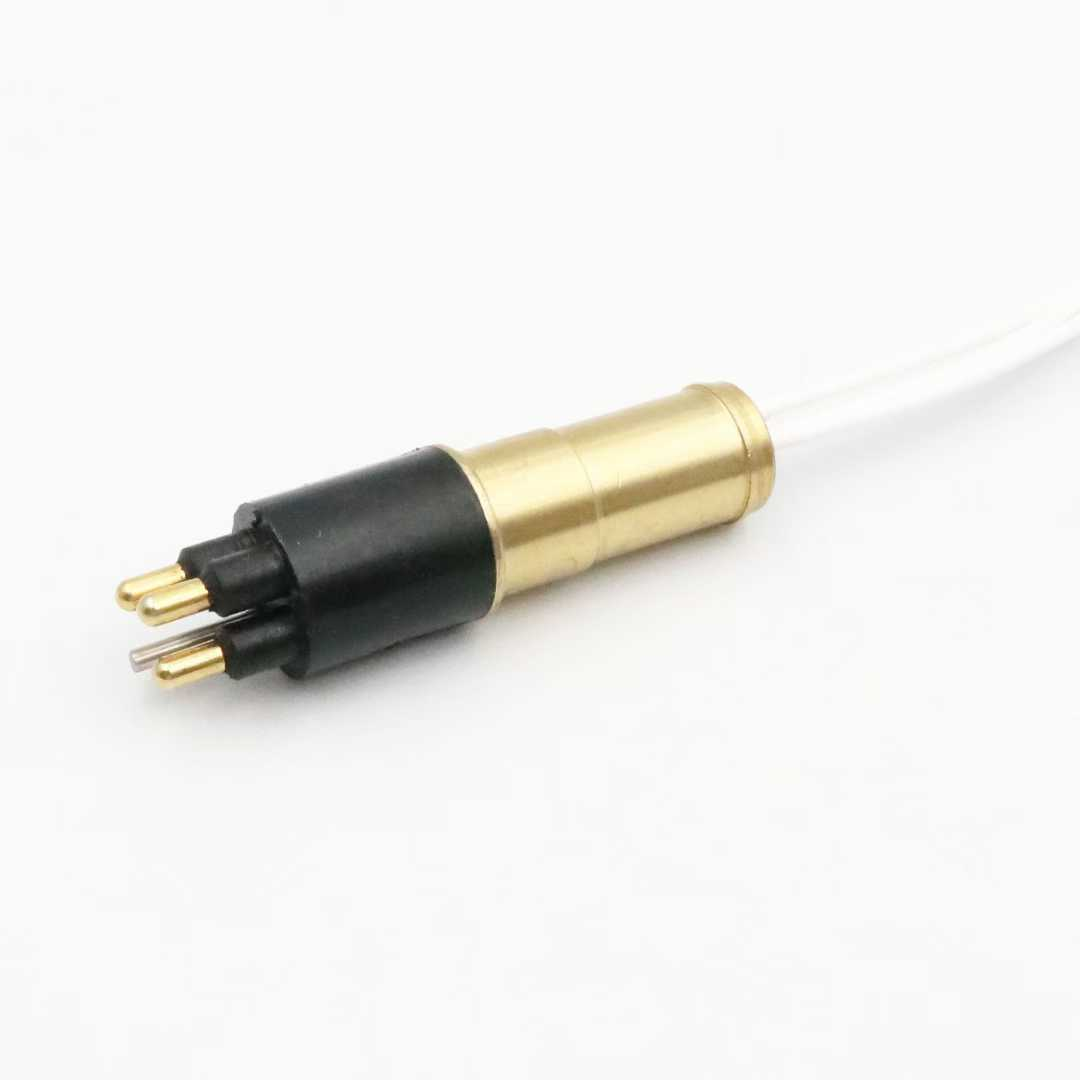
Titanium vs Stainless Steel Underwater Connectors: Complete Material Selection Guide for Extreme Environments
最終更新日 March 10, 2026
Reading Time: 15 minutes
Category: Technical Guides
Author: HYSF Materials Engineering Team
エグゼクティブ・サマリー
Material selection is one of the most critical decisions in underwater connector specification. The choice between titanium and stainless steel affects connector performance, longevity, maintenance requirements, and total cost of ownership. This comprehensive guide provides engineers, procurement specialists, and project managers with the knowledge needed to make optimal material selections for their specific applications.
Key Findings:
- Titanium offers superior corrosion resistance but at 3-4x material cost
- Stainless steel (316L/2205) suitable for most applications to 1,000m depth
- Titanium essential for extreme environments (sour service, high temperature)
- Galvanic compatibility with surrounding structures often determines optimal choice
- Total cost of ownership may favor titanium despite higher initial cost
This guide covers material properties, performance characteristics, application recommendations, and economic analysis to support informed decision-making.
Material Fundamentals
Titanium Alloys for Underwater Connectors
Common Titanium Grades
| Grade | Composition | Key Properties | Typical Applications |
|---|---|---|---|
| Grade 2 | Commercially pure Ti | Excellent corrosion resistance, good formability | General subsea, shallow water |
| Grade 5 (Ti-6Al-4V) | 6% Al, 4% V | 高強度、良好な耐食性 | Deepwater, high-pressure |
| Grade 7 | Grade 2 + 0.15% Pd | Enhanced corrosion resistance | Sour service, extreme environments |
| Grade 12 | Ti-0.3Mo-0.8Ni | Improved crevice corrosion resistance | High-temperature subsea |
| Grade 23 (Ti-6Al-4V ELI) | Extra low interstitials | Superior fracture toughness | Critical deepwater applications |
Titanium Properties
| Property | Value | Significance |
|---|---|---|
| Density | 4.43 g/cm³ | 45% lighter than steel |
| Tensile Strength | 240-950 MPa (grade dependent) | High strength-to-weight ratio |
| Yield Strength | 170-880 MPa | Excellent structural capability |
| Corrosion Rate | <0.001 mm/year (seawater) | 海水による腐食がほとんどない |
| Operating Temperature | -253°C to 400°C | Wide temperature range |
| Modulus of Elasticity | 110 GPa | Lower than steel (design consideration) |
| Thermal Expansion | 8.6 μm/m·°C | Lower than steel |
メリット
– Exceptional corrosion resistance in seawater
– Immune to chloride stress corrosion cracking
– Non-magnetic (important for some applications)
– Excellent fatigue resistance
– Biocompatible (relevant for some marine research)
– Forms protective oxide layer spontaneously
Disadvantages:
– Higher material cost (3-4x stainless steel)
– More difficult to machine and fabricate
– Lower modulus of elasticity (may require design adjustments)
– Susceptible to galling (requires proper lubrication)
– Limited supplier base compared to steel
Stainless Steel Alloys for Underwater Connectors
Common Stainless Steel Grades
| Grade | Type | Composition | Key Properties | Typical Applications |
|---|---|---|---|---|
| 316L | Austenitic | 16-18% Cr, 10-14% Ni, 2-3% Mo | Good corrosion resistance, weldable | General subsea to 500m |
| 317L | Austenitic | 18-20% Cr, 13-15% Ni, 3-4% Mo | Better than 316L in chlorides | Moderate depth, aggressive water |
| 2205 (Duplex) | Duplex | 22% Cr, 5% Ni, 3% Mo, N | 高強度、良好な耐食性 | Deepwater, high pressure |
| 2507 (Super Duplex) | Super Duplex | 25% Cr, 7% Ni, 4% Mo, N | Excellent corrosion resistance | Extreme environments |
| 904L | Austenitic | 20% Cr, 25% Ni, 4.5% Mo | Superior corrosion resistance | Chemical processing, sour service |
Stainless Steel Properties (316L as baseline)
| Property | Value | Significance |
|---|---|---|
| Density | 8.0 g/cm³ | Heavier than titanium |
| Tensile Strength | 485-620 MPa | Good structural capability |
| Yield Strength | 170-310 MPa | Adequate for most applications |
| Corrosion Rate | 0.002-0.05 mm/year (seawater) | Acceptable for most applications |
| Operating Temperature | -200°C to 800°C | Wide temperature range |
| Modulus of Elasticity | 193 GPa | Higher stiffness than titanium |
| Thermal Expansion | 16.0 μm/m·°C | Higher than titanium |
メリット
– Lower material cost
– Well-established supply chain
– Easier to machine and fabricate
– Higher modulus of elasticity
– Good overall corrosion resistance
– Extensive industry experience and standards
Disadvantages:
– Susceptible to chloride stress corrosion cracking (SCC)
– Pitting and crevice corrosion risk in stagnant conditions
– Heavier than titanium
– Magnetic (may interfere with some instruments)
– Requires careful specification for aggressive environments
Corrosion Performance Comparison
Seawater Corrosion Resistance
| Environment | チタン・グレード2 | 316L Stainless | 2205 Duplex | 2507 Super Duplex |
|---|---|---|---|---|
| Clean seawater | 素晴らしい | グッド | 非常に良い | 素晴らしい |
| Polluted seawater | 素晴らしい | フェア | グッド | 非常に良い |
| Stagnant seawater | 素晴らしい | Poor | フェア | グッド |
| High velocity seawater | 素晴らしい | グッド | 非常に良い | 素晴らしい |
| Buried in seabed | 素晴らしい | Poor | フェア | グッド |
Key insight: Titanium maintains excellent corrosion resistance across all seawater conditions. Stainless steel performance varies significantly with environment.
Specific Corrosion Mechanisms
孔食
| 素材 | Pitting Resistance Equivalent Number (PREN) | Critical Pitting Temperature (°C) |
|---|---|---|
| チタン・グレード2 | N/A (immune) | >100 |
| 316L Stainless | 24-26 | 15-25 |
| 2205 Duplex | 34-36 | 50-60 |
| 2507 Super Duplex | 42-44 | 70-80 |
PREN Formula: PREN = %Cr + 3.3×%Mo + 16×%N
Interpretation: Higher PREN indicates better pitting resistance. Titanium is essentially immune to pitting in seawater.
隙間腐食
Crevice corrosion occurs in tight spaces where oxygen is depleted:
| 素材 | Critical Crevice Temperature (°C) | Risk Level |
|---|---|---|
| チタン・グレード2 | >100 | Negligible |
| Titanium Grade 7 | >100 | Negligible |
| 316L Stainless | 0-10 | 高い |
| 2205 Duplex | 30-40 | 中程度 |
| 2507 Super Duplex | 50-60 | 低い |
Design implication: Stainless steel connectors require careful design to avoid crevices. Titanium is forgiving.
応力腐食割れ(SCC)
| 素材 | Chloride SCC Resistance | Temperature Limit |
|---|---|---|
| チタン | 素晴らしい | Up to 260°C |
| 316L Stainless | Poor | >60°C risky |
| 2205 Duplex | グッド | Up to 100°C |
| 2507 Super Duplex | 非常に良い | Up to 150°C |
Critical for: High-temperature subsea applications, geothermal, injection wells
ガルバニック腐食
When dissimilar metals are connected in seawater, galvanic corrosion can occur:
| Connector Material | Anodic to Steel | Cathodic to Steel | Risk with Carbon Steel |
|---|---|---|---|
| チタン | No | Yes (strongly) | High (steel corrodes) |
| 316L Stainless | No | Yes (moderately) | 中程度 |
| 2205 Duplex | No | Yes (moderately) | 中程度 |
Mitigation strategies:
– Use insulating kits between dissimilar metals
– Apply sacrificial anodes to protect steel structures
– Select connector material compatible with surrounding structure
– Use coatings to isolate metals
Rule of thumb: Titanium connectors on steel structures require cathodic protection design review.
Mechanical Performance
Strength Comparison
| 素材 | Tensile Strength (MPa) | Yield Strength (MPa) | Elongation (%) |
|---|---|---|---|
| チタン・グレード2 | 345 | 275 | 20 |
| チタン・グレード5 | 895 | 830 | 10 |
| 316L Stainless | 485-620 | 170-310 | 40 |
| 2205 Duplex | 650-880 | 450-550 | 25 |
| 2507 Super Duplex | 800-1000 | 550-650 | 15 |
Design implications:
– Grade 5 titanium offers highest strength-to-weight ratio
– Duplex stainless steels approach titanium strength at lower cost
– Elongation affects formability and crash resistance
Fatigue Performance
Underwater connectors experience cyclic loading from:
– Wave action
– Vessel motion
– Thermal cycling
– Pressure cycling
| 素材 | Fatigue Limit (MPa) | Endurance Limit Ratio |
|---|---|---|
| チタン・グレード5 | 500-600 | ~0.6 |
| チタン・グレード2 | 200-250 | ~0.6 |
| 316L Stainless | 200-240 | ~0.4 |
| 2205 Duplex | 300-350 | ~0.5 |
| 2507 Super Duplex | 350-400 | ~0.5 |
Key insight: Titanium has superior fatigue resistance, important for dynamic applications (ROV, AUV, risers).
Fracture Toughness
| 素材 | K_IC (MPa√m) | Ductile-to-Brittle Transition |
|---|---|---|
| チタン・グレード2 | 55-75 | None (FCC structure) |
| チタン・グレード5 | 40-60 | None |
| 316L Stainless | 75-150 | None |
| 2205 Duplex | 80-120 | Below -50°C |
| 2507 Super Duplex | 70-100 | Below -40°C |
Critical for: Deepwater applications, low-temperature environments, impact loading
Environmental Considerations
Depth and Pressure Ratings
| 素材 | Typical Depth Rating | Maximum Proven Depth | Pressure Considerations |
|---|---|---|---|
| チタン・グレード5 | 3,000m | 6,000m+ | Excellent collapse resistance |
| チタン・グレード2 | 2,000m | 4,000m | Good for most applications |
| 316L Stainless | 500m | 1,000m | Wall thickness increases with depth |
| 2205 Duplex | 1,500m | 2,500m | High strength enables thinner walls |
| 2507 Super Duplex | 2,000m | 3,000m | Approaching titanium capability |
Design note: Higher strength materials enable thinner walls, reducing weight and cost.
Temperature Extremes
| 素材 | Minimum Temperature | Maximum Temperature | Thermal Shock Resistance |
|---|---|---|---|
| チタン | -253°C | 400°C | 素晴らしい |
| 316L Stainless | -200°C | 800°C | グッド |
| 2205 Duplex | -50°C | 300°C | 中程度 |
| 2507 Super Duplex | -50°C | 300°C | 中程度 |
アプリケーション
– Cryogenic: Titanium or 316L (LNG, liquid nitrogen)
– High temperature: 316L or titanium (geothermal, injection)
– Thermal cycling: Titanium preferred
Chemical Exposure
| Chemical Environment | チタン | 316L | 2205 | 2507 |
|---|---|---|---|---|
| Seawater (normal) | 素晴らしい | グッド | 非常に良い | 素晴らしい |
| Sour service (H₂S) | 素晴らしい | Poor | フェア | グッド |
| CO₂ (high pressure) | 素晴らしい | フェア | グッド | 非常に良い |
| Chlorine | 素晴らしい | Poor | フェア | グッド |
| Acids (dilute) | 素晴らしい | フェア | グッド | 非常に良い |
| Hydrocarbons | 素晴らしい | グッド | 非常に良い | 素晴らしい |
Critical applications:
– Oil & gas production (sour service): Titanium or super duplex
– Chemical injection systems: Titanium preferred
– Seawater injection: Duplex or titanium
Economic Analysis
Material Cost Comparison
| 素材 | Relative Cost (per kg) | Connector Cost Premium |
|---|---|---|
| 316L Stainless | 1.0x (baseline) | Baseline |
| 2205 Duplex | 1.8-2.2x | +40-60% |
| 2507 Super Duplex | 2.5-3.0x | +70-100% |
| チタン・グレード2 | 3.5-4.0x | +150-200% |
| チタン・グレード5 | 4.0-5.0x | +200-250% |
Note: Connector cost premium is less than raw material premium due to manufacturing efficiencies.
Total Cost of Ownership (TCO) Analysis
Consider a typical ROV connector over 10-year lifecycle:
| Cost Component | 316L Stainless | チタン・グレード5 |
|---|---|---|
| Initial Purchase | $2,500 | $7,500 |
| Installation | $500 | $500 |
| Inspection (annual) | $800 × 10 = $8,000 | $400 × 10 = $4,000 |
| Maintenance/Repair | $3,000 × 3 = $9,000 | $1,000 × 1 = $1,000 |
| Replacement (year 7) | $2,500 + $3,000 = $5,500 | $0 |
| Downtime Cost | $15,000 | $5,000 |
| Total 10-Year Cost | $33,500 | $18,000 |
| Net Savings (Titanium) | — | $15,500 |
Key insight: Despite 3x higher initial cost, titanium can deliver 40-50% lower TCO in demanding applications.
When Titanium Justifies the Premium
Titanium is economically justified when:
- Failure consequence is high: Downtime cost exceeds $50,000/day
- Access is difficult: Deepwater, remote locations
- Environment is aggressive: Sour service, high temperature, polluted water
- Lifecycle is long: 10+ year design life required
- Weight is critical: AUV, ROV, airborne systems
- Inspection is impractical: Buried cables, sealed systems
When Stainless Steel is Appropriate
Stainless steel is suitable when:
- Environment is benign: Clean seawater, moderate depth
- Access is easy: Shallow water, frequent inspection possible
- Lifecycle is short: <5 year design life
- Budget is constrained: Capital cost is primary driver
- Galvanic compatibility: Connected to steel structures without isolation
- Proven application: Similar installations have good track record
Application Recommendations
オフショア石油・ガス
| Application | Recommended Material | Rationale |
|---|---|---|
| Subsea Trees (shallow) | 2205 Duplex | Cost-effective, adequate performance |
| Subsea Trees (deep/sour) | Titanium Grade 5/7 | Corrosion resistance critical |
| Manifolds | 2507 Super Duplex | Balance of cost and performance |
| Umbilicals | チタン・グレード5 | Dynamic loading, long life |
| Control Systems | 316L or 2205 | Depends on environment |
| Injection Wells | Titanium Grade 7 | CO₂/H₂S resistance essential |
Offshore Wind
| Application | Recommended Material | Rationale |
|---|---|---|
| Array Cables (shallow) | 316L Stainless | Cost-effective for benign environment |
| Array Cables (deep) | 2205 Duplex | Enhanced corrosion resistance |
| Substation | 2205 or 2507 | Critical infrastructure |
| Floating Platforms | チタン・グレード5 | Dynamic loading, difficult access |
| SCADA Systems | 316L Stainless | Accessible, replaceable |
ROV/AUV Systems
| Application | Recommended Material | Rationale |
|---|---|---|
| Work-Class ROV | チタン・グレード5 | Weight savings, reliability |
| Observation ROV | 2205 Duplex | Cost-performance balance |
| AUV | チタン・グレード5 | Weight critical, long missions |
| Tether Connectors | チタン・グレード5 | Dynamic loading, fatigue critical |
| Tooling Interfaces | 2205 or Titanium | Depends on usage frequency |
Aquaculture
| Application | Recommended Material | Rationale |
|---|---|---|
| Feeding Systems | 316L Stainless | Cost-effective, accessible |
| Monitoring Sensors | 2205 Duplex | Reliability important |
| Mooring Systems | 316L or 2205 | Depends on water quality |
| Offshore Farms | 2205 Duplex | Harsh environment, difficult access |
Marine Research
| Application | Recommended Material | Rationale |
|---|---|---|
| Instrument Packages | チタン・グレード2 | Non-magnetic, corrosion resistant |
| Cabled Observatories | チタン・グレード5 | Long life, reliable |
| Autonomous Gliders | チタン・グレード5 | Weight critical |
| Sample Collection | チタン・グレード2 | Biocompatible, non-contaminating |
Design and Installation Considerations
ガルバニック互換性
When connecting dissimilar metals:
Best Practice:
1. Select connector material close to structure material in galvanic series
2. Use insulating kits when connecting titanium to steel
3. Ensure cathodic protection system accounts for all materials
4. Avoid small anode/large cathode configurations
Galvanic Series (seawater, most noble first):
1. Titanium (most noble)
2. Super Duplex Stainless
3. Duplex Stainless
4. 316L Stainless
5. Carbon Steel (most active)
Crevice Design
For Stainless Steel:
– Avoid tight crevices where possible
– Use weld overlays in crevice areas
– Apply sealants to exclude seawater
– Design for drainage and ventilation
For Titanium:
– Less critical but still good practice
– Standard connector designs adequate
Installation Torque
| 素材 | Galling Risk | Lubrication Required | Torque Tolerance |
|---|---|---|---|
| チタン | 高い | Yes (anti-seize) | ±10% |
| 316L Stainless | 中程度 | Recommended | ±15% |
| Duplex Stainless | 中程度 | Recommended | ±15% |
Critical: Titanium requires proper lubrication to prevent galling during make/break cycles.
Inspection Requirements
| 素材 | Inspection Frequency | Methods |
|---|---|---|
| チタン | Every 2-3 years | Visual, dimensional |
| 316L Stainless | 年間 | Visual, dye penetrant, thickness |
| Duplex Stainless | Every 1-2 years | Visual, dye penetrant |
Supplier and Quality Considerations
Titanium Suppliers
Tier 1 (Aerospace/Medical Quality):
– VSMPO-AVISMA (Russia) — supply chain concerns
– TIMET (USA) — reliable, premium pricing
– Kobe Steel (Japan) — high quality, good availability
– BaoTi (China) — improving quality, competitive pricing
Connector Manufacturers:
– SubConn (titanium options available)
– TE Connectivity (SeaCon titanium series)
– Amphenol (specialized titanium connectors)
– HYSF (titanium connector systems)
Stainless Steel Suppliers
Well-established supply chain:
– Multiple qualified suppliers globally
– Consistent quality across vendors
– Competitive pricing
– Short lead times
Quality Certification
Required for critical applications:
– Material test reports (MTRs)
– Chemical composition verification
– Mechanical property testing
– NDE (non-destructive examination)
– Traceability to heat/lot
Standards:
– ASTM B265 (titanium plate/sheet)
– ASTM B348 (titanium bar/billet)
– ASTM A240 (stainless plate/sheet)
– ASTM A182 (stainless forgings)
– NACE MR0175 (sour service)
今後の動向
Material Developments
Titanium:
– New alloys with improved strength (Ti-5553, Ti-6246)
– Additive manufacturing enabling complex geometries
– Cost reduction through improved processing
– Surface treatments for enhanced wear resistance
Stainless Steel:
– Hyper-duplex alloys (PREN >50)
– Improved welding techniques
– Nanostructured surfaces for corrosion resistance
– Lower nickel formulations (cost stability)
Hybrid Approaches
Clad Materials:
– Titanium-clad steel (best of both worlds)
– Stainless-clad titanium (cost optimization)
– Emerging for specific applications
Coatings:
– PVD coatings on stainless (enhanced performance)
– Thermal spray titanium on steel
– Ceramic coatings for wear resistance
Sustainability Considerations
Recycling:
– Titanium: Highly recyclable, growing infrastructure
– Stainless steel: Well-established recycling (60%+ recycled content)
Carbon Footprint:
– Titanium: Higher embodied energy
– Stainless steel: Lower embodied energy, but shorter life in harsh environments
Lifecycle Assessment:
– Total environmental impact favors titanium in demanding applications
– Shorter life stainless may have higher total impact
Decision Framework
Material Selection Checklist
Step 1: Define Requirements
– [ ] Maximum depth/pressure
– [ ] Temperature range
– [ ] Chemical environment
– [ ] Design life
– [ ] Accessibility for maintenance
– [ ] Budget constraints
Step 2: Evaluate Environment
– [ ] Seawater quality (clean/polluted)
– [ ] Presence of H₂S, CO₂, chlorides
– [ ] Stagnant vs. flowing conditions
– [ ] Galvanic coupling with structure
– [ ] Cathodic protection system
Step 3: Assess Consequences
– [ ] Cost of failure (direct + indirect)
– [ ] Downtime impact
– [ ] Safety implications
– [ ] Environmental risk
– [ ] Reputational impact
Step 4: Economic Analysis
– [ ] Initial cost comparison
– [ ] Installation cost
– [ ] Inspection/maintenance cost
– [ ] Replacement cost
– [ ] Downtime cost
– [ ] Total cost of ownership
Step 5: Make Decision
– [ ] Technical suitability confirmed
– [ ] Economic justification established
– [ ] Supply chain verified
– [ ] Quality requirements defined
– [ ] Installation procedures developed
Quick Selection Guide
| Scenario | Recommended Material |
|---|---|
| Shallow water (<100m), clean seawater, low consequence | 316L Stainless |
| Moderate depth (100-500m), normal seawater | 2205 Duplex |
| Deepwater (>500m), critical application | チタン・グレード5 |
| Sour service (H₂S present) | Titanium Grade 7 or 2507 Super Duplex |
| High temperature (>80°C) | Titanium or 316L |
| Dynamic loading (ROV/AUV) | チタン・グレード5 |
| Weight critical | チタン・グレード5 |
| Budget constrained, accessible | 316L Stainless |
| Long life (>15 years), difficult access | チタン・グレード5 |
| Galvanically coupled to steel (no isolation) | 2205 Duplex or 316L |
結論
The choice between titanium and stainless steel for underwater connectors is not simply a matter of “better” or “worse” — it’s about selecting the right material for your specific application, environment, and economic constraints.
Key takeaways:
- Titanium excels in corrosion resistance, strength-to-weight ratio, and fatigue performance
- Stainless steel offers cost advantages and adequate performance for many applications
- Total cost of ownership often favors titanium in demanding environments despite higher initial cost
- Environment matters — seawater quality, temperature, and chemical exposure drive material selection
- Galvanic compatibility with surrounding structures is often the deciding factor
- Application criticality determines whether premium materials are justified
The right question is not “Which material is better?” but “Which material is right for THIS application?”
By applying the framework and guidance in this document, engineers can make informed material selections that optimize performance, reliability, and cost over the full lifecycle of underwater connector systems.
参考文献と規格
- ASTM International. “Standard Specification for Titanium and Titanium Alloy Bars and Billets.” ASTM B348.
- ASTM International. “Standard Specification for Chromium-Nickel-Molybdenum-Iron-Nickel-Copper Alloy Plate, Sheet, and Strip.” ASTM B127.
- NACE International. “Sulfide Stress Cracking Resistant Metallic Materials for Oilfield Equipment.” NACE MR0175/ISO 15156.
- DNV. “Subsea Production Systems.” DNV-ST-F101, 2025.
- ISO. “Petroleum and Natural Gas Industries — Materials for Use in H₂S-Containing Environments.” ISO 15156.
- HYSF. “Connector Material Performance Database: 15-Year Field Study.” Internal Report, 2026.
- ASM International. “Corrosion: Environments and Industries.” ASM Handbook, Vol. 13C, 2025.
- European Federation of Corrosion. “Guidelines on Materials Selection for Marine Environments.” EFC Publication 87, 2024.
HYSFについて
HYSF provides underwater connector solutions in titanium, stainless steel, and hybrid configurations. Our materials engineering team can assist with application-specific material selection and total cost of ownership analysis.
Contact: engineering@hysfsubsea.com
ウェブサイト https://hysfsubsea.com/materials-selection
Technical Support: +86-XXX-XXXX-XXXX
This article is part of HYSF’s Technical Guides series, providing authoritative engineering guidance for subsea professionals. For custom material selection consulting, contact our engineering team.







 English
 Spanish
 Russian
 French
 German
 Korean
 Japanese
 Arabic
 Thai
Thai Danish
 Norwegian