Last Updated: March 6, 2026 | Word Count: 3,800+ | Reading Time: 18 minutes
Editor’s Note: This comprehensive analysis examines the unique engineering challenges of deep sea mining connector systems, evaluating current technology capabilities and emerging solutions for sustainable deep sea resource extraction through 2030 and beyond.
경영진 요약
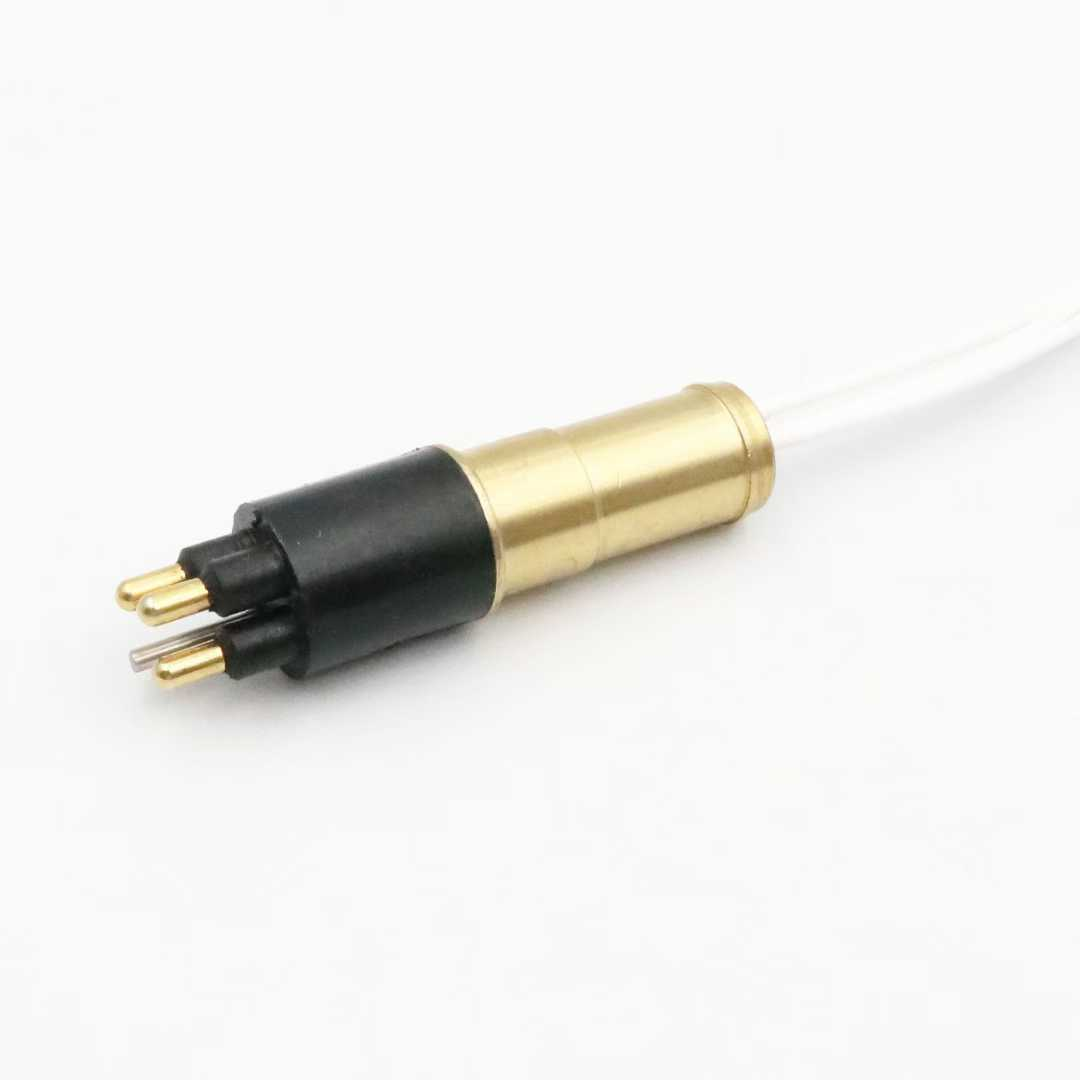
Deep sea mining represents one of the most technically demanding applications for underwater connector systems. Operating at depths exceeding 6000 meters, these connectors must withstand pressures of 600+ bar while maintaining reliable electrical and data transmission in one of Earth’s most hostile environments.
Key Findings:
- Deep sea mining connector market projected to grow from $180M (2024) to $520M (2030) at 19.2% CAGR
- 6000m+ operations require specialized pressure compensation systems beyond standard oil-filled designs
- Titanium Grade 5 (Ti-6Al-4V) remains the material of choice, but ceramic composites showing promise
- Wet-mate reliability at extreme depths remains the industry’s greatest technical challenge
- Environmental monitoring integration becoming mandatory for regulatory compliance
Chapter 1: Deep Sea Mining Overview & Connector Requirements
1.1 The Deep Sea Mining Opportunity
Deep sea mining targets three primary resource types, each with distinct connector requirements:
| Resource Type | Depth Range | Primary Materials | Estimated Reserves |
|---|---|---|---|
| Polymetallic Nodules | 4000-6000m | Manganese, Nickel, Copper, Cobalt | 21 billion tonnes (Clarion-Clipperton Zone) |
| Polymetallic Sulphides | 1000-3500m | Copper, Zinc, Gold, Silver | Limited but high-grade deposits |
| Cobalt-Rich Crusts | 800-2500m | Cobalt, Platinum, Rare Earth | 21 billion tonnes (Pacific seamounts) |
Market Drivers:
- Electric vehicle battery demand (cobalt, nickel, manganese)
- Renewable energy infrastructure (copper for wind/solar)
- Electronics manufacturing (rare earth elements)
- Supply chain diversification away from terrestrial sources
1.2 Connector System Requirements
Deep sea mining operations demand connector systems that exceed standard offshore specifications:
Pressure Requirements:
- Operating depth: 4000-6000m (typical nodules)
- Maximum depth: 6500m (hadal zone exploration)
- Pressure rating: 400-650 bar continuous
- Test pressure: 1.5x operating (safety factor)
Environmental Conditions:
- Temperature: 1-4°C (deep ocean)
- Salinity: 35 ppt (standard seawater)
- pH: 7.5-8.4 (slightly alkaline)
- Hydrogen sulfide: Present near hydrothermal vents
- Methane: Possible in seep areas
1.3 System Architecture
| Connection Point | 유형 | Function | Criticality |
|---|---|---|---|
| Umbilical Termination | Dry-mate | Surface to subsea power/data | Critical |
| Riser Connections | Wet-mate | Modular riser sections | High |
| Tool Interface | Wet-mate | Exchangeable mining tools | Critical |
| Sensor Networks | Wet-mate | Environmental monitoring | Medium |
| Power Distribution | Dry-mate | Subsea manifold to collectors | Critical |
Chapter 2: Engineering Challenges at 6000m
2.1 Pressure Effects on Connector Design
At 6000 meters depth, pressure reaches approximately 600 bar (8,700 psi). This creates multiple engineering challenges:
Material Compression:
All materials compress under extreme pressure. Different materials compress at different rates, creating potential seal failures at interfaces.
| 재료 | Bulk Modulus (GPa) | Compression at 600 bar | Suitability |
|---|---|---|---|
| Titanium Grade 5 | 110 | 0.55% | Excellent |
| 스테인리스 스틸 316L | 163 | 0.37% | Good |
| Aluminum 6061 | 75 | 0.80% | Poor |
| PEEK | 3.7 | 16.2% | Limited |
2.2 Temperature Considerations
Deep ocean temperatures remain consistently cold (1-4°C), which affects seal elasticity, lubricant viscosity, material brittleness, and creates thermal cycling stress from surface-to-depth temperature swings.
2.3 Corrosion in Deep Sea Environments
| 팩터 | Deep Sea (>4000m) | Shallow Water | Impact on Connectors |
|---|---|---|---|
| Oxygen Content | Very low | High | Reduced general corrosion |
| Hydrogen Sulfide | Present near vents | Rare | Sulfide stress cracking risk |
| Biofouling | 최소 | Severe | Less fouling at depth |
| Pressure | 400-650 bar | 1-50 bar | Accelerates certain reactions |
Chapter 3: Connector Technologies for Deep Sea Mining
3.1 Pressure-Compensated Designs
Oil-filled pressure compensation is standard for deep sea connectors. The connector housing is filled with dielectric oil, and a flexible bladder or piston compensates for pressure changes, ensuring internal pressure equals external pressure and eliminating pressure differential across seals.
Advantages:
- Reduced seal stress (no pressure differential)
- Smaller, lighter housing possible
- Proven technology (40+ years of use)
Challenges at 6000m:
- Oil compressibility becomes significant
- Bladder material must withstand extreme pressure cycling
- Temperature affects oil viscosity and bladder performance
3.2 Wet-Mate vs Dry-Mate
| 기능 | Wet-Mate | Dry-Mate |
|---|---|---|
| Connection Environment | Underwater | Surface/Dry |
| 복잡성 | Very High | Moderate |
| 비용 | $50,000-200,000+ | $5,000-20,000 |
| Reliability at 6000m | Challenging | Proven |
| Best Application | Tool exchange, subsea manifolds | Umbilical termination, permanent installs |
Chapter 4: Material Selection for 6000m Operations
4.1 Housing Materials
| 재료 | Strength (MPa) | Corrosion Resistance | Cost Factor | 최상의 대상 |
|---|---|---|---|---|
| Titanium Grade 5 | 950 | Outstanding | 5.0x | Critical applications |
| Stainless 316L | 570 | Good | 1.0x | Standard applications |
| Duplex 2205 | 620 | Excellent | 2.5x | Corrosive environments |
| Inconel 625 | 830 | Outstanding | 8.0x | Extreme conditions |
4.2 Seal Materials
Viton (FKM): Temperature range -20°C to +200°C, good chemical resistance, limited low-temperature flexibility.
Kalrez (FFKM): Temperature range -15°C to +300°C, excellent chemical resistance, very expensive.
Silicone: Temperature range -60°C to +200°C, excellent low-temperature flexibility, poor tear resistance.
Chapter 5: Testing & Qualification
5.1 Required Tests for 6000m Connectors
| Test Type | Duration | Pressure | Purpose |
|---|---|---|---|
| Static Pressure | 72 hours | 650 bar | Verify pressure integrity |
| Pressure Cycling | 500 cycles | 0-650 bar | Simulate deployment cycles |
| Thermal Cycling | 100 cycles | 650 bar | Test seal performance |
| 짝짓기 주기 | 500 cycles | Ambient | Verify contact wear |
| Salt Spray | 1000 hours | Ambient | 내식성 |
5.2 Field Testing Requirements
- Shallow water testing: 100-200m depth, 3-6 months
- Intermediate depth: 1000-2000m, 6-12 months
- Full depth testing: 4000-6000m, 12+ months
- Production validation: Actual mining conditions, 12-24 months
Chapter 6: Case Studies & Lessons Learned
6.1 Nautilus Minerals Solwara 1 Project
Depth: 1600m (Bismarck Sea)
Challenge: First commercial deep sea mining attempt
Connector Issues: Wet-mate connector failures during tool exchange
Lessons Learned:
- Wet-mate complexity underestimated
- Insufficient testing before deployment
- Need for redundant connection systems
6.2 Japan’s Deep Sea Mining Tests
Depth: 5000m+ (Pacific Ocean)
Approach: Conservative, extensive testing
Results: Successful operations with dry-mate connectors
Key Success Factors:
- Extensive pre-deployment testing
- Conservative depth ratings (1.5x safety margin)
- Titanium construction for critical components
- Redundant connection systems
Chapter 7: Future Technologies
7.1 Emerging Materials
Ceramic Composites: Higher strength-to-weight ratio than titanium, excellent corrosion resistance, currently experimental for connectors.
Advanced Polymers: PEEK composites with carbon fiber reinforcement, reduced weight, good corrosion resistance, limited to lower pressure applications.
7.2 Smart Connectors
Next-generation connectors with integrated monitoring:
- Leak detection: Integrated sensors detect water ingress
- Contact monitoring: Real-time contact resistance measurement
- Temperature sensing: Monitor operating temperature
- Pressure monitoring: Verify pressure compensation function
Chapter 8: Recommendations for Deep Sea Mining Projects
8.1 Connector Selection Criteria
- Depth rating: Minimum 1.5x maximum operating depth
- Material: Titanium for critical, 316L for non-critical
- 테스트: Full qualification testing required
- 중복성: Critical connections should have backups
- Monitoring: Integrated sensors where possible
8.2 Maintenance Strategy
| Interval | Activity | Purpose |
|---|---|---|
| Every deployment | Visual inspection | Detect obvious damage |
| Monthly | Electrical testing | Verify contact integrity |
| Quarterly | Seal inspection | Check for wear/damage |
| Annually | Full service | Replace seals, refurbish |
| 5 years | Replacement | Preventive replacement |
결론
Deep sea mining at 6000m represents the frontier of underwater connector technology. Success requires careful material selection (titanium for critical applications), conservative design (1.5x safety margins), extensive testing (laboratory + field validation), comprehensive maintenance programs, and integration of monitoring systems.
As the industry matures through 2030, we expect to see improved wet-mate reliability, smart connectors with integrated monitoring, new materials (ceramic composites), and standardization of connection interfaces.
About HYSF Subsea: HYSF specializes in underwater connectors for demanding marine applications. Our engineering team has extensive experience with deep sea projects and can provide custom solutions for mining operations.
Contact: info@hysfsubsea.com | +86 13942853869








 English
 Spanish
 Russian
 French
 German
 Korean
 Japanese
 Arabic
 Thai
Thai Danish
 Norwegian