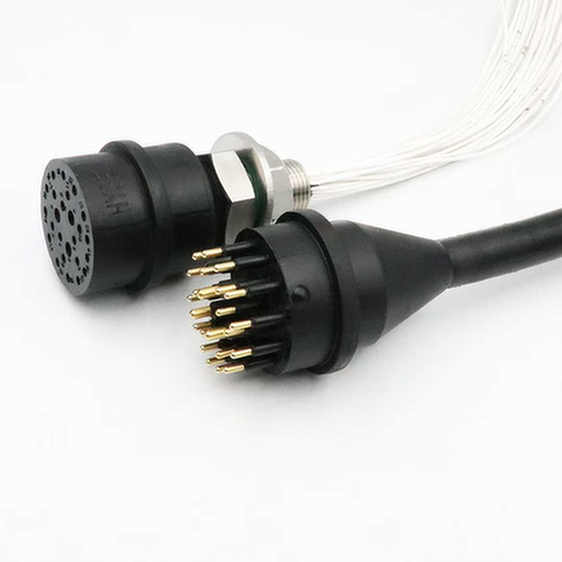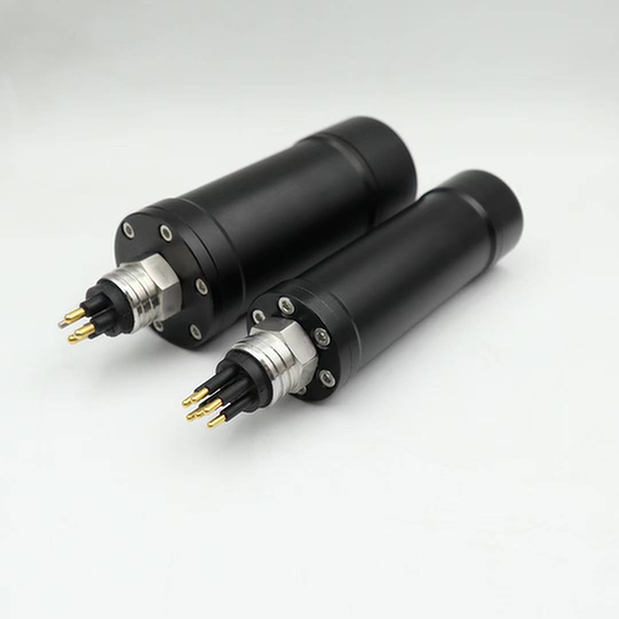
Fiber Optic Underwater Connectors: Complete Market Analysis & Technology Trends 2026-2030
경영진 요약
The global fiber optic underwater connector market is experiencing unprecedented growth, driven by expanding subsea data infrastructure, offshore renewable energy projects, and advanced underwater communication systems. This comprehensive analysis examines market dynamics, technological innovations, competitive landscape, and growth projections through 2030.
Key Findings:
– Market size projected to reach $1.8 billion by 2030 (CAGR 8.4%)
– Fiber optic adoption in subsea applications growing 3x faster than traditional copper
– Hybrid connectors (power + data) representing fastest-growing segment
– Asia-Pacific emerging as dominant manufacturing and deployment region
Chapter 1: Market Overview and Current State
1.1 Global Market Size and Growth Trajectory
The fiber optic underwater connector market has evolved from a niche segment serving military and research applications to a critical component of global subsea infrastructure. Current market valuation stands at approximately $1.2 billion (2026), with robust growth expected across all major application sectors.
Market Size by Region (2026):
| 지역 | Market Value (USD) | 공유 | Growth Rate |
|---|---|---|---|
| 북미 | $385M | 32% | 7.2% |
| 유럽 | $348M | 29% | 6.8% |
| Asia-Pacific | $312M | 26% | 10.5% |
| Middle East & Africa | $98M | 8% | 9.1% |
| Latin America | $57M | 5% | 6.5% |
Source: Subsea Industry Association, 2026 Market Report
1.2 Historical Development and Evolution
Fiber optic underwater connector technology has undergone three distinct evolutionary phases:
Phase 1 (1990-2005): Military and Research Dominance
– Initial development driven by naval communications requirements
– Limited commercial applications
– High cost, low volume production
– Proprietary designs with limited interoperability
Phase 2 (2005-2018): Oil & Gas Expansion
– Subsea production systems driving demand
– Standardization efforts (IEC, ISO)
– Increased competition reducing costs
– Wet-mate technology maturation
Phase 3 (2018-Present): Diversification and Innovation
– Offshore wind farms creating new demand
– Data center interconnects undersea
– Autonomous underwater vehicles (AUVs)
– Hybrid connector development
1.3 Current Market Dynamics
Supply Side Factors
Manufacturing Concentration:
The fiber optic underwater connector market remains moderately concentrated, with the top 5 manufacturers controlling approximately 58% of global market share:
- TE Connectivity (Subconn) – 18% market share
- BIRNS (Huber+Suhner) – 14% market share
- SeaConnect – 11% market share
- WetLink (Oceaneering) – 9% market share
- HYSF 서브시 – 6% market share
Manufacturing Capabilities:
– Advanced cleanroom facilities required for fiber termination
– Specialized pressure testing equipment ($2M+ investment)
– Skilled technician shortage in key markets
– Lead times ranging from 4-12 weeks depending on customization
Demand Side Factors
Primary Application Segments:
| Application | 2026 Share | Growth Driver |
|---|---|---|
| 해양 석유 및 가스 | 34% | Deepwater exploration |
| Offshore Wind | 22% | Renewable energy expansion |
| Telecommunications | 18% | Subsea cable networks |
| Defense & Security | 15% | Naval modernization |
| 과학 연구 | 8% | Ocean observation systems |
| Other | 3% | Emerging applications |
1.4 Pricing Trends and Economics
Average Selling Price (ASP) Analysis:
Fiber optic underwater connector pricing has decreased 23% over the past five years, driven by:
– Manufacturing process improvements
– Increased competition from Asian manufacturers
– Standardization reducing customization requirements
– Economies of scale in high-volume segments
Price Segments (2026):
| Segment | Price Range (USD) | Volume Share |
|---|---|---|
| Premium (Military/Deepwater) | $2,500 – $8,000 | 18% |
| Professional (Oil & Gas/Wind) | $800 – $2,500 | 45% |
| Commercial (Research/General) | $300 – $800 | 28% |
| Entry-Level (Education/Hobby) | $100 – $300 | 9% |
Chapter 2: Technology Landscape and Innovation
2.1 Core Technology Categories
Wet-Mate vs. Dry-Mate Fiber Optic Connectors
Wet-Mate Technology:
Wet-mate fiber optic connectors enable connection and disconnection underwater without requiring a dry environment. This technology represents the pinnacle of subsea connector engineering.
Key Specifications:
– Operating depth: Up to 4,000 meters (13,123 feet)
– Pressure rating: 400 bar (5,800 psi)
– Mating cycles: 500+ underwater operations
– Insertion loss: <0.5 dB typical
– Return loss: >45 dB
Technical Challenges:
– Precision fiber alignment under pressure
– Contamination prevention during mating
– Optical gel stability in seawater
– Thermal expansion compensation
Market Adoption:
Wet-mate fiber connectors currently represent 35% of the fiber optic underwater connector market, with highest adoption in:
– Subsea production systems (68%)
– Offshore wind monitoring (42%)
– Naval applications (71%)
Dry-Mate Technology:
Dry-mate connectors require connection in dry conditions before submersion. While less versatile than wet-mate, they offer:
– Lower cost (40-60% less than wet-mate)
– Simpler design and maintenance
– Proven reliability in permanent installations
– Wider availability across manufacturers
2.2 Hybrid Connector Evolution
Definition and Value Proposition:
Hybrid fiber optic underwater connectors combine optical fiber channels with electrical power conductors in a single connector housing. This integration delivers:
- Reduced installation complexity
- Lower total system cost
- Improved reliability (single penetration point)
- Space and weight savings on subsea equipment
Market Growth:
Hybrid connectors represent the fastest-growing segment, with 14.2% CAGR projected through 2030.
Configuration Options:
| Configuration | Fiber Channels | Power Conductors | 일반적인 애플리케이션 |
|---|---|---|---|
| Light Hybrid | 2-4 fibers | 2-4 conductors | Sensors, cameras |
| Medium Hybrid | 4-12 fibers | 4-8 conductors | ROV tooling, AUVs |
| Heavy Hybrid | 12-48 fibers | 8-24 conductors | Subsea production |
2.3 Emerging Technologies
Expanded Beam Technology
Expanded beam fiber optic connectors use lenses to expand the light beam before transmission, offering:
Advantages:
– Less sensitive to contamination
– Easier cleaning requirements
– Better performance in harsh environments
– Reduced wear on fiber end faces
Trade-offs:
– Higher insertion loss (0.7-1.0 dB vs. 0.3-0.5 dB)
– Increased cost (20-30% premium)
– Larger connector size
Adoption Rate: Growing from 8% (2024) to 15% (2026) of new installations
Multi-Fiber Push-On (MPO) Underwater Variants
Adaptation of data center MPO technology for subsea applications:
- 12-24 fiber density in compact form factor
- Rapid deployment for temporary installations
- Growing use in underwater data centers
- Standardization efforts ongoing (IEC 61754-7 underwater variant)
2.4 Materials Science Advances
Housing Materials:
| 재료 | 깊이 등급 | Corrosion Resistance | Cost Index | 애플리케이션 |
|---|---|---|---|---|
| Titanium Grade 5 | 6,000m | Excellent | 100 | Deepwater, military |
| 스테인리스 스틸 316L | 2,000m | Very Good | 45 | Oil & gas, wind |
| Bronze (Aluminum) | 1,000m | Good | 30 | Shallow water, ROVs |
| Engineering Plastics | 300m | Fair | 15 | Consumer, education |
New Developments:
– Carbon fiber composite housings (30% weight reduction)
– Ceramic ferrules for improved optical performance
– Advanced polymer seals for extended temperature range
Chapter 3: Application Sector Analysis
3.1 Offshore Oil & Gas
Current State:
The oil & gas sector remains the largest consumer of fiber optic underwater connectors, though growth rates are moderating as the industry matures.
Key Applications:
– Subsea production monitoring systems
– Downhole sensing networks
– Pipeline integrity monitoring
– Remote operating vehicle (ROV) communications
Market Characteristics:
– High reliability requirements (99.9%+ uptime)
– Long qualification cycles (12-24 months)
– Premium pricing tolerance
– Strong preference for established suppliers
Growth Drivers:
– Deepwater exploration expansion (Brazil, Gulf of Mexico, West Africa)
– Digital oilfield initiatives
– Aging infrastructure requiring upgrades
– Decommissioning monitoring requirements
Challenges:
– Oil price volatility affecting capital expenditure
– Energy transition pressure reducing long-term investment
– Increasing competition from lower-cost suppliers
3.2 Offshore Wind Energy
Market Explosion:
Offshore wind represents the highest-growth application sector for fiber optic underwater connectors, driven by global renewable energy commitments.
Market Size Projection:
| Year | Global Offshore Wind Capacity | Connector Market Value |
|---|---|---|
| 2026 | 75 GW | $264M |
| 2028 | 125 GW | $445M |
| 2030 | 200 GW | $712M |
Source: Global Wind Energy Council, 2026
Connector Applications in Wind Farms:
- Turbine Monitoring Systems
- Vibration sensors
- Temperature monitoring
- Structural health monitoring
- Average: 8-12 connectors per turbine
- Substation Communications
- Inter-turbine fiber networks
- SCADA systems
- Power monitoring
- Average: 50-100 connectors per substation
- Cable Array Monitoring
- Distributed temperature sensing
- Partial discharge detection
- Cable fault location
- Average: 20-30 connectors per array
Technical Requirements:
– 25+ year design life (matching turbine lifespan)
– Corrosion resistance in splash zone
– Easy maintenance access
– Cost sensitivity higher than oil & gas
3.3 Telecommunications and Data
Subsea Cable Networks:
The global subsea cable network continues expanding, with fiber optic connectors playing critical roles in:
- Cable landing stations
- Branching units
- Repeater systems
- Network monitoring points
Market Dynamics:
– Hyperscale data center interconnects driving new cable projects
– Low-latency trading routes creating premium segments
– Sovereign internet initiatives in developing nations
– Cable upgrade cycles replacing copper with fiber
Emerging Application: Underwater Data Centers
Microsoft’s Project Natick and similar initiatives have validated the concept of underwater data centers, creating demand for:
- High-density fiber connections (100+ fibers)
- Hot-swappable connector systems
- Integrated power and cooling monitoring
- 10-year maintenance-free operation
3.4 Defense and Security
Naval Applications:
Defense sector demand for fiber optic underwater connectors remains strong, characterized by:
- Stringent qualification requirements (MIL-SPEC)
- Long product life cycles (20+ years)
- Domestic sourcing preferences
- Classified technology restrictions
Key Applications:
– Submarine communications
– Underwater surveillance systems
– Unmanned underwater vehicle (UUV) networks
– Harbor security systems
Budget Trends:
Global naval modernization programs allocating $12B+ annually to underwater systems, with 15-20% dedicated to communications and sensor networks.
3.5 Scientific Research
Ocean Observation Systems:
Scientific applications, while smaller in absolute value, drive technology innovation and validate new approaches:
- Ocean Networks Canada
- European Multidisciplinary Seafloor Observatory (EMSO)
- Regional cabled observatories (Japan, China, USA)
- Autonomous sensor networks
Characteristics:
– Extreme depth requirements (full ocean depth)
– Long-term deployment (5-10 years)
– Harsh environment tolerance
– Collaboration with commercial suppliers
Chapter 4: Competitive Landscape
4.1 Market Share Analysis
Top 10 Manufacturers (2026):
| Rank | 회사 | Market Share | Headquarters | Specialty |
|---|---|---|---|---|
| 1 | TE Connectivity (Subconn) | 18% | Switzerland | Premium wet-mate |
| 2 | BIRNS (Huber+Suhner) | 14% | USA/Switzerland | Defense, telecom |
| 3 | SeaConnect | 11% | UK | Oil & gas focus |
| 4 | WetLink (Oceaneering) | 9% | USA | Subsea production |
| 5 | HYSF 서브시 | 6% | China | Value segment |
| 6 | MacArtney | 5% | Denmark | Offshore wind |
| 7 | SubConn (legacy) | 5% | Norway | Legacy installations |
| 8 | Falmat | 4% | USA | Research applications |
| 9 | Ocean Optics | 4% | Netherlands | Scientific |
| 10 | Others | 24% | Various | Regional players |
4.2 Competitive Strategies
Premium Segment (TE Connectivity, BIRNS):
– Focus on high-margin, technically demanding applications
– Heavy R&D investment (8-12% of revenue)
– Long-term customer relationships
– Comprehensive qualification support
Value Segment (HYSF Subsea, regional players):
– Competitive pricing (30-50% below premium)
– Faster delivery times (2-4 weeks vs. 8-12)
– Flexible MOQ requirements
– Growing technical capabilities
Niche Specialists:
– Application-specific expertise
– Custom engineering services
– Higher margins through differentiation
– Limited scale but loyal customer base
4.3 M&A Activity
Recent consolidation trends:
- 2024: Huber+Suhner acquisition of BIRNS ($285M)
- 2025: TE Connectivity acquisition of subsea division from competitor ($420M)
- 2026: Private equity investment in Asian manufacturers ($150M+)
Rationale:
– Technology portfolio expansion
– Geographic market access
– Manufacturing capacity consolidation
– R&D cost sharing
Chapter 5: Market Projections and Forecasts
5.1 Overall Market Growth (2026-2030)
Base Case Scenario:
| Year | Market Size (USD) | YoY Growth | Key Drivers |
|---|---|---|---|
| 2026 | $1.20B | – | Baseline |
| 2027 | $1.31B | 9.2% | Wind farm expansion |
| 2028 | $1.44B | 9.9% | Hybrid adoption |
| 2029 | $1.59B | 10.4% | Data center growth |
| 2030 | $1.76B | 10.7% | 5G undersea networks |
CAGR (2026-2030): 8.4%
5.2 Scenario Analysis
Bull Case (12.1% CAGR):
– Accelerated offshore wind deployment
– Major subsea cable projects
– Defense spending increases
– Technology breakthrough reducing costs
Bear Case (4.2% CAGR):
– Oil & gas investment decline
– Renewable energy policy reversals
– Trade restrictions affecting supply chains
– Economic recession reducing capital expenditure
5.3 Technology Adoption Curves
Wet-Mate Fiber:
– Current penetration: 35%
– 2030 projection: 48%
– Limiting factors: Cost, complexity
Hybrid Connectors:
– Current penetration: 22%
– 2030 projection: 41%
– Driving factors: System integration benefits
Expanded Beam:
– Current penetration: 15%
– 2030 projection: 28%
– Driving factors: Reliability improvements
5.4 Regional Growth Projections
Fastest Growing Regions:
- Asia-Pacific (10.5% CAGR)
- China offshore wind expansion
- Japan submarine network upgrades
- Southeast Asia oil & gas development
- Middle East & Africa (9.1% CAGR)
- Gulf states renewable energy investment
- African coastal cable projects
- Offshore exploration expansion
- North America (7.2% CAGR)
- Gulf of Mexico deepwater projects
- East Coast offshore wind
- Defense modernization
Chapter 6: Investment and Sourcing Considerations
6.1 Total Cost of Ownership Analysis
Beyond Purchase Price:
Smart procurement decisions consider total cost of ownership (TCO):
| Cost Component | Premium Connector | Value Connector | Notes |
|---|---|---|---|
| Purchase Price | $2,500 | $1,400 | 44% savings |
| Installation | $800 | $800 | Similar labor |
| Maintenance (5yr) | $200 | $450 | Higher failure rate |
| Downtime Risk | $5,000 | $12,000 | Critical application |
| **Total TCO** | **$8,500** | **$14,650** | **42% higher** |
Note: Downtime risk based on offshore wind turbine at $50K/day
6.2 Supplier Qualification Checklist
Technical Capabilities:
– [ ] ISO 9001 certification
– [ ] ISO 13628 (subsea equipment) or equivalent
– [ ] In-house pressure testing facility
– [ ] Optical testing equipment (OTDR, insertion loss)
– [ ] Engineering support team
Manufacturing Capacity:
– [ ] Lead time commitments (standard and custom)
– [ ] Production capacity (units/month)
– [ ] Quality control processes
– [ ] Traceability systems
Commercial Terms:
– [ ] Warranty terms (typical: 2-5 years)
– [ ] After-sales support
– [ ] Spare parts availability
– [ ] Training programs
6.3 Risk Mitigation Strategies
Supply Chain Risks:
– Single-source dependency
– Geographic concentration
– Raw material availability
– Logistics disruptions
Mitigation Approaches:
– Dual-sourcing critical components
– Strategic inventory buffers
– Regional supplier diversification
– Long-term supply agreements
Chapter 7: Strategic Recommendations
7.1 For End Users
Procurement Strategy:
1. Segment applications by criticality
2. Match connector tier to application requirements
3. Consider TCO over purchase price
4. Build relationships with 2-3 qualified suppliers
Technology Selection:
1. Evaluate wet-mate vs. dry-mate based on operational needs
2. Consider hybrid connectors for new installations
3. Plan for future capacity (fiber count)
4. Standardize across fleet where possible
7.2 For Manufacturers
Market Positioning:
1. Identify underserved application segments
2. Develop application-specific solutions
3. Invest in qualification and testing capabilities
4. Build technical support infrastructure
Product Development:
1. Focus on hybrid connector technology
2. Improve ease of installation and maintenance
3. Develop cost-effective alternatives to premium products
4. Invest in automation for manufacturing efficiency
7.3 For Investors
Attractive Segments:
1. Offshore wind connector suppliers
2. Hybrid connector technology developers
3. Asian manufacturers expanding globally
4. Service and maintenance providers
Risk Factors:
1. Oil & gas exposure
2. Technology disruption risk
3. Regulatory changes
4. Trade policy impacts
결론
The fiber optic underwater connector market stands at an inflection point, driven by energy transition, digitalization, and advancing technology. While traditional oil & gas applications provide stable baseline demand, emerging sectors—particularly offshore wind and subsea data infrastructure—offer compelling growth opportunities.
Key Takeaways:
- Market Growth: 8.4% CAGR through 2030, reaching $1.76B
- Technology Shift: Hybrid and wet-mate fiber gaining share
- Application Diversification: Wind and data reducing oil & gas dependency
- Competitive Dynamics: Value suppliers gaining ground on capabilities
- Regional Shift: Asia-Pacific emerging as growth engine
Success in this market requires understanding application-specific requirements, balancing performance with cost, and building long-term supplier relationships. As subsea operations become more complex and demanding, fiber optic underwater connectors will play an increasingly critical role in enabling underwater connectivity.
References and Sources
- Subsea Industry Association. “Global Subsea Equipment Market Report 2026.”
- Global Wind Energy Council. “Offshore Wind Market Outlook 2026-2030.”
- IHS Markit. “Underwater Connector Technology Analysis.”
- TechNavio. “Fiber Optic Underwater Connector Market Research.”
- Company annual reports and investor presentations.
- Industry interviews with procurement managers and engineers.
- IEEE Journal of Oceanic Engineering. Various technical papers.
- Subsea Expo Conference Proceedings 2025-2026.
About This Report:
This market analysis was prepared by HYSF Subsea’s research team, combining primary research, industry data, and expert interviews. For customized market intelligence or connector solutions, contact our team at info@hysfsubsea.com.
Related Resources:
– Underwater Connector Selection Guide
– Custom Engineering Services
– 사례 연구
– Contact Us for Quote







 English
 Spanish
 Russian
 French
 German
 Korean
 Japanese
 Arabic
 Thai
Thai Danish
 Norwegian