경영진 요약
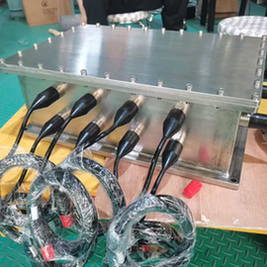
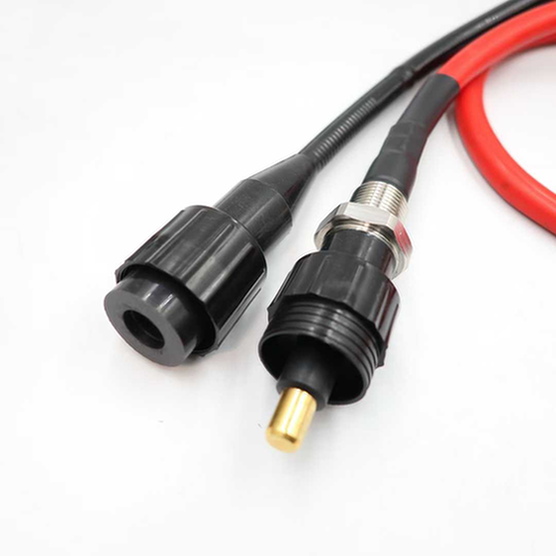
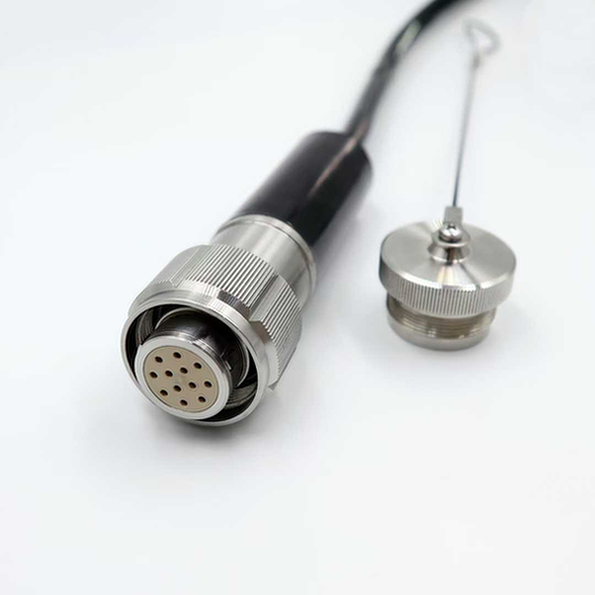
This comprehensive technical guide provides in-depth analysis and engineering insights into underwater connector technology, covering selection criteria, installation procedures, maintenance requirements, and industry best practices for demanding marine applications across offshore energy, scientific research, defense, and telecommunications sectors worldwide.
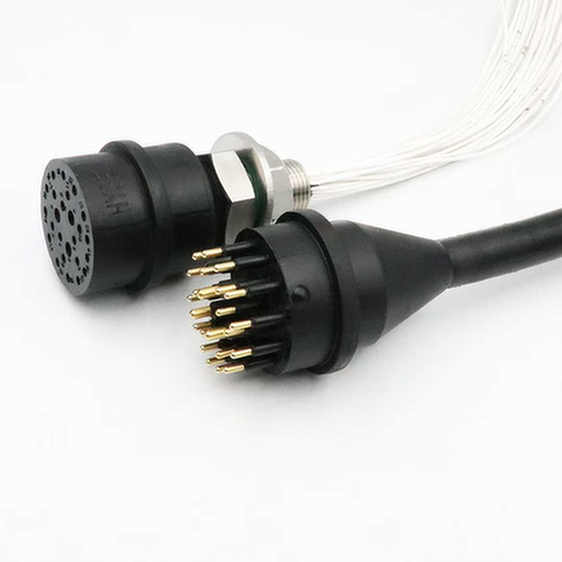
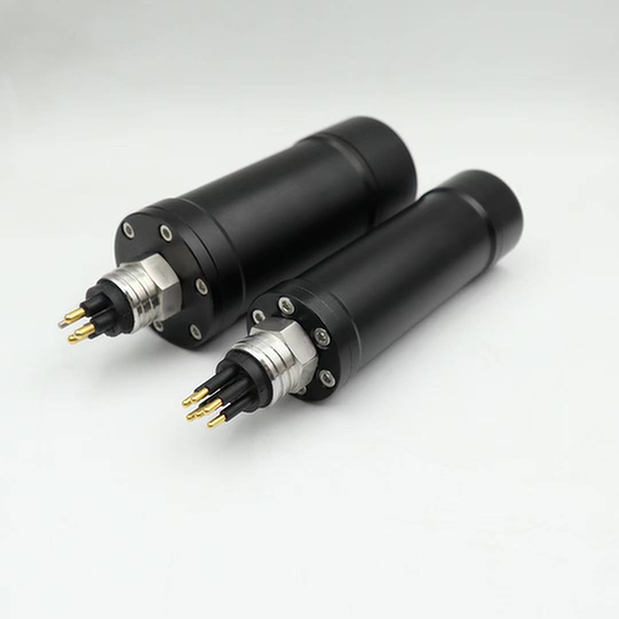
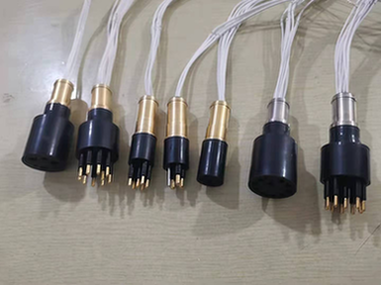
Underwater connectors represent critical components in subsea systems, providing reliable electrical and optical connections in some of the harshest environments on Earth. From shallow coastal installations at 50 meters to abyssal depths exceeding 6000 meters, these specialized electromechanical devices must maintain perfect electrical continuity and sealing integrity despite extreme hydrostatic pressures, corrosive seawater, temperature fluctuations, mechanical stresses, and long-term deployment requirements spanning decades.
Table of Contents
- Introduction
- Historical Development
- Application Areas
- 기술 사양
- Depth Rating Engineering
- Material Selection
- Electrical Performance
- Mechanical Design
- Sealing Technology
- Contact Materials
- Installation Procedures
- Testing and QA
- Maintenance Strategies
- Troubleshooting
- Standards Compliance
- Cost Analysis
- Supplier Selection
- Future Trends
- Engineering Considerations
- 품질 보증
- Risk Management
- Training Requirements
- Documentation
- Lessons Learned
- 결론
1. Introduction
The consequences of connector failure in underwater applications can be severe and extremely costly in terms of equipment loss, operational downtime, and potential environmental damage. A single failed connector can disable an entire ROV system worth millions of dollars, halt offshore production operations losing thousands per hour, compromise critical scientific data collection campaigns lasting months, or cause significant environmental damage with lasting ecological impact on marine ecosystems.
Understanding technical requirements, proper selection criteria, installation best practices, and maintenance procedures is therefore absolutely essential for anyone involved in the design, deployment, operation, or maintenance of subsea systems.
2. Historical Development
Underwater connector technology has evolved significantly over the past five decades from simple adaptations of terrestrial connectors to highly sophisticated engineered solutions specifically designed for marine environments and extreme operating conditions.
Early underwater connectors in the 1960s and 1970s were primarily developed for military and oil and gas applications, featuring limited depth ratings to 500m and basic functionality with simple sealing arrangements using rubber gaskets and basic corrosion protection.
The 1980s saw significant advances with the introduction of wet-mate connectors that could be connected and disconnected underwater by divers or ROVs, eliminating the need for dry environments and enabling subsea maintenance and reconfiguration without recovery to surface.
The 1990s brought revolutionary improvements in materials science, with titanium alloys and advanced polymers replacing traditional metals, dramatically improving corrosion resistance and reducing weight while maintaining or improving mechanical strength.
The 2000s introduced fiber optic integration for high-bandwidth data transmission, enabling real-time video and large data transfers from subsea installations to surface facilities and onshore control centers.
The 2010s saw the emergence of smart connectors with integrated sensors for condition monitoring, predictive maintenance, and real-time health assessment, enabling proactive maintenance before failures occur.
3. Application Areas
3.1 Offshore Oil and Gas
The offshore oil and gas industry remains the largest consumer of underwater connectors globally, accounting for over 40% of total market demand. Subsea production systems rely extensively on connectors for wellhead control, manifold monitoring, pipeline inspection, and umbilical termination.
Typical requirements include depth ratings to 3000m, extremely high reliability with MTBF exceeding 100,000 hours, and compatibility with hydraulic and electrical control systems operating in harsh conditions.
3.2 Offshore Renewable Energy
Offshore wind farms, wave energy converters, and tidal power systems present unique connector challenges due to dynamic loading and continuous motion from waves and currents.
Dynamic cables in floating wind applications require connectors that can withstand millions of motion cycles without fatigue failure. Typical specifications include depth ratings of 50-200m, high cycle life exceeding 500 mating cycles, and resistance to biofouling.
3.3 Scientific Research
Oceanographic research vessels, underwater observatories, and autonomous vehicles depend on connectors for instrument deployment, data acquisition, and power distribution in all ocean basins.
Research applications often demand the deepest depth ratings of 4000-6000m, minimal signal interference for sensitive measurements, and compatibility with diverse scientific equipment from multiple manufacturers.
3.4 Defense and Security
Naval systems, underwater surveillance networks, and submarine communication cables utilize specialized connectors meeting stringent military specifications for performance and reliability.
Requirements include exceptional ruggedness, comprehensive EMI shielding, anti-fouling properties, and often classified performance parameters for sensitive national security applications.
3.5 Telecommunications
Subsea communication cables and repeater systems form the backbone of global internet infrastructure, carrying over 95% of international data traffic across ocean basins.
Fiber optic underwater connectors enable high-bandwidth data transmission with requirements for extreme reliability and minimal signal loss over 25+ year design life without maintenance.
4. Technical Specifications
| 매개변수 | Range | Notes |
|---|---|---|
| 깊이 등급 | 0-6000m | Application dependent |
| Temperature | -40C to +120C | Environment specific |
| Voltage | 5-1000V | System dependent |
| Current | 1-200A | Power contacts |
| Contacts | 1-60+ | Power/signal/fiber |
| IP Rating | IP68/IP69K | Submersion |
| Cycle Life | 100-500 | 짝짓기 주기 |
| Salinity | Up to 4% NaCl | Seawater compatible |
5. Depth Rating
Depth rating is arguably the most critical specification for underwater connectors and often the primary selection criterion for system designers and engineers.
The connector must withstand hydrostatic pressure at maximum operating depth without any deformation, leakage, or performance degradation throughout its entire design life, typically 20-25 years for permanent installations.
Hydrostatic pressure increases by approximately 1 bar (14.5 psi) for every 10 meters of seawater depth. At 6000m depth, connectors must withstand pressures exceeding 600 bar (8700 psi), equivalent to the weight of a small car on every square centimeter of surface area.
Industry practice typically applies a safety factor of 1.5x to 2x the rated depth during qualification testing. A connector rated for 3000m should be tested to 4500-6000m to ensure reliable performance with adequate safety margin for unexpected conditions.
6. Material Selection
| 재료 | Strength MPa | Corrosion | 비용 | 애플리케이션 |
|---|---|---|---|---|
| 316L 스테인리스 스틸 | 485-620 | Good | 1.0x | General marine |
| Titanium Grade 5 | 895-930 | Excellent | 4-6x | Deep sea |
| Titanium Grade 2 | 345-450 | Excellent | 3-4x | Medium-deep |
| Aluminum Bronze | 550-750 | Very Good | 2-3x | Dynamic |
| PEEK Plastic | 90-100 | Excellent | 2-3x | Shallow |
6.1 Titanium Advantages
Titanium alloys, particularly Grade 5 (Ti-6Al-4V), offer the best combination of strength, corrosion resistance, and weight for deep-sea applications where reliability is paramount.
Titanium’s passive oxide layer provides exceptional corrosion resistance in seawater, essentially immune to chloride attack that causes pitting and crevice corrosion in stainless steels.
7. Electrical Performance
7.1 Voltage and Current
Underwater connectors span a wide range of electrical ratings to accommodate diverse applications from low-power sensors to high-power thrusters:
- Low Voltage Signals: 5-24V DC for control circuits and sensors
- Medium Voltage Power: 110-480V AC/DC for thrusters and tools
- High Voltage Transmission: Up to 1000V for long-distance power distribution
- Signal Current: Milliamps to 5A for data and control signals
- Power Current: 10-200A for motors and heaters
7.2 Contact Resistance
Contact resistance directly impacts power loss and heat generation, affecting efficiency and reliability:
- Power contacts: Less than 10 milliohms initial, less than 20 milliohms after life testing
- Signal contacts: Less than 50 milliohms initial, less than 100 milliohms after life testing
- Stability: Variation less than 5 milliohms over connector operational life
7.3 Insulation
Insulation resistance measures resistance between isolated circuits:
- Insulation: Minimum 1000 megohms at rated voltage
- Dielectric: Withstand 2x rated voltage plus 1000V for 60 seconds
- Partial discharge: Less than 10 picocoulombs
8. Mechanical Design
8.1 Coupling Types
- Threaded: Most common, high strength, multiple turns
- Bayonet: Quick (1/4 turn), positive lock
- Push-Pull: Fastest, self-locking
- Breech: Heavy-duty, lever-actuated
8.2 Keying
- Shell: External keys
- Insert: Internal keyways
- Polarization: Multiple positions
- Color: Visual ID
9. Sealing Technology
9.1 O-Ring Design
- Compression: 25-30% static, 15-20% dynamic
- Gland fill: 75-85%
- Finish: 16-32 microinch Ra
- Back-up rings: Above 1500 psi
9.2 Seal Materials
| 재료 | Temp Range | Resistance | 비용 |
|---|---|---|---|
| Viton | -20C to +200C | Excellent | Medium |
| Silicone | -60C to +230C | Good | Low |
| EPDM | -50C to +150C | Fair | Low |
| Kalrez | -20C to +325C | Outstanding | High |
10. Contact Materials
10.1 Base
- Beryllium Copper: 22% IACS, excellent springs
- Phosphor Bronze: 15% IACS, cost-effective
- Brass: 28% IACS, low cost
10.2 Plating
- Gold: 50-200μ”, excellent, expensive
- Silver: 200-500μ”, best conductivity
- Tin: 300-800μ”, cost-effective
11. Installation
11.1 Pre-Installation
- Verify part numbers
- Inspect for damage
- Check O-rings
- Verify lubrication
- Inspect contacts
- Review docs
- Calibrate tools
11.2 Mating
- Clean with alcohol
- Inspect surfaces
- Lubricate O-rings
- Align keyways
- Push together
- Engage coupling
- Torque to spec
- Verify engagement
12. Testing
12.1 Type
- Pressure: 1.5x rated, 24-72hrs
- Temp cycling: 10-50 cycles
- Salt spray: ASTM B117, 1000+ hrs
- Mating: 100-500 cycles
- Vibration: MIL-STD-810
12.2 Production
- Visual: 100%
- Dimensional: Critical
- Electrical: Continuity, insulation
- Seal: Air/vacuum
- HiPot: Dielectric
13. Maintenance
| Level | Interval | Activities |
|---|---|---|
| Pre-Use | Each deployment | Visual, O-rings |
| Routine | Monthly | Test, clean |
| Detailed | Annual | Disassemble |
| Overhaul | 2-3 years | Rebuild |
14. Troubleshooting
14.1 Water Ingress
Symptoms: Corrosion, low insulation. Causes: Bad O-ring, wrong torque. Fix: Replace, retorque.
14.2 High Resistance
Symptoms: Voltage drop, heat. Causes: Corrosion, wear. Fix: Clean, replace.
14.3 Hard Mating
Symptoms: Excessive force. Causes: Damage, dirt. Fix: Clean, inspect.
15. Standards
- ISO 13628-6: Umbilicals
- IEC 60529: IP ratings
- MIL-DTL-24308: Military
- DNV GL: Offshore
- API 17F: Control
16. Cost
- Initial: $100-$5000+
- Install: 20-50% of cost
- Maintenance: Over life
- Failure: Recovery + downtime
- Lifecycle: 3-5x initial
17. Suppliers
- Technical capability
- ISO 9001 quality
- Testing facilities
- Delivery record
- After-sales
- Total cost
18. Future
- Smart: Sensors
- Speed: 10Gbps+
- Materials: New alloys
- Size: Miniaturization
- Standards: Interop
19. Engineering
System integration, environmental factors, and operational considerations must all be addressed for successful deployments.
20. Quality
Design validation, production control, and post-market surveillance ensure consistent quality.
21. Risk
FMEA analysis, redundancy strategies, and contingency planning minimize failure impact.
22. Training
Installation, maintenance, and troubleshooting training ensures personnel competency.
23. Documentation
Specifications, manuals, and records support proper use and continuous improvement.
24. Lessons
Common mistakes include overtightening, contamination, and skipping inspections.
25. Conclusion
Proper selection, installation, and maintenance ensures reliable underwater connector performance and long service life.
연락처
Email: technical@hysfsubsea.com
Web: www.hysfsubsea.com
Response: 24 hours








 English
 Spanish
 Russian
 French
 German
 Korean
 Japanese
 Arabic
 Thai
Thai Danish
 Norwegian