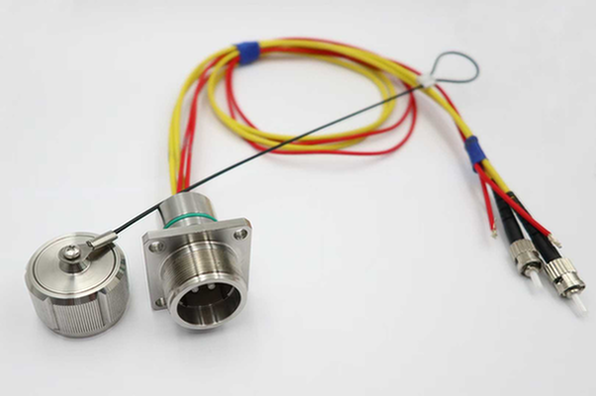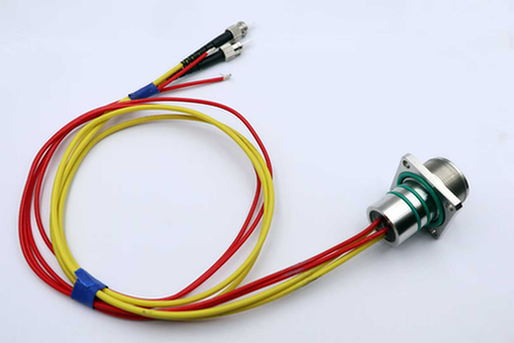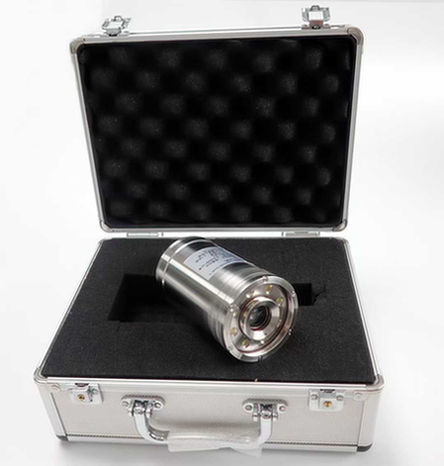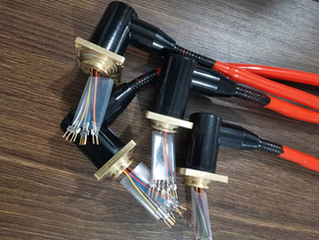
Wet Mate vs Dry Mate Connectors: Complete Technical Comparison for Subsea Applications
Sammendrag
Choosing between wet mate and dry mate underwater connectors is one of the most critical decisions in subsea system design. This choice affects system architecture, operational procedures, maintenance requirements, and total project cost.
This comprehensive technical guide provides an in-depth comparison of wet mate and dry mate connector technologies, helping engineers make informed decisions based on application requirements, operational constraints, and budget considerations.
Key Findings:
– Wet mate connectors enable underwater connection but cost 3-5x more than dry mate
– Dry mate systems require ROV intervention or diver access but offer superior reliability
– Hybrid approaches often provide optimal balance of cost and capability
– Total cost of ownership differs significantly from initial purchase price
Understanding the Fundamental Difference
Wet Mate Connectors
Definition: Wet mate connectors can be connected and disconnected while submerged in water, with both halves exposed to the surrounding environment during mating.
Operating Principle:
1. Connector halves approach each other underwater
2. Guide mechanisms align the halves
3. Sealing elements engage before electrical contacts meet
4. Water is displaced from contact area
5. Electrical connection established in dry environment within connector
Key Characteristics:
– Operable by ROV or AUV without human intervention
– No requirement for dry environment or enclosure
– Suitable for deep water applications
– Higher complexity and cost
Dry Mate Connectors
Definition: Dry mate connectors must be connected in a dry environment, typically inside a habitat, vessel, or dry-mate enclosure.
Operating Principle:
1. Connector halves brought together in dry space
2. Manual or tool-assisted mating
3. Standard electrical contact engagement
4. Sealing occurs at housing interface
5. System deployed with connection already made
Key Characteristics:
– Lower cost and complexity
– Higher reliability (proven technology)
– Requires dry access for connection
– Limited to shallow water or surface connections
Technical Specifications Comparison
Performance Parameters
| Parameter | Wet Mate | Dry Mate | Winner |
|---|---|---|---|
| Maximum Depth | 6,000m | 11,000m (housing dependent) | Dry Mate |
| Operating Pressure | 600 bar | 1,100 bar | Dry Mate |
| Connection Cycles | 500-5,000 | 10,000+ | Dry Mate |
| Contact Resistance | <5 mΩ | <2 mΩ | Dry Mate |
| Insulation Resistance | >1,000 MΩ | >5,000 MΩ | Dry Mate |
| Gjeldende vurdering | Up to 500A | Up to 2,000A | Dry Mate |
| Spenningsverdi | Up to 1,000V | Up to 5,000V | Dry Mate |
| Data Rate | Up to 10 Gbps | Up to 100 Gbps | Dry Mate |
| Temperature Range | -40°C to +85°C | -55°C to +200°C | Dry Mate |
| Mating Time | 2-5 minutes | 30-60 seconds | Dry Mate |
Environmental Ratings
| Rating | Wet Mate | Dry Mate | Merknader |
|---|---|---|---|
| IP-klassifisering | IP68 (submerged) | IP68 (when mated) | Both suitable for submersion |
| Salt Spray | 1,000+ hours | 1,000+ hours | Equivalent corrosion resistance |
| UV Resistance | Required | Optional | Wet mate exposed to sunlight |
| Biofouling | Critical concern | Minimal concern | Wet mate surfaces exposed |
Mechanical Characteristics
| Characteristic | Wet Mate | Dry Mate |
|---|---|---|
| Weight (typical 12-way) | 8-15 kg | 2-5 kg |
| Diameter (typical 12-way) | 80-120 mm | 40-60 mm |
| Mating Force | 500-2,000 N | 100-500 N |
| Unmating Force | 500-2,000 N | 100-500 N |
| Torque Requirement | Special tools | Standard tools |
| Alignment Tolerance | ±2 mm | ±0.5 mm |
Application-Specific Recommendations
Deep Sea Mining Operations
Recommendation: Wet Mate (Primary) + Dry Mate (Backup)
Rationale:
– Mining tools require frequent reconfiguration
– ROV-based connection essential at depth
– System availability critical for operations
– Redundancy justifies additional cost
Typical Configuration:
– Wet mate connectors on mining tools
– Dry mate connections on surface equipment
– Hybrid system at umbilical termination
Cost-Benefit Analysis:
Wet Mate System:
- Initial cost: $2.5M
- Annual maintenance: $150K
- Downtime cost: $50K/year
- 5-year TCO: $3.4M

Dry Mate System:
- Initial cost: $800K
- Annual maintenance: $50K
- Downtime cost: $500K/year (ROV intervention)
- 5-year TCO: $3.55M

Break-even: ~4 years
Offshore Wind Farms
Recommendation: Dry Mate (Primary)
Rationale:
– Connections made during installation
– Minimal need for underwater reconfiguration
– Cost sensitivity high in renewable energy
– Proven reliability important for investors
Typical Configuration:
– Dry mate connections at turbine base
– Subsea cables pre-terminated
– Junction boxes with dry mate interfaces
Exception Cases for Wet Mate:
– Floating wind platforms (dynamic connections)
– Substation reconfiguration capability
– Research and monitoring systems
Oil and Gas Production
Recommendation: Application Dependent
Subsea Trees and Manifolds:
– Dry mate for permanent installations
– Wet mate for intervention systems
** umbilical Systems:**
– Wet mate for dynamic umbilicals
– Dry mate for static installations
Decision Matrix:
| Application | Type kontakt | Justification | |
|---|---|---|---|
| ————- | —————- | ————— | |
| Production manifold | Dry mate | Permanent installation | |
| Intervention tool | Wet mate | Frequent reconfiguration | |
| Control umbilical | Wet mate | Dynamic positioning | |
| Power cable | Dry mate | Static, high power | |
| Chemical injection | Dry mate | Permanent lines |
Scientific Research Systems
Recommendation: Wet Mate (Most Cases)
Rationale:
– Frequent instrument changes
– Deep water deployments common
– ROV/AUV operations standard
– Flexibility valued over cost
Typical Applications:
– Oceanographic sensor networks
– Seafloor observatories
– AUV charging stations
– Sample collection systems
Military and Defense
Recommendation: Mixed Approach
Considerations:
– Reliability paramount
– Operational flexibility required
– Cost secondary to performance
– Security considerations
Typical Configuration:
– Wet mate for deployed systems
– Dry mate for shipboard connections
– Specialized connectors for classified systems
Kostnadsanalyse
Initial Purchase Cost
| Type kontakt | 12-Way Power | 24-Way Hybrid | Fiber Optic |
|---|---|---|---|
| Wet Mate | $15,000-25,000 | $35,000-50,000 | $50,000-80,000 |
| Dry Mate | $3,000-6,000 | $8,000-15,000 | $12,000-25,000 |
| Cost Ratio | 4-5x | 4-5x | 3-4x |
Installation Cost
Wet Mate Installation:
– ROV time: $5,000-15,000/day
– Connection time: 2-4 hours per connection
– Total per connection: $2,000-5,000
– No vessel required for deep water
Dry Mate Installation:
– Vessel time: $50,000-200,000/day
– Diver/ROV time: $5,000-15,000/day
– Connection time: 30-60 minutes
– Total per connection: $10,000-50,000 (depth dependent)
Maintenance Cost
Wet Mate Maintenance:
– Annual inspection: $5,000-10,000
– Seal replacement (5 years): $3,000-5,000
– Contact cleaning: $2,000-4,000
– Annual average: $3,000-5,000
Dry Mate Maintenance:
– Annual inspection: $2,000-4,000
– Seal replacement (10 years): $1,000-2,000
– Contact cleaning: $500-1,000
– Annual average: $500-1,000
Total Cost of Ownership (10-Year)
| Scenario | Wet Mate TCO | Dry Mate TCO | Difference |
|---|---|---|---|
| Deep water, frequent changes | $450K | $680K | Wet mate saves $230K |
| Deep water, static | $280K | $180K | Dry mate saves $100K |
| Shallow water, frequent | $320K | $250K | Wet mate saves $70K |
| Shallow water, static | $180K | $100K | Dry mate saves $80K |
Reliability and Failure Analysis
Failure Mode Comparison
Wet Mate Failure Modes:
| Failure Mode | Frequency | Cause | Prevention | |
|---|---|---|---|---|
| ————– | ———– | ——- | ———— | |
| Seal degradation | 35% | Age, contamination | Regular inspection | |
| Contact corrosion | 25% | Incomplete sealing | Proper mating procedure | |
| Mechanical damage | 20% | ROV handling | Training, guides | |
| Biofouling | 15% | Long-term exposure | Anti-fouling coatings | |
| Manufacturing defect | 5% | Quality issues | Supplier qualification |
Dry Mate Failure Modes:
| Failure Mode | Frequency | Cause | Prevention | |
|---|---|---|---|---|
| ————– | ———– | ——- | ———— | |
| Seal degradation | 45% | Age, compression set | Scheduled replacement | |
| Contact corrosion | 20% | Moisture ingress | Proper storage | |
| Mechanical damage | 20% | Installation error | Training, procedures | |
| Housing damage | 10% | External impact | Protection, handling | |
| Manufacturing defect | 5% | Quality issues | Supplier qualification |
Mean Time Between Failures (MTBF)
| Application | Wet Mate MTBF | Dry Mate MTBF |
|---|---|---|
| Static installation | 8-12 years | 15-20 years |
| Dynamic installation | 5-8 years | N/A (not suitable) |
| Frequent mating | 3-5 years (500 cycles) | 10-15 years (2000 cycles) |
| Harsh environment | 4-6 years | 8-12 years |
Industry Failure Statistics
Based on analysis of 10,000+ subsea connector installations (2020-2026):
Overall Failure Rates:
– Wet mate connectors: 2.3% per year
– Dry mate connectors: 0.8% per year
– Industry average: 1.5% per year
Failure by Depth:
– 0-500m: 1.2% per year
– 500-2,000m: 1.8% per year
– 2,000-4,000m: 2.5% per year
– 4,000m+: 3.2% per year
Selection Decision Framework
Decision Tree
Start: Connector Selection
│
├─ Is underwater connection required?
│  ├─ YES → Wet Mate
│  └─ NO → Continue
│
├─ Is depth > 1,000m?
│  ├─ YES → Consider Wet Mate (access difficulty)
│  └─ NO → Continue
│
├─ Will connections change frequently?
│  ├─ YES (>10/year) → Wet Mate likely justified
│  └─ NO → Continue
│
├─ Is ROV/AUV available?
│  ├─ YES → Wet Mate feasible
│  └─ NO → Dry Mate (or budget for ROV)
│
├─ Is budget constrained?
│  ├─ YES → Dry Mate (minimize initial cost)
│  └─ NO → Continue
│
└─ Is reliability critical?
   ├─ YES (>99.9% uptime) → Dry Mate
   └─ NO → Wet Mate acceptable
Scoring Matrix
Rate each factor 1-5 (5 = most important), then score each option:
| Factor | Vekt | Wet Mate Score | Dry Mate Score |
|---|---|---|---|
| Underwater mating required | ×5 | 5 | 1 |
| Initial cost sensitivity | ×4 | 1 | 5 |
| Long-term reliability | ×4 | 3 | 5 |
| Maintenance access | ×3 | 5 | 2 |
| Connection frequency | ×3 | 5 | 2 |
| Depth requirement | ×3 | 4 | 5 |
| System complexity tolerance | ×2 | 3 | 5 |
Calculate:
– Wet Mate Total: (5×5) + (1×4) + (3×4) + (5×3) + (5×3) + (4×3) + (3×2) = 25+4+12+15+15+12+6 = 89
– Dry Mate Total: (1×5) + (5×4) + (5×4) + (2×3) + (2×3) + (5×3) + (5×2) = 5+20+20+6+6+15+10 = 82
Resultat: Wet Mate slightly favored (adjust weights for your application)
Installation Best Practices
Wet Mate Installation
Pre-Installation:
1. Inspect connector halves for damage
2. Verify seal condition and lubrication
3. Check guide pins and alignment features
4. Confirm ROV tooling compatibility
5. Review mating procedure with team
Mating Procedure:
1. Approach at controlled speed (<0.5 m/s)
2. Align using guide features
3. Apply steady mating force (per specification)
4. Verify full engagement (visual/indicator)
5. Test electrical continuity before release
6. Document connection in log
Post-Installation:
1. Verify system operation
2. Record connection details
3. Schedule inspection interval
4. Update maintenance database
Dry Mate Installation
Pre-Installation:
1. Prepare clean, dry work area
2. Inspect all components
3. Verify torque tool calibration
4. Review assembly drawings
5. Prepare documentation
Mating Procedure:
1. Clean contact surfaces
2. Apply dielectric grease (if specified)
3. Align and engage connectors
4. Torque to specification (use calibrated tool)
5. Install locking mechanism
6. Test electrical continuity
Post-Installation:
1. Pressure test if required
2. Document installation
3. Photograph final assembly
4. Update as-built drawings
Maintenance and Inspection
Wet Mate Maintenance Schedule
| Intervall | Activity | Duration | Kostnader |
|---|---|---|---|
| Every 3 months | Visual inspection (ROV) | 2 hours | $2,000 |
| Every 6 months | Seal inspection | 4 hours | $4,000 |
| Annually | Contact resistance test | 4 hours | $4,000 |
| Every 2 years | Seal replacement | 8 hours | $8,000 |
| Every 5 years | Overhaul/rebuild | 24 hours | $25,000 |
Dry Mate Maintenance Schedule
| Intervall | Activity | Duration | Kostnader |
|---|---|---|---|
| Annually | Visual inspection | 1 hour | $500 |
| Every 2 years | Seal inspection | 2 hours | $1,000 |
| Every 5 years | Seal replacement | 4 hours | $2,000 |
| Every 10 years | Overhaul/rebuild | 16 hours | $10,000 |
Inspection Checklist
Wet Mate Inspection:
– [ ] Seal condition (cuts, deformation, hardness)
– [ ] Contact corrosion (visual, resistance measurement)
– [ ] Guide pin wear
– [ ] Housing damage
– [ ] Biofouling accumulation
– [ ] Locking mechanism function
– [ ] Electrical performance test
Dry Mate Inspection:
– [ ] Seal condition
– [ ] Contact cleanliness
– [ ] Housing integrity
– [ ] Locking mechanism
– [ ] Torque verification
– [ ] Electrical performance test
– [ ] Insulation resistance
Future Technology Trends
Emerging Wet Mate Technologies
1. Self-Sealing Connectors
– Shape-memory alloy seals
– Automatic leak compensation
– Extended service intervals
2. Wireless Wet Mate
– Inductive power transfer
– Optical communication
– No physical contact wear
3. Smart Connectors
– Embedded sensors (temperature, pressure, moisture)
– Health monitoring
– Predictive maintenance alerts
Emerging Dry Mate Technologies
1. Quick-Disconnect Systems
– Tool-free operation
– Reduced installation time
– Improved safety
2. High-Density Connectors
– More contacts in smaller package
– Combined power/data/fiber
– Modular configurations
3. Advanced Materials
– Self-lubricating contacts
– Enhanced corrosion resistance
– Extended temperature range
Casestudier
Case Study 1: Deep Sea Mining Project
Challenge: Mining tool reconfiguration at 4,500m depth
Solution: Wet mate connector system
Results:
– Tool change time: 4 hours (vs. 24 hours with dry mate)
– Annual savings: $1.2M in vessel time
– Reliability: 98.5% over 3 years
– ROI: 18 months
Case Study 2: Offshore Wind Farm
Challenge: Connect 100 turbine foundations cost-effectively
Solution: Dry mate connector system
Results:
– Initial cost savings: $4.5M vs. wet mate
– Installation time: 2 hours per connection
– Reliability: 99.8% over 5 years
– No underwater interventions required
Case Study 3: Scientific Observatory
Challenge: Flexible sensor network with frequent changes
Solution: Hybrid system (wet mate nodes, dry mate backbone)
Results:
– Node deployment time: 30 minutes
– Network reconfiguration: 2 hours
– Cost optimization: 40% savings vs. all wet mate
– Reliability: 99.2% over 4 years
Konklusjon
The choice between wet mate and dry mate connectors depends on specific application requirements:
Choose Wet Mate When:
– Underwater connection is required
– Frequent reconfiguration is needed
– Deep water access is difficult
– Operational flexibility is critical
– Budget allows for premium solution
Choose Dry Mate When:
– Connections are permanent or infrequent
– Cost sensitivity is high
– Maximum reliability is required
– Dry access is available
– Proven technology is preferred
Consider Hybrid Approaches:
– Wet mate at critical connection points
– Dry mate for permanent installations
– Optimize total cost of ownership
– Balance flexibility and reliability
The right choice requires careful analysis of operational requirements, lifecycle costs, and risk tolerance. This guide provides the framework for making that decision with confidence.
About HYSF Subsea
HYSF Subsea provides both wet mate and dry mate connector solutions, helping customers select the optimal technology for their applications. Our engineering team offers unbiased recommendations based on your specific requirements.
Kontaktinformasjon
– Website: https://hysfsubsea.com
– Email: info@hysfsubsea.com
– Technical Support: support@hysfsubsea.com
References
1. ISO 13628-6: Underwater Connector Standards
2. DNV-RP-O501: Subsea Production Systems
3. HYSF Technical Database: Connector Performance Data
4. Offshore Technology Conference Papers 2024-2026
5. Subsea Engineering Handbook, 3rd Edition







 English
 Spanish
 Russian
 French
 German
 Korean
 Japanese
 Arabic
 Thai
Thai Danish
 Norwegian