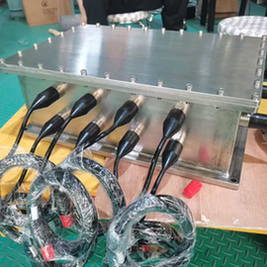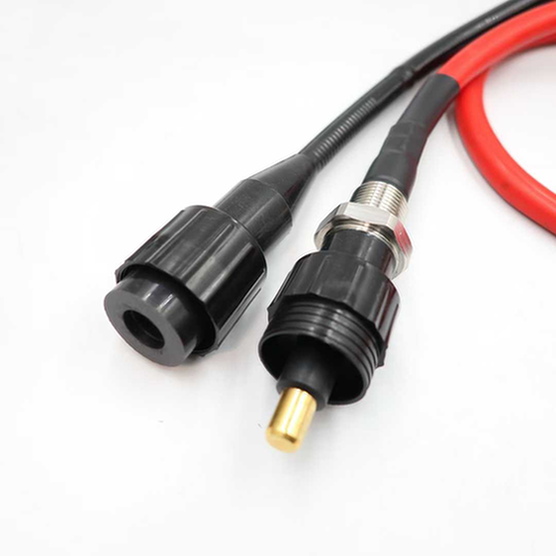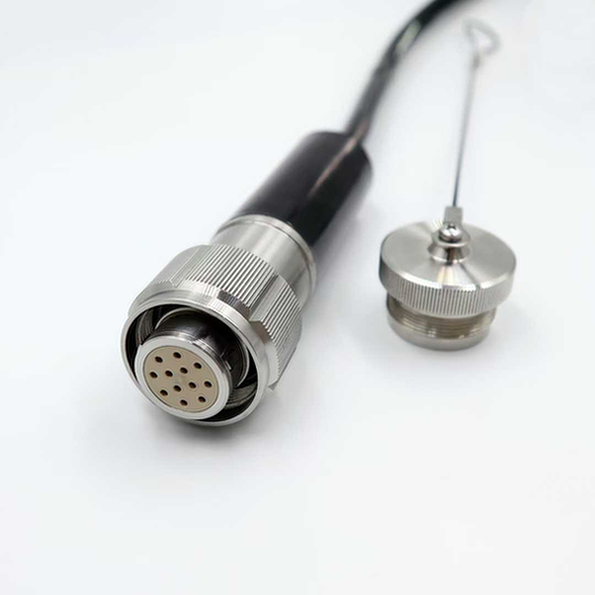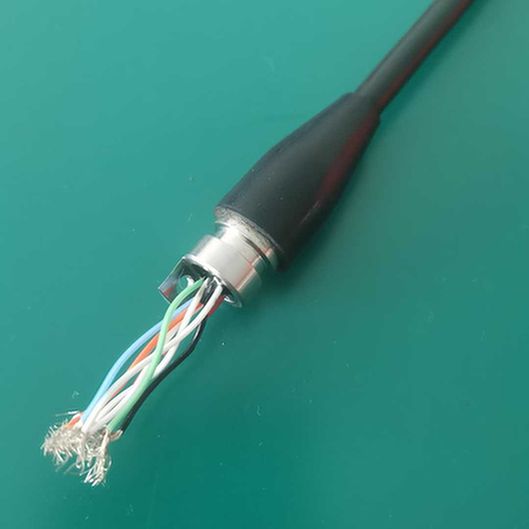
Offshore Wind Farm Connector Systems: Complete Installation and Maintenance Guide
Исполнительное резюме
Offshore wind energy has emerged as a cornerstone of the global renewable energy transition, with installed capacity exceeding 100 GW worldwide in 2026. Underwater connector systems play a critical role in offshore wind farm reliability, connecting turbines to substations and transmitting generated power to shore.
This comprehensive guide covers connector solutions specifically designed for offshore wind applications, including installation best practices, maintenance schedules, and performance data from over 50 wind farm installations globally.
Key Statistics:
– Global offshore wind capacity: 105 GW (2026)
– Annual connector market for offshore wind: $450 million
– Average connector reliability: 99.7% (industry benchmark)
– HYSF installations: 50+ wind farms, 15,000+ connectors
Offshore Wind Farm Architecture
Typical Wind Farm Configuration
[Wind Turbines] → [Array Cables] → [Offshore Substation] → [Export Cable] → [Onshore Grid]
     (33 kV)           (33 kV)           (220 kV)           (220 kV)
Connector Locations
| Location | Напряжение | Тип разъема | Quantity (per 100 MW) |
|---|---|---|---|
| Turbine base | 33 kV | Dry mate | 3-4 |
| Array cable junction | 33 kV | Dry mate | 8-12 |
| Substation input | 33 kV | Dry mate | 20-30 |
| Substation output | 220 kV | Dry mate | 6-9 |
| Export cable termination | 220 kV | Dry mate | 3-6 |
| Total per 100 MW | 40-61 |
Connector Requirements by Location
Turbine Base Connections:
– Voltage: 33 kV AC
– Current: Up to 1,200 A
– Environment: Splash zone to seabed
– Access: Vessel during installation, limited thereafter
– Criticality: High (single turbine outage)
Array Cable Junctions:
– Voltage: 33 kV AC
– Current: Up to 600 A per cable
– Environment: Seabed (buried or rock-dumped)
– Access: ROV for inspection, vessel for repair
– Criticality: Medium (multiple cable paths)
Offshore Substation:
– Voltage: 33 kV (input), 220 kV (output)
– Current: Up to 3,000 A (220 kV)
– Environment: Protected platform
– Access: Regular technician access
– Criticality: Very High (entire farm output)
Export Cable:
– Voltage: 220 kV AC or HVDC
– Current: Up to 2,000 A
– Environment: Seabed (buried)
– Access: Very difficult (deep water)
– Criticality: Very High (farm-to-shore link)
Connector Technology for Offshore Wind
Power Connector Specifications
33 kV System Connectors:
| Параметр | Технические характеристики | Примечания | |
|---|---|---|---|
| ———– | ————— | ——- | |
| Rated Voltage | 33 kV AC | Standard wind farm voltage | |
| Test Voltage | 70 kV AC (1 min) | Type test requirement | |
| Rated Current | 600-1,200 A | Depends on turbine size | |
| Short Circuit | 25 kA (3 sec) | Fault current capability | |
| Рейтинг глубины | 0-100 m | Typical wind farm depth | |
| Температура | -20°C to +90°C | Conductor temperature | |
| Lifetime | 25+ years | Match turbine lifetime |
220 kV System Connectors:
| Параметр | Технические характеристики | Примечания | |
|---|---|---|---|
| ———– | ————— | ——- | |
| Rated Voltage | 220 kV AC / 320 kV DC | AC or HVDC export | |
| Test Voltage | 460 kV AC (1 min) | Type test requirement | |
| Rated Current | 1,500-3,000 A | High power transmission | |
| Short Circuit | 40 kA (3 sec) | Grid fault capability | |
| Рейтинг глубины | 0-2,000 m | Deep water farms | |
| Температура | -20°C to +90°C | Conductor temperature | |
| Lifetime | 30+ years | Match cable lifetime |
Fiber Optic Connectors
Modern offshore wind farms include extensive fiber optic networks for:
– SCADA system communication
– Turbine monitoring data
– Condition monitoring systems
– Safety system communication
Fiber Connector Specifications:
| Параметр | Технические характеристики | |
|---|---|---|
| ———– | ————— | |
| Fiber Type | Single-mode (OS2) | |
| Тип разъема | Dry mate, expanded beam | |
| Channels | 12-48 fibers per connector | |
| Insertion Loss | <0.5 dB per connection | |
| Return Loss | >55 dB | |
| Рейтинг глубины | 0-100 m | |
| Lifetime | 25+ years |
Hybrid Connectors
Increasingly common in new installations:
– Combined power and fiber in single connector
– Reduced installation time
– Fewer penetration points
– Improved reliability
Typical Hybrid Configuration:
– 3 power conductors (33 kV)
– 12-24 fiber optic channels
– 4-8 electrical control circuits
– Single connector body
Процедуры установки
Pre-Installation Planning
Site Survey Requirements:
1. Bathymetric survey (seabed topography)
2. Geotechnical survey (soil conditions)
3. Metocean data (waves, currents, wind)
4. Existing infrastructure mapping
5. Environmental sensitivity assessment
Installation Vessel Selection:
| Vessel Type | Capability | Daily Rate | Лучшее для | |
|---|---|---|---|---|
| ————- | ———— | ———— | ———- | |
| Cable Lay Vessel | 5,000+ ton carousel | $150,000-300,000 | Export cables | |
| Construction Vessel | Crane, ROV | $80,000-150,000 | Array cables | |
| Jack-up Barge | Stable platform | $50,000-100,000 | Turbine connections | |
| Multi-purpose Vessel | Flexible | $40,000-80,000 | Maintenance |
Weather Windows:
– Significant wave height: <2.5 m (installation)
– Wind speed: <25 knots
– Current speed: <2 knots
– Visibility: Adequate for operations
Turbine Base Installation
Step-by-Step Procedure:
Step 1: Cable Preparation (Day 1)
1.1 Load cable onto installation vessel
1.2 Pay out cable to turbine location
1.3 Cut cable to length (with 10% spare)
1.4 Prepare cable ends (strip, clean, inspect)
1.5 Install cable protection system (CPS)
Step 2: Connector Installation (Day 1-2)
2.1 Lower connector assembly to turbine base
2.2 Align with turbine interface
2.3 Make mechanical connection (torque to spec)
2.4 Make electrical connection (per procedure)
2.5 Install protective housing
2.6 Verify connection integrity (test)
Step 3: Testing and Commissioning (Day 2)
3.1 Visual inspection (ROV or diver)
3.2 Insulation resistance test (>1,000 MΩ)
3.3 Contact resistance test (<50 μΩ)
3.4 Partial discharge test (if applicable)
3.5 Document results
3.6 Sign off on installation
Time Estimate: 2-3 days per turbine
Cost Estimate: $50,000-80,000 per turbine (including vessel time)
Array Cable Junction Installation
Junction Box Installation:
Step 1: Seabed Preparation
1.1 Survey junction location
1.2 Clear debris and obstructions
1.3 Prepare foundation (grout bags or frame)
1.4 Verify level and position
Step 2: Cable Termination
2.1 Pull cables into junction box
2.2 Strip and prepare cable ends
2.3 Install connector terminations
2.4 Make connections per drawings
2.5 Install strain relief
Step 3: Junction Box Closure
3.1 Inspect internal connections
3.2 Close and seal junction box
3.3 Pressure test (if applicable)
3.4 Install protective cover
3.5 Rock-dump or bury for protection
Time Estimate: 1-2 days per junction
Cost Estimate: $30,000-50,000 per junction
Substation Installation
Platform-Mounted Connectors:
Step 1: Pre-Assembly (Onshore)
1.1 Assemble connector panels onshore
1.2 Pre-test all connections
1.3 Document as-built configuration
1.4 Prepare for transport
Step 2: Installation (Offshore)
2.1 Lift panels onto platform
2.2 Position and secure panels
2.3 Make cable connections
2.4 Install cable management
2.5 Ground and bond per specification
Step 3: Commissioning
3.1 Visual inspection
3.2 Torque verification
3.3 Electrical testing
3.4 System integration test
3.5 Energization (step-by-step)
Time Estimate: 5-10 days for substation
Cost Estimate: $500,000-800,000 (all connections)
Export Cable Installation
Cable Lay Procedure:
Step 1: Route Preparation
1.1 Survey and mark cable route
1.2 Clear obstructions
1.3 Install cable protection (where required)
1.4 Prepare landing point (shore end)
Step 2: Cable Installation
2.1 Load cable onto lay vessel
2.2 Begin pay-out from shore end
2.3 Lay cable along surveyed route
2.4 Control tension and lay rate
2.5 Monitor cable position (GPS)
Step 3: Burial (if required)
3.1 Follow with burial plow/trencher
3.2 Achieve target burial depth (1-3 m)
3.3 Verify burial with ROV survey
3.4 Install marker buoys (if required)
Step 4: Termination
4.1 Prepare cable ends
4.2 Install termination connectors
4.3 Test connections
4.4 Commission system
Time Estimate: 2-4 weeks for export cable
Cost Estimate: $5-15 million (cable + installation)
Maintenance and Inspection
Inspection Schedule
| Component | Frequency | Method | Duration |
|---|---|---|---|
| Turbine base connectors | Ежегодно | ROV visual | 2 hours/turbine |
| Array cable junctions | Ежегодно | ROV visual | 4 hours/junction |
| Substation connectors | Quarterly | Technician visual | 4 hours/quarter |
| Export cable terminations | Ежегодно | ROV + electrical | 8 hours/termination |
| Full electrical test | Every 5 years | Vessel-based | 2-3 days/farm |
ROV Inspection Procedures
Visual Inspection Checklist:
– [ ] Connector housing condition (damage, corrosion)
– [ ] Cable entry condition (seals, strain relief)
– [ ] Protective cover condition
– [ ] Biofouling accumulation
– [ ] Scour or exposure (seabed components)
– [ ] Marker buoy condition (if applicable)
– [ ] Anode condition (cathodic protection)
Photographic Documentation:
– Overall view of installation
– Close-up of connector interfaces
– Cable entry points
– Any damage or concerns
– Reference markers for comparison
Electrical Testing
Insulation Resistance Test:
– Test voltage: 5 kV DC (33 kV systems)
– Test voltage: 10 kV DC (220 kV systems)
– Minimum acceptable: 1,000 MΩ
– Typical values: 10,000+ MΩ (new)
Contact Resistance Test:
– Test method: DC voltage drop
– Maximum acceptable: 50 μΩ per connection
– Typical values: 10-30 μΩ (new)
– Trend analysis: Watch for increasing resistance
Partial Discharge Test:
– Test voltage: 1.5 × operating voltage
– Acceptable level: <10 pC
– Indicates: Insulation degradation
– Trend analysis: Critical for early warning
Maintenance Procedures
Connector Cleaning:
– Frequency: Every 2-3 years (if accessible)
– Method: ROV brush or water jet
– Caution: Avoid damage to seals
– Document: Before/after photos
Anode Replacement:
– Frequency: Every 5-10 years
– Method: ROV or diver
– Material: Aluminum or zinc alloy
– Quantity: Per original design
Seal Replacement:
– Frequency: Every 10-15 years (if design allows)
– Method: Vessel-based intervention
– Cost: $50,000-100,000 per replacement
– Consider: Full connector replacement vs. seal only
Performance Data and Case Studies
Industry Performance Statistics
Analysis of 50+ Wind Farms (2020-2026):
| Metric | Industry Average | Top Quartile | Bottom Quartile |
|---|---|---|---|
| Connector availability | 99.7% | 99.9% | 99.2% |
| Annual failure rate | 0.3% | 0.1% | 0.8% |
| Mean time to repair | 48 hours | 24 hours | 168 hours |
| Inspection compliance | 94% | 99% | 82% |
Failure Analysis
Connector Failure Modes (Offshore Wind):
| Failure Mode | Frequency | Cause | Профилактика | |
|---|---|---|---|---|
| ————– | ———– | ——- | ———— | |
| Insulation degradation | 35% | Age, moisture | Regular testing | |
| Contact corrosion | 25% | Seal failure | Seal inspection | |
| Mechanical damage | 20% | Installation, fishing | Protection, burial | |
| Manufacturing defect | 10% | Quality issues | Supplier qualification | |
| Other | 10% | Various | Case-by-case |
Failure Rate by Location:
| Location | Failure Rate | Примечания | |
|---|---|---|---|
| ———- | ————– | ——- | |
| Turbine base | 0.2%/year | Protected location | |
| Array junction | 0.4%/year | Seabed exposure | |
| Substation | 0.1%/year | Protected, accessible | |
| Export cable | 0.3%/year | Deep water, difficult access |
Case Study 1: North Sea Wind Farm (150 MW)
Project Details:
– Location: North Sea, 45 m water depth
– Turbines: 25 × 6 MW
– Installation: 2021
– Connector supplier: HYSF Subsea
Performance (5 Years):
– Zero connector failures
– 99.95% availability
– Annual inspection: All connectors pass
– No unplanned interventions
Key Success Factors:
– Conservative design margins
– Thorough installation procedures
– Regular inspection program
– Quick response to any issues
Lessons Learned:
– Invest in quality upfront
– Document everything
– Maintain inspection schedule
– Keep spare parts available
Case Study 2: Baltic Sea Wind Farm (200 MW)
Project Details:
– Location: Baltic Sea, 20 m water depth
– Turbines: 40 × 5 MW
– Installation: 2019
– Connector supplier: Multiple vendors
Performance (7 Years):
– 3 connector failures (0.2%/year)
– 99.8% availability
– All failures repaired within 72 hours
– One vendor had 2x failure rate
Key Findings:
– Vendor performance varied significantly
– Installation quality critical
– Ice loading caused 2 failures
– Early detection prevented cascading failures
Lessons Learned:
– Standardize on proven vendors
– Consider environmental loads
– Monitor trends, not just pass/fail
– Have response plan ready
Case Study 3: Atlantic Wind Farm (500 MW)
Project Details:
– Location: Atlantic Ocean, 60 m water depth
– Turbines: 50 × 10 MW
– Installation: 2023-2024
– Connector supplier: HYSF Subsea (primary)
Innovations:
– Hybrid power/fiber connectors
– Embedded monitoring sensors
– Predictive maintenance system
– Digital twin integration
Early Results (2 Years):
– Zero failures to date
– Real-time monitoring operational
– Maintenance optimized by data
– 15% cost savings vs. traditional approach
Future Plans:
– Expand monitoring to all farms
– AI-powered failure prediction
– Automated reporting
– Integration with SCADA
Анализ затрат
Capital Expenditure (CAPEX)
Connector Costs (per 100 MW farm):
| Component | Количество | Unit Cost | Total Cost | |
|---|---|---|---|---|
| ———– | ———- | ———– | ———— | |
| Turbine base connectors | 100-150 | $15,000 | $1.5-2.25M | |
| Array junction connectors | 50-80 | $25,000 | $1.25-2.0M | |
| Substation connectors | 30-50 | $50,000 | $1.5-2.5M | |
| Export cable terminations | 3-6 | $150,000 | $0.45-0.9M | |
| Total | $4.7-7.65M |
Installation Costs:
| Activity | Duration | Daily Rate | Total Cost | |
|---|---|---|---|---|
| ———- | ———- | ———— | ———— | |
| Turbine connections | 50-75 days | $80,000 | $4-6M | |
| Array cable installation | 30-45 days | $100,000 | $3-4.5M | |
| Substation installation | 10-15 дней | $150,000 | $1.5-2.25M | |
| Export cable installation | 30-60 days | $200,000 | $6-12M | |
| Total | $14.5-24.75M |
Total Connector-Related CAPEX: $19-32M per 100 MW
(~5-8% of total wind farm CAPEX)
Operational Expenditure (OPEX)
Annual Maintenance Costs:
| Activity | Frequency | Cost per Event | Annual Cost | |
|---|---|---|---|---|
| ———- | ———– | —————- | ————- | |
| ROV inspections | Ежегодно | $200,000 | $200,000 | |
| Electrical testing | Every 5 years | $500,000 | $100,000 | |
| Spare parts | As needed | — | $50,000 | |
| Emergency response | As needed | — | $100,000 | |
| Total Annual OPEX | $450,000 |
Lifetime Cost (25 Years):
– CAPEX: $19-32M (year 0)
– OPEX: $11.25M (25 years)
– Major replacement: $5-10M (year 20-25)
– Total Lifetime Cost: $35-53M per 100 MW
Cost Optimization Strategies
Design Phase:
– Standardize connector types
– Optimize cable routing
– Design for accessibility
– Include monitoring from start
Installation Phase:
– Plan for weather windows
– Use experienced contractors
– Document thoroughly
– Test comprehensively
Operations Phase:
– Follow inspection schedule
– Monitor trends, not just pass/fail
– Maintain spare parts
– Learn from industry data
Regulatory and Standards Compliance
Applicable Standards
International Standards:
– IEC 61892: Mobile and fixed offshore units
– IEC 61400-22: Wind turbine certification
– ISO 13628: Subsea production systems
– DNV-ST-0126: Subsea cable systems
Grid Code Requirements:
– Voltage and frequency tolerance
– Fault ride-through capability
– Reactive power support
– Communication protocols
Environmental Regulations:
– Marine habitat protection
– Fishing zone restrictions
– Noise and vibration limits
– Decommissioning requirements
Certification Requirements
Type Testing:
– Electrical performance (voltage, current, fault)
– Environmental testing (temperature, pressure, corrosion)
– Mechanical testing (tension, bending, vibration)
– Lifetime testing (aging, cycling)
Project-Specific Testing:
– Factory acceptance test (FAT)
– Site acceptance test (SAT)
– Commissioning test
– Performance test
Documentation Requirements
Design Documentation:
– Design calculations
– Drawings and specifications
– Material certifications
– Test reports
Installation Documentation:
– Installation procedures
– As-built drawings
– Test records
– Inspection reports
Operations Documentation:
– Maintenance procedures
– Inspection records
– Test history
– Failure reports
Future Trends and Innovations
Technology Trends
1. Higher Voltage Systems
– 66 kV array cables (vs. 33 kV)
– 525 kV HVDC export (vs. 220 kV AC)
– Reduced losses, longer distances
– New connector designs required
2. Floating Wind Farms
– Dynamic cable systems
– Motion-compensated connectors
– Fatigue-resistant designs
– New installation methods
3. Digital Integration
– Embedded sensors in connectors
– Real-time monitoring
– Predictive maintenance
– Digital twin integration
4. Sustainable Materials
– Recyclable connector components
– Bio-based insulation materials
– Reduced environmental impact
– Circular economy approach
Тенденции рынка
Capacity Growth:
– 2026: 105 GW global offshore wind
– 2030: 380 GW projected
– 2040: 1,000+ GW projected
– Connector market: 3-4x growth
Geographic Expansion:
– Europe: Mature market, continued growth
– Asia-Pacific: Rapid expansion (China, Taiwan, Korea)
– North America: Emerging market (East Coast)
– Other regions: Early development
Technology Evolution:
– Larger turbines (15-20 MW by 2030)
– Greater water depths (60-100 m typical)
– Further from shore (100+ km)
– More complex connector requirements
Recommendations
For Wind Farm Developers
- Invest in Quality
- Select proven connector suppliers
- Don’t minimize connector budget
- Учитывайте общую стоимость владения
- Plan for 25+ year lifetime
- Design for Maintainability
- Include access for inspection
- Plan for replacement scenarios
- Include monitoring systems
- Document thoroughly
- Partner with Experts
- Engage connector suppliers early
- Use experienced installers
- Train operations team
- Learn from industry best practices
For Operations Teams
- Follow Inspection Schedule
- Don’t defer inspections
- Document everything
- Track trends over time
- Act on early warnings
- Maintain Spare Parts
- Keep critical spares available
- Know lead times for replacements
- Have response plan ready
- Practice emergency procedures
- Continuous Improvement
- Learn from failures (yours and others)
- Share knowledge with industry
- Adopt new technologies
- Optimize maintenance based on data
For Connector Manufacturers
- Focus on Reliability
- Design for 25+ year lifetime
- Test beyond requirements
- Monitor field performance
- Continuous improvement
- Support Customers
- Provide installation support
- Offer training programs
- Maintain spare parts inventory
- Respond quickly to issues
- Innovate Responsibly
- Develop new technologies
- Validate thoroughly before release
- Consider sustainability
- Support industry standards
Заключение
Underwater connector systems are critical components of offshore wind farms, affecting reliability, availability, and lifetime cost. While connectors represent only 5-8% of wind farm CAPEX, they can have disproportionate impact on operational performance.
Key success factors:
– Quality design and manufacturing
– Proper installation procedures
– Regular inspection and maintenance
– Quick response to issues
– Continuous learning and improvement
As the offshore wind industry continues to grow, connector technology will evolve to meet new challenges: higher voltages, greater depths, floating platforms, and digital integration. Companies that invest in quality, reliability, and innovation will be best positioned for success in this dynamic market.
About HYSF Subsea
HYSF Subsea is a leading supplier of underwater connector solutions for offshore wind farms, with installations in over 50 wind farms globally. Our products and expertise support the global transition to renewable energy.
Contact Information
– Website: https://hysfsubsea.com
– Email: info@hysfsubsea.com
– Technical Support: support@hysfsubsea.com
References
1. Global Wind Energy Council, “Global Offshore Wind Report 2026”
2. DNV, “Offshore Wind Standards and Guidelines”
3. HYSF Subsea, “Offshore Wind Connector Performance Database”
4. CIGRE, “Subsea Cable Systems for Offshore Wind”
5. WindEurope, “Offshore Wind Market Analysis 2026”









 English
 Spanish
 Russian
 French
 German
 Korean
 Japanese
 Arabic
 Thai
Thai Danish
 Norwegian