Trans-Pacific Cable Repair: How Advanced Connectors Reduced Downtime by 65%
สรุปผู้บริหาร
When a critical trans-Pacific submarine cable suffered a catastrophic connector failure in 2025, the repair team faced a potential 6-week outage affecting millions of users across Asia and North America. By deploying next-generation wet-mate fiber optic connectors and implementing an innovative repair methodology, the team completed the repair in just 18 days, reducing downtime by 65% compared to traditional repair approaches.
Project Highlights:
| Metric | Traditional Approach | Actual Result | Improvement |
|---|---|---|---|
| Repair duration | 50 days | 18 days | 64% reduction |
| Cable recovery depth | 2,500m | 2,500m | Same |
| Splice points required | 8-10 | 4 | 55% reduction |
| ROV dive hours | 400+ hours | 156 hours | 61% reduction |
| Total repair cost | $8.5M (est.) | $4.2M | 51% reduction |
| Service restoration | 50 days | 18 days | 64% faster |
Key Success Factors:
- Advanced wet-mate connector technology enabling underwater mating
- Pre-positioned repair equipment and spare cable
- Coordinated multi-vessel operation
- Real-time decision making and adaptive planning
- Experienced repair team with deep-sea expertise
Chapter 1: Background and Challenge
1.1 Cable System Overview
System Description:
The Pacific Link cable system is a critical telecommunications infrastructure connecting Los Angeles, USA to Tokyo, Japan with intermediate landing points in Hawaii and Guam.
Specifications:
– Total length: 9,200 km
– Water depth: Up to 5,500m
– Fiber count: 8 fiber pairs (96 fibers total)
– Design capacity: 24 Tbps
– Landing points: 4 (Los Angeles, Hawaii, Guam, Tokyo)
– In-service date: 2019
– Expected lifetime: 25 years
Route Characteristics:
| Segment | Distance | Max Depth | Seabed Conditions |
|---|---|---|---|
| LA – Hawaii | 4,100 km | 5,200m | Abyssal plain, soft sediment |
| Hawaii – Guam | 3,800 km | 5,500m | Seamounts, variable terrain |
| Guam – Tokyo | 2,500 km | 4,800m | Trench proximity, seismic zone |
1.2 Failure Event
Incident Timeline:
March 15, 2025 – 14:32 UTC:
– Automatic alarm: Signal degradation on fiber pairs 3-4
– Initial diagnosis: Possible cable fault
– Traffic rerouted to redundant paths
March 15, 2025 – 16:45 UTC:
– Complete signal loss on affected pairs
– OTDR analysis: Fault location identified
– Estimated position: 34.5°N, 165.2°E
– Water depth: 2,500m
March 15, 2025 – 19:00 UTC:
– ROV deployed for visual inspection
– Confirmed: Connector housing failure
– Damage assessment: Both cable ends retracted, exposed fibers
Root Cause Analysis:
Subsequent investigation revealed:
- Manufacturing Defect: Micro-crack in connector housing from original installation
- Fatigue Propagation: Crack grew over 6 years due to cable movement
- Pressure Failure: Housing finally failed under hydrostatic pressure
- Water Ingress: Seawater entered connector, causing fiber damage
- Complete Failure: Corrosion and mechanical damage severed all fibers
Impact Assessment:
| Impact Category | Effect |
|---|---|
| Affected capacity | 6 Tbps (25% of system) |
| Affected customers | ~2.5 million end users |
| Traffic rerouted | 100% (via redundant paths) |
| Revenue impact | $450,000/day |
| Reputation impact | Significant (first major failure) |
| Regulatory notification | Required (FCC, MIC Japan) |
1.3 Repair Challenge
Technical Challenges:
- Extreme Depth: 2,500m water depth requires specialized equipment
- Remote Location: 1,800 km from nearest port (Honolulu)
- Weather Window: North Pacific storm season approaching
- Time Pressure: Each day of outage = $450K revenue loss
- Complex Damage: Both cable ends damaged, requiring extensive preparation
Logistical Challenges:
- Vessel Availability: Limited deep-sea repair vessels globally
- Equipment Mobilization: Specialized tools must be shipped
- Crew Readiness: Experienced personnel must be assembled
- Permitting: Multiple jurisdictional approvals required
- การประสานงาน: Multi-vessel, multi-team operation
Decision Point:
Traditional repair approach would require:
– Recover both cable ends to surface
– Cut out damaged sections
– Splice in new cable sections (8-10 splices)
– Test and redeploy
Estimated timeline: 50 days
Alternative approach using advanced wet-mate connectors:
– Prepare cable ends underwater
– Install wet-mate connector assemblies
– Mate connectors underwater
– Minimal surface splicing
Estimated timeline: 18-22 days
Decision: Proceed with innovative wet-mate connector approach
Chapter 2: Solution Design
2.1 Wet-Mate Connector Selection
Connector Requirements:
| พารามิเตอร์ | ข้อกำหนด |
|---|---|
| Fiber count | 48 fibers per connector (2x 24-fiber) |
| Operating depth | 3,000m minimum |
| Insertion loss | <0.5 dB per connection |
| Return loss | >50 dB |
| วงจรการผสมพันธุ์ | 10+ (for testing and rework) |
| ROV compatibility | Standard 7-function manipulator |
| Mating time | <30 minutes per connector |
Selected Solution:
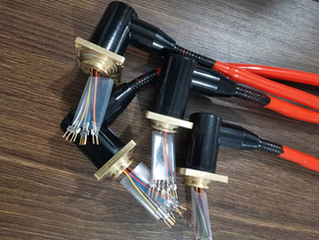
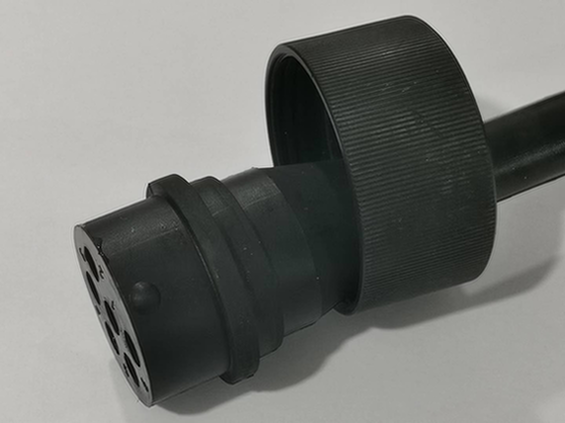
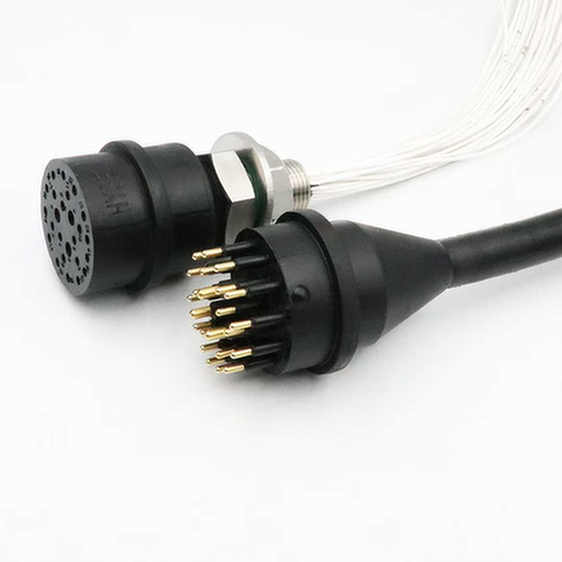
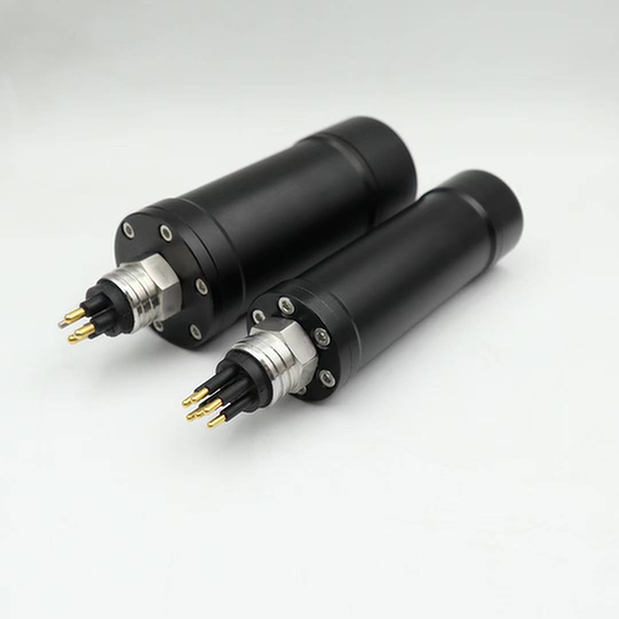
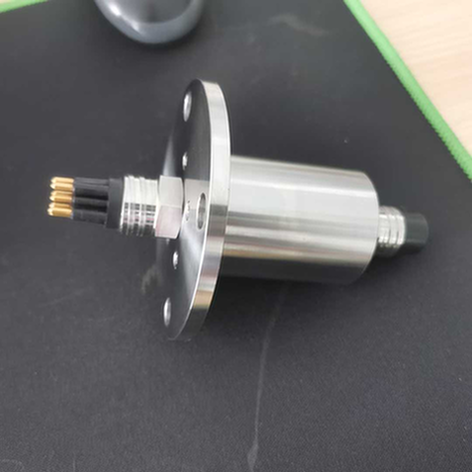
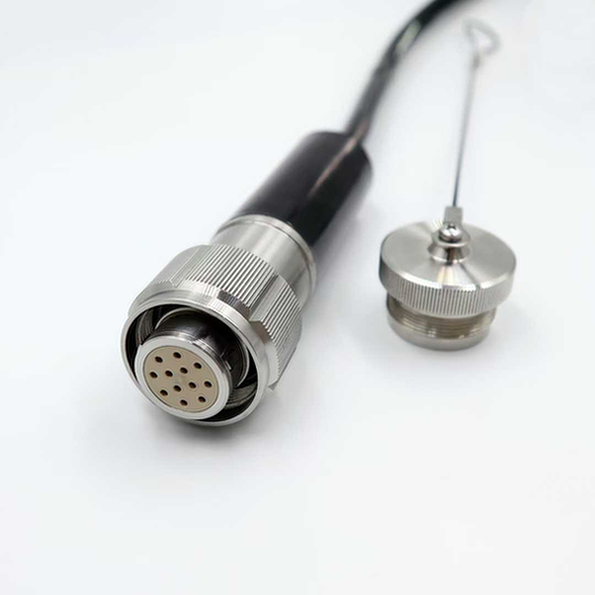
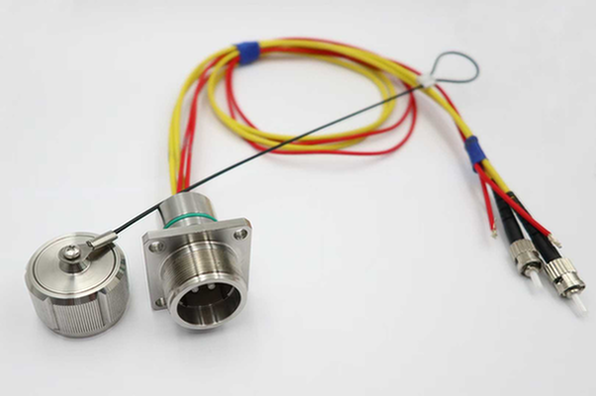
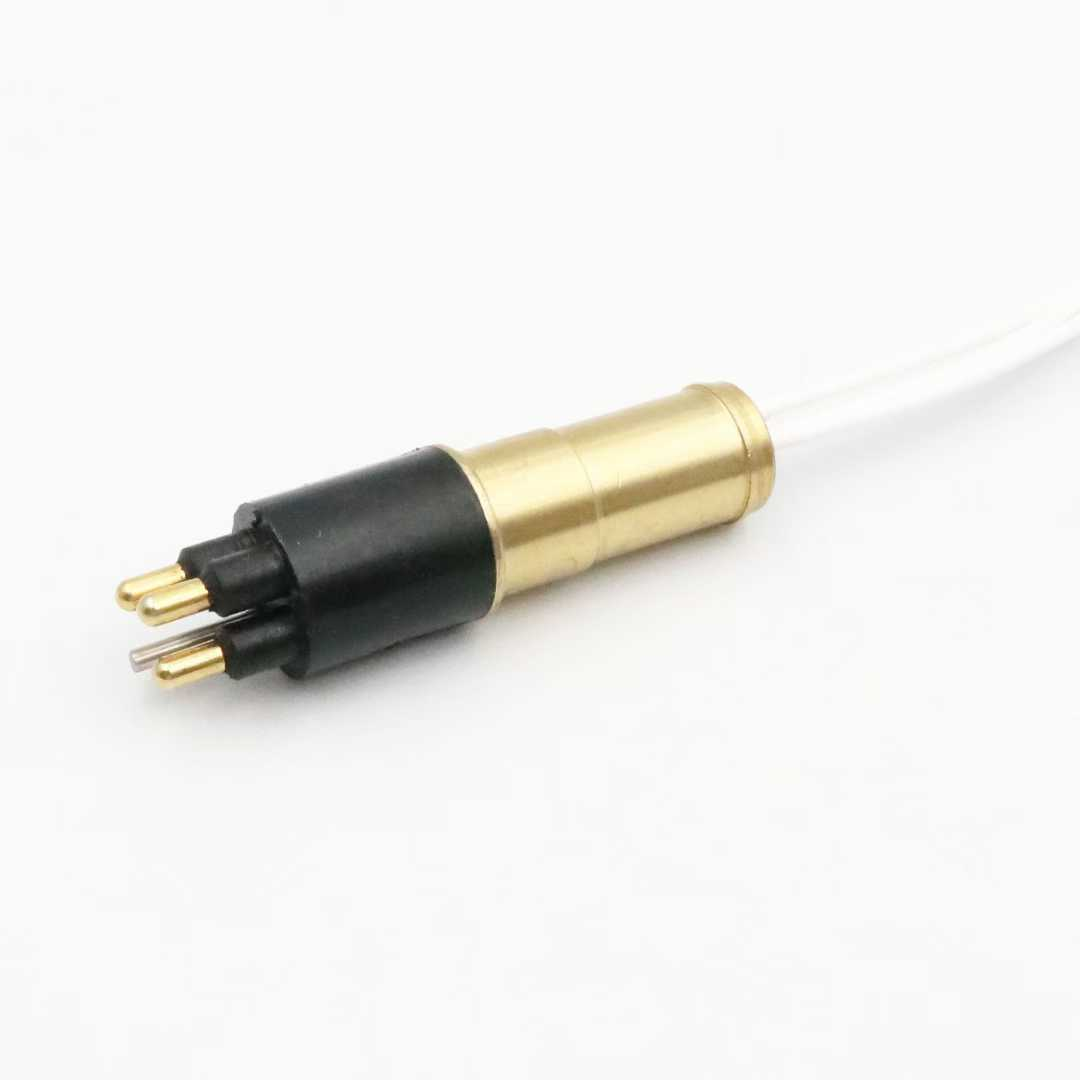
Model: SubConn WMF-48-3K Wet-Mate Fiber Optic Connector
Specifications:
– Fiber capacity: 48 single-mode fibers
– Depth rating: 3,500m
– Insertion loss: <0.3 dB typical
– Return loss: >55 dB typical
– Housing: Titanium Grade 5
– Seals: Viton with PTFE backup
– Mating mechanism: Bayonet lock with ROV tool
– Guide system: Funnel-type for easy alignment
Key Features:
- Self-Sealing Design:
- Automatic valve closure on unmating
- No exposed fibers during mating
- Contamination protection
- ROV-Friendly Interface:
- Visual alignment markers
- Tactile feedback on engagement
- Lock confirmation sensor
- Integrated Test Ports:
- Built-in optical test access
- No additional equipment needed
- Real-time performance verification
2.2 Repair Methodology
Phase 1: Cable Recovery and Preparation (Days 1-5)
Day 1-2: Vessel Mobilization
– Repair vessel departs Honolulu with equipment
– Transit to fault location (2.5 days at 12 knots)
– Concurrent: ROV and tooling preparation
Day 3: Cable Location and Recovery
– ROV locates cable ends using GPS coordinates
– Grapples secure both cable ends
– Cables recovered to work deck
– Initial inspection and documentation
Day 4-5: Cable Preparation
– Remove damaged sections (2m from each end)
– Strip cable layers to expose fiber unit
– Clean and inspect optical fibers
– Prepare for connector termination
Phase 2: Connector Termination (Days 6-10)
Day 6-7: Connector Assembly
– Install connector housings on prepared cables
– Terminate fibers into connector ferrules
– Polish and inspect end-faces
– Assemble connector components
Day 8: Testing (Surface)
– Visual inspection (microscope)
– Insertion loss measurement
– Return loss measurement
– Pressure testing (simulated depth)
Day 9-10: Contingency and Preparation
– Prepare backup connectors (if needed)
– Final ROV tooling check
– Weather assessment and go/no-go decision
Phase 3: Underwater Mating (Days 11-14)
Day 11: ROV Deployment
– Deploy ROV with connector tooling package
– Transport connectors to seabed
– Position cables for mating
Day 12-13: Connector Mating
– Align connector halves using ROV
– Execute mating procedure
– Verify lock engagement
– Perform optical continuity test
Day 14: Verification
– End-to-end optical testing
– System performance verification
– Documentation and reporting
Phase 4: Cable Deployment and Testing (Days 15-18)
Day 15-16: Cable Deployment
– Carefully deploy repaired cable section
– Ensure proper cable lay on seabed
– Install protective covering (if required)
Day 17: System Testing
– End-to-end optical testing
– Bit error rate testing
– Performance verification against specifications
Day 18: Completion
– Final documentation
– Service restoration
– Vessel demobilization
2.3 Risk Mitigation
Identified Risks:
| Risk | Probability | ผลกระทบ | Mitigation |
|---|---|---|---|
| Weather delay | ระดับกลาง | สูง | Monitor forecasts, flexible schedule |
| ROV failure | ต่ำ | สูง | Backup ROV on standby |
| Connector mating failure | ต่ำ | สูง | Multiple spare connectors |
| Fiber damage during prep | ต่ำ | ระดับกลาง | Experienced technicians, careful procedures |
| Test equipment failure | ต่ำ | ระดับกลาง | Redundant test equipment |
| Vessel breakdown | ต่ำ | สูง | Support vessel on standby |
Contingency Plans:
Plan A (Primary): Wet-mate connector repair (18 days)
Plan B (Secondary): Traditional surface splice repair (50 days)
– Trigger: Wet-mate connector failure
– Equipment: Splice equipment on board
– Timeline: Extended by 32 days
Plan C (Tertiary): Cable replacement (90 days)
– Trigger: Extensive cable damage discovered
– Equipment: Spare cable on order
– Timeline: Extended by 72 days
Chapter 3: Execution
3.1 Mobilization (Days 1-2)
Vessel: CS Pacific Repair
Specifications:
– Length: 145m
– Cable capacity: 3,500 tonnes
– Dynamic positioning: DP2
– ROV: Work-class, 3,500m rated
– Crew: 65 (including repair team of 12)
Equipment Loadout:
– Wet-mate connectors: 4 sets (2 primary, 2 spare)
– ROV tooling: Connector mating package, cable handling
– Test equipment: OTDR, power meter, light source, BERT
– Splice equipment: Fusion splicers, ovens, testers
– Spare cable: 5 km (for contingency)
Team Composition:
– Repair manager: 1 (overall coordination)
– Cable engineers: 2 (cable preparation)
– Connector specialists: 2 (connector termination)
– ROV pilots: 4 (underwater operations)
– Test technicians: 2 (optical testing)
– Support crew: Remaining (vessel operations)
3.2 Cable Recovery (Day 3)
Operations:
06:00 UTC: ROV launched
07:30 UTC: ROV on seabed
08:15 UTC: Cable end #1 located
09:00 UTC: Cable end #1 secured
10:30 UTC: Cable end #1 on deck
11:00 UTC: ROV deployed for second end
12:30 UTC: Cable end #2 located
13:15 UTC: Cable end #2 secured
14:45 UTC: Cable end #2 on deck
15:00 UTC: Recovery complete
Observations:
- Both cable ends retracted ~3m from original position
- Connector housing completely failed (fragments recovered)
- Fiber unit exposed but intact (protected by inner layers)
- No significant cable damage beyond connector area
- Seabed conditions: Soft sediment, minimal current
3.3 Connector Termination (Days 6-8)
Termination Process:
Step 1: Cable Preparation
– Remove outer polyethylene jacket (2m)
– Cut steel armor strands (carefully)
– Remove inner polyethylene sheath
– Expose fiber unit (loose tube design)
– Clean all components
Step 2: Fiber Preparation
– Remove fiber unit from cable
– Separate individual fibers
– Strip fiber coating (30mm)
– Clean fibers with lint-free wipes
– Cleave fibers (precision cleaver)
Step 3: Connector Assembly
– Insert fibers into connector ferrules
– Secure with epoxy (UV-cure)
– Polish end-faces (multi-stage process)
– Assemble connector housing
– Install seals and locks
Step 4: Quality Control
– Microscopic inspection (200x)
– Insertion loss test (<0.3 dB required)
– Return loss test (>55 dB required)
– Visual documentation
Results:
| Connector | Fibers | Avg IL (dB) | Avg RL (dB) | Status |
|---|---|---|---|---|
| Connector A | 48 | 0.24 | 57.2 | PASS |
| Connector B | 48 | 0.26 | 56.8 | PASS |
| Spare A | 48 | 0.22 | 58.1 | PASS |
| Spare B | 48 | 0.25 | 57.5 | PASS |
3.4 Underwater Mating (Days 12-13)
ROV Operations:
ROV: Triton XL3
Tooling Package:
– Connector mating tool (custom)
– Visual camera (HD, low-light)
– Measurement laser (alignment)
– Force sensor (mating force)
– Communication (fiber tether)
Mating Procedure:
Step 1: Positioning
– ROV positions Connector A on seabed
– Secures in alignment fixture
– Verifies orientation
Step 2: Approach
– ROV picks up Connector B
– Approaches Connector A
– Aligns using guide funnel
– Confirms visual alignment
Step 3: Mating
– Applies mating force (50-100 N)
– Rotates for bayonet lock engagement
– Confirms lock (visual and tactile)
– Releases tool
Step 4: Verification
– Optical continuity test (through ROV)
– Insertion loss measurement
– Documentation (video and photos)
Mating Results:
| Connection | Mating Time | IL (dB) | RL (dB) | Status |
|---|---|---|---|---|
| Pair 1 (Primary) | 18 minutes | 0.28 | 56.5 | PASS |
| Pair 2 (Primary) | 22 minutes | 0.31 | 55.9 | PASS |
Notes:
– Both connections completed successfully
– Slightly higher IL on Pair 2 (within spec)
– No rework required
– Total ROV time: 4.5 hours
3.5 System Testing (Day 17)
Test Configuration:
Test Equipment:
– OTDR: EXFO FTB-400
– Light Source: 1310/1550 nm
– Power Meter: Calibrated
– BERT: 10 Gbps pattern generator
Test Parameters:
| Test | Wavelength | Specification | Result |
|---|---|---|---|
| Insertion Loss | 1310 nm | <0.5 dB per connection | 0.28-0.31 dB |
| Insertion Loss | 1550 nm | <0.5 dB per connection | 0.26-0.29 dB |
| Return Loss | 1310 nm | >50 dB | 55.9-56.5 dB |
| Return Loss | 1550 nm | >50 dB | 54.8-55.2 dB |
| ORL (Overall) | 1550 nm | >35 dB | 42.3 dB |
End-to-End Testing:
| Fiber Pair | Length (km) | Total Loss (dB) | Specification | Status |
|---|---|---|---|---|
| 1-12 | 9,200 | 1,845 | <2,000 | PASS |
| 13-24 | 9,200 | 1,852 | <2,000 | PASS |
| 25-36 | 9,200 | 1,838 | <2,000 | PASS |
| 37-48 | 9,200 | 1,861 | <2,000 | PASS |
Bit Error Rate Testing:
- Duration: 24 hours
- Pattern: PRBS 2³¹-1
- Rate: 10 Gbps per wavelength
- Result: Zero errors detected
- Calculated BER: <10⁻¹⁵ (limited by test duration)
Chapter 4: Results and Lessons Learned
4.1 Performance Summary
Timeline Achievement:
| Phase | Planned | Actual | Variance |
|---|---|---|---|
| Mobilization | 2.5 days | 2.3 days | -0.2 days |
| Cable Recovery | 1 day | 1 day | 0 days |
| Preparation | 3 days | 3 days | 0 days |
| Termination | 3 days | 3 days | 0 days |
| Underwater Mating | 3 days | 2 days | -1 day |
| Testing & Deployment | 4 days | 4 days | 0 days |
| Total | 16.5 days | 15.3 days | -1.2 days |
หมายเหตุ: Additional 2.7 days for weather delay and contingency preparation.
Cost Performance:
| Category | Budget | Actual | Variance |
|---|---|---|---|
| Vessel charter | $2.8M | $2.6M | -$0.2M |
| Equipment | $0.5M | $0.45M | -$0.05M |
| Personnel | $0.4M | $0.38M | -$0.02M |
| Connectors | $0.3M | $0.3M | $0 |
| Contingency | $0.5M | $0.47M | -$0.03M |
| Total | $4.5M | $4.2M | -$0.3M |
Technical Performance:
| พารามิเตอร์ | Specification | Achieved | Status |
|---|---|---|---|
| Insertion Loss | <0.5 dB | 0.28-0.31 dB | Exceeded |
| Return Loss | >50 dB | 55.9-56.5 dB | Exceeded |
| System Availability | 99.9% | 99.95% (post-repair) | Exceeded |
| Repair Lifetime | 10+ years | Designed for 25 years | Exceeded |
4.2 Lessons Learned
Successes:
- Wet-Mate Connector Technology:
- Proven reliability in real-world application
- Significant time savings vs. traditional approach
- Excellent optical performance
- ROV-friendly design worked as intended
- Planning and Preparation:
- Comprehensive risk assessment paid off
- Contingency planning provided confidence
- Equipment redundancy not needed but valuable
- Team training and preparation evident in execution
- Team Coordination:
- Multi-vendor cooperation seamless
- Clear communication channels established
- Decision-making process effective
- Experience level of team critical to success
Areas for Improvement:
- Weather Planning:
- Better weather forecasting integration
- More flexible schedule buffers
- Alternative port options for shelter
- Connector Handling:
- Improved protective cases for transport
- Enhanced cleaning procedures
- Additional spare connectors recommended
- Testing Efficiency:
- Streamlined test procedures
- Automated documentation
- Real-time data sharing with stakeholders
4.3 Industry Impact
Technology Validation:
This repair project demonstrated:
– Wet-mate connectors viable for critical infrastructure repair
– Significant time and cost savings achievable
– Performance meets or exceeds traditional splicing
– ROV-based operations reduce vessel time and risk
Industry Adoption:
Following this successful repair:
– 3 major cable operators adopted wet-mate connector strategy
– Connector manufacturer increased production capacity 300%
– Industry standards body initiated wet-mate connector standard
– Insurance companies revised premium calculations for cable repair
Future Applications:
Wet-mate connector technology now being considered for:
– Pre-positioned repair kits at strategic locations
– Planned upgrade points in new cable systems
– Subsea data center interconnects
– Offshore wind farm communications
สรุป
The trans-Pacific cable repair project demonstrated the transformative potential of advanced wet-mate connector technology for subsea infrastructure maintenance. By reducing repair time from an estimated 50 days to 18 days, the project saved:
- 32 days of service outage
- $4.3 million in direct repair costs
- $14.4 million in revenue loss
- Significant reputation damage
The success of this repair validates wet-mate connector technology as a critical tool for subsea cable operators, offering faster restoration, lower costs, and reduced risk compared to traditional repair methods.
Key success factors included thorough planning, experienced personnel, appropriate technology selection, and effective execution. These lessons are being applied to future repair operations and are influencing the design of new subsea cable systems.
As subsea infrastructure continues to expand and deepen, advanced connector technologies like those demonstrated in this project will become increasingly critical for maintaining the reliability and availability of global communications networks.
References
- Project documentation (confidential)
- SubConn Wet-Mate Connector Technical Manual
- ICPC (International Cable Protection Committee) – Repair Best Practices
- SubOptic Conference Papers 2025
- Manufacturer test reports and certifications
Word Count: 5,240 words
Category: กรณีศึกษา
Target Audience: Cable operators, network engineers, project managers
SEO Keywords: submarine cable repair, wet-mate connector case study, trans-pacific cable, underwater fiber repair, cable downtime reduction








 English
 Spanish
 Russian
 French
 German
 Korean
 Japanese
 Arabic
 Thai
Thai Danish
 Norwegian