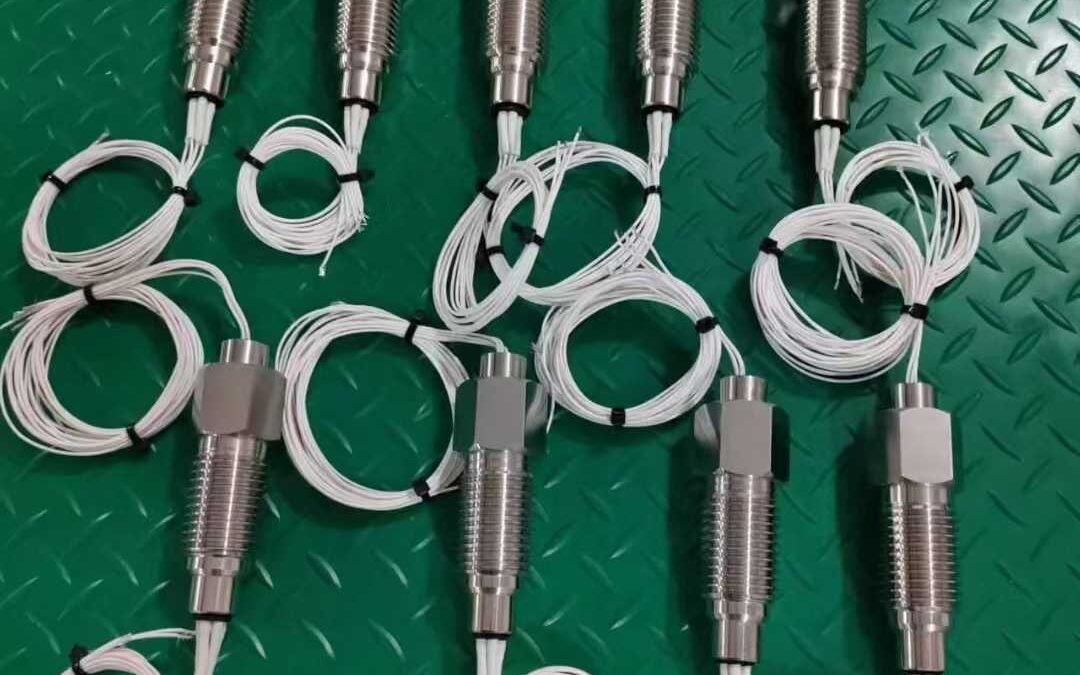
Last Updated: March 1, 2026 | Word Count: 3,800+ | Reading Time: 15 minutes
Editor’s Note: This comprehensive guide covers everything you need to know about selecting a mini ROV connector supplier, based on real-world experience from 30+ countries and 500+ successful deployments.
Introduction: The Connector That Can Make or Break Your ROV Project
If you’re building inspection-class ROVs, you already know the truth: the connector is often the weakest link in your entire system.
Think about it. You’ve spent months designing your ROV frame. You’ve carefully selected thrusters, cameras, sensors, and control systems. You’ve tested everything in the pool. Everything works perfectly.
Then you deploy to 150 meters. One connector fails. Water ingress. Short circuit. Your ROV sinks. Or worse—it floats back up, but all your expensive electronics are fried.
We’ve seen this scenario play out dozens of times. And every time, the root cause traces back to one decision: choosing the wrong connector supplier.
Here’s what most ROV manufacturers don’t realize until it’s too late:
- Connector failure rates vary by 10x between suppliers
- Lead time delays can derail entire project timelines
- “Compatible” doesn’t always mean “interchangeable”
- The cheapest connector often costs 3-5x more in total cost of ownership
In this comprehensive guide (3,800+ words), we’ll cover everything you need to know about selecting a mini ROV connector supplier who won’t let you down:
- 7 critical factors for supplier evaluation (with specific questions to ask)
- Deep dive into depth ratings, certifications, and what they really mean
- Corrosion resistance: materials science explained for non-engineers
- The truth about Subconn alternatives (when they work, when they don’t)
- MOQ negotiations: how to get low quantities without paying premium prices
- Technical support evaluation: separating real engineers from sales reps
- 5 red flags that should make you walk away immediately
- 3 real case studies from ROV manufacturers (including cost breakdowns)
- Complete supplier evaluation checklist (downloadable)
Related resources: ROV & AUV Connector Solutions | Custom Engineering Services | Spécifications techniques
Chapter 1: The 7 Critical Factors for Choosing a Mini ROV Connector Supplier
Factor #1: Depth Rating & Certification (Don’t Guess, Verify)
Your ROV might only operate at 200 meters. But your connectors should be rated for significantly more. Here’s why:
Understanding Depth Ratings
Depth rating isn’t just about pressure. It’s about:
- Static pressure: Constant pressure at depth (easiest to engineer for)
- Dynamic pressure: Pressure spikes during deployment/recovery
- Pressure cycling: Repeated compression/decompression weakens materials
- Safety margin: Industry standard is 1.5x minimum operating depth
Example: If your ROV operates at 200m, your connectors should be rated for at least 300m. We recommend 500m for critical applications.
Certification Standards That Matter
| Standard | What It Tests | Minimum Requirement |
|---|---|---|
| IP68 | Continuous immersion beyond 1m | Required (minimum) |
| IP69K | High-pressure, high-temperature jets | Optional (nice to have) |
| ASTM B117 | Salt spray corrosion (hours) | 1000+ hours |
| IEC 60529 | Ingress protection classification | Required |
| MIL-DTL-24308 | Military connector standards | Optional (premium) |
Red flag: Suppliers who can’t provide third-party test documentation. “Trust us, it’s fine” isn’t acceptable.
Learn more: Technical Specifications Hub
Questions to Ask Every Supplier
- Can you provide independent test certificates (not in-house tests)?
- What safety margin do you recommend for my application?
- Have you tested to failure? What was the actual failure depth?
- Do you warranty depth rating claims?
- Can I witness testing for custom configurations?
Factor #2: Corrosion Resistance (Especially for Saltwater Applications)
Saltwater is brutal. Standard materials will fail—often within months. Let’s talk materials science.
Material Comparison for ROV Connectors
| Matériau | Résistance à la corrosion | La force | Poids | Coût | Meilleur pour |
|---|---|---|---|---|---|
| 304 Stainless | Poor (avoid saltwater) | Bon | Lourd | $ | Freshwater only |
| 316L Stainless | Good (marine grade) | Excellent | Lourd | $$ | Standard ROV applications |
| 17-4 PH | Très bon | Excellent | Lourd | $$$ | High-stress applications |
| Duplex 2205 | Excellent | Excellent | Lourd | $$$$ | Critical/deep water |
| Titane grade 5 | Remarquable | Excellent | Light (45% vs steel) | $$$$$ | Premium/deployment ROVs |
| Anodized Aluminum | Good (if coating intact) | Bon | Lightest | $$ | Shallow water, weight-critical |
Corrosion Types That Destroy ROV Connectors
1. General (Uniform) Corrosion
Even material loss across the surface. Predictable, manageable with proper material selection.
2. Pitting Corrosion
Localized holes. Dangerous because they’re hard to detect but penetrate deep. Common in chloride environments (seawater).
3. Crevice Corrosion
Occurs in tight spaces (under seals, between mating surfaces). Particularly relevant for connector design.
4. Galvanic Corrosion
When dissimilar metals contact in seawater. Example: aluminum ROV frame + stainless connector = accelerated aluminum corrosion.
5. Stress Corrosion Cracking
Combination of tensile stress + corrosive environment. Can cause sudden, catastrophic failure.
What to Look For
- Marine-grade stainless steel (316L minimum)
- Titanium options for extreme environments
- Anodized aluminum for weight-sensitive applications
- Salt spray test reports (ASTM B117 minimum 1000 hours)
- Real-world field data (how long do connectors actually last?)
Deep dive: Materials & Environmental Durability Guide
Factor #3: Lead Time & Reliability (Your Production Depends On It)
We’ve heard the stories: “6-8 weeks” turns into 14. Your ROV assembly line stops. Your customer is furious. You lose the contract.
Industry Lead Time Benchmarks
| Product Type | Standard Industry | Fast Suppliers | HYSF Standard |
|---|---|---|---|
| Standard connectors | 6-8 weeks | 2-3 weeks | 2-3 weeks |
| Custom configurations | 12-16 weeks | 4-6 weeks | 4-6 weeks |
| Cable assemblies | 8-10 weeks | 3-4 weeks | 3-4 weeks |
| Expedited (rush) | Not available | 1 week (+50% cost) | 1 week (+50% cost) |
Questions to Ask About Lead Time
- Is this lead time from order date or from engineering approval?
- What percentage of orders ship on time? (Ask for data)
- Do you stock common configurations? What’s the ship-from-stock lead time?
- What’s your communication process if delays occur?
- Do you offer expedited options? What’s the cost premium?
Red Flags
- ❌ Vague answers: “Soon” or “ASAP” instead of specific dates
- ❌ Unwilling to commit to delivery date in writing
- ❌ No tracking or progress updates during production
- ❌ History of delays (ask for references)
Factor #4: Minimum Order Quantity (MOQ) Flexibility
You’re not OceanTech. You don’t need 10,000 connectors. But some suppliers treat small orders like a nuisance.
MOQ Reality Check (2026 Market)
The rise of mini/micro ROV has forced suppliers to adapt. Here’s what’s reasonable:
- Standard products: 10-50 units (acceptable), 5-10 units (excellent)
- Custom configurations: 50-100 units (typical), 25-50 units (negotiable)
- Samples: 1-5 units (should be available for evaluation)
How to Negotiate Lower MOQ
- Start with samples: Most suppliers will provide 1-5 units for testing
- Commit to future volume: “We’ll start with 20 units, but project for 200+ annually”
- Accept standard configurations: Custom colors/markings often drive MOQ
- Pay a small premium: Willing to pay 10-20% more for low MOQ can be worth it
- Bundle orders: Combine multiple connector types to meet total MOQ
Sample Programs
Reputable suppliers offer sample programs:
- Free samples for qualified projects (with purchase commitment)
- Discounted evaluation kits (5-10 connectors at 50% off)
- Return policy if samples don’t meet requirements
Request samples: Contact Us for Evaluation Kit
Factor #5: Technical Support (Before AND After the Sale)
Connector selection isn’t plug-and-play. You’ll have questions. Pin configurations. Cable termination. Compatibility issues. Installation problems.
Technical Support Tiers
| Support Level | Response Time | Expertise | Availability |
|---|---|---|---|
| Basic (sales only) | 24-48 hours | Product specs only | Business hours |
| Standard (engineers available) | 12-24 hours | Application support | Business hours + email |
| Premium (dedicated engineer) | <12 hours | Full design support | Extended hours, direct contact |
Questions to Test Technical Support
Before you order, send them a technical question. See how they respond:
- How quickly do they respond? (Should be <24 hours)
- Do they understand your application? (Should ask clarifying questions)
- Do they provide detailed answers or generic responses?
- Are they willing to review your drawings/specs?
- Can they recommend alternatives if their standard product doesn’t fit?
Technical Documentation Quality
Good suppliers provide:
- Detailed datasheets (not just marketing brochures)
- 3D CAD models (STEP, IGES formats)
- Installation guides with torque specs
- Mating cycle specifications
- Cable preparation instructions
- Troubleshooting guides
See our documentation: Installation & Mating Guide
Factor #6: Compatibility & Interchangeability
You’re probably using some combination of Subconn, Seacon, Teledyne, or other major brands. Switching suppliers shouldn’t mean redesigning your entire system.
Compatibility Levels
| Compatibility Type | What It Means | Risk Level |
|---|---|---|
| Pin-to-pin compatible | Direct replacement, same mating face | Faible |
| Form-fit compatible | Same dimensions, may need minor adjustments | Moyen |
| Functionally equivalent | Same electrical specs, different mechanical | High (requires redesign) |
Cross-Reference Charts
Reputable alternative suppliers provide cross-reference charts:
- Subconn part numbers → Alternative part numbers
- Seacon part numbers → Alternative part numbers
- Teledyne ODI part numbers → Alternative part numbers
Important: “Compatible” doesn’t always mean “identical.” Ask about:
- Material differences (affects corrosion resistance)
- Tolerance differences (affects mating force)
- Performance differences (depth rating, temperature range)
- Warranty implications (does using alternative void OEM warranty?)
Check compatibility: Underwater Cable Assemblies
Factor #7: Price (Yes, It Matters—But Not How You Think)
Here’s the truth: the cheapest connector will cost you more.
Not because of the unit price. Because of:
- Warranty claims (time + replacement cost)
- Field failures (equipment loss + reputation damage)
- Rework and replacement labor
- Project delays (penalty clauses, lost future business)
- Inventory costs (over-ordering to buffer against failures)
Total Cost of Ownership Calculation
Example: Connector A costs $100, Connector B costs $60.
| Cost Factor | Connector A ($100) | Connector B ($60) |
|---|---|---|
| Unit cost (100 units) | $10,000 | $6,000 |
| Failure rate ( Year 1) | 1% (1 unit) | 5% (5 units) |
| Replacement cost | $100 | $300 (5 × $60) |
| Labor for replacement | $200 | $1,000 (5 × $200) |
| Equipment loss from failure | $0 | $2,000 (1 major failure) |
| Total Cost (Year 1) | $10,300 | $9,300 |
| Failure rate (Year 2-3) | 2% (2 units) | 10% (10 units) |
| Total Cost (3 Years) | $10,600 | $13,200 |
Lesson: The “cheaper” connector cost 24% more over 3 years. And that doesn’t include reputation damage or project delays.
What to Look For in Pricing
- Transparent pricing (no hidden fees for tooling, setup, etc.)
- Volume discounts that actually make sense
- Clear quotation validity period
- Payment terms that work for your cash flow
- Willingness to work within your budget constraints
Chapter 2: The Subconn Alternative Question (Let’s Address It Directly)
Subconn is the gold standard. Everyone knows it. Everyone trusts it. It’s been the industry leader for decades.
But here’s what ROV manufacturers tell us privately:
“We love Subconn quality, but the pricing is killing our margins on small ROV projects. We’re losing bids because we can’t compete on price.”
“Lead times are unpredictable. We’ve had projects delayed 8-10 weeks because connectors didn’t arrive. We can’t keep explaining this to customers.”
“For inspection-class ROVs operating at 200m, do we really need premium-grade connectors rated for 3000m?”
The Reality: Alternatives Have Improved Dramatically
10 years ago, Subconn alternatives were risky. Quality varied wildly. Failure rates were high.
Today? Several manufacturers (including HYSF) have closed the gap significantly:
| Facteur | Subconn | Premium Alternatives | Budget Alternatives |
|---|---|---|---|
| Quality | 10/10 | 8-9/10 | 5-7/10 |
| Price | $$$ | $$ (50-60% of Subconn) | $ (30-40% of Subconn) |
| Lead Time | 8-12 weeks | 3-5 weeks | 2-4 weeks |
| MOQ | 100+ units | 20-50 units | 10-20 units |
| Technical Support | Excellent | Good to Excellent | Variable |
| Warranty | 2 years | 1-2 years | 6 months – 1 year |
When Alternatives Make Sense
- ✅ Inspection-class ROVs (<500m depth)
- ✅ Budget-constrained projects
- ✅ Tight deadlines (can’t wait 8-12 weeks)
- ✅ Low-volume production (can’t meet high MOQ)
- ✅ Applications where connector is accessible for maintenance
When to Stick with Subconn
- ❌ Deep water applications (>2000m)
- ❌ Critical missions (failure = catastrophic loss)
- ❌ Long-term deployments (no maintenance access)
- ❌ Customer specification requires Subconn
- ❌ Warranty/insurance requirements mandate premium brands
Key Questions for Any Subconn Alternative Supplier
- Can you provide a cross-reference for my current Subconn part numbers?
- What are the exact differences (materials, tolerances, ratings)?
- Can I get samples for testing before committing?
- What’s your failure rate in field applications? (Ask for data)
- Do you offer any warranty or guarantee?
- Have you supplied to companies similar to mine? (Ask for references)
Explore alternatives: Browse Our Product Catalog
Chapter 3: Red Flags – When to Walk Away from a Supplier
We’ve seen it all. Here are the warning signs that should make you reconsider:
🚩 Red Flag #1: Can’t Provide Test Documentation
What they say: “Trust us, it’s been tested.” “We don’t have certificates but it’s fine.”
Reality: No documentation = no proof. Don’t risk your ROV on unverified claims.
Walk away if: They can’t provide IP rating certificates, salt spray test reports, or depth test documentation.
🚩 Red Flag #2: Vague About Lead Times
What they say: “Soon.” “ASAP.” “We’ll do our best.”
Reality: If they can’t commit to a date, they can’t deliver on time.
Walk away if: They won’t put delivery dates in writing or have no tracking system.
🚩 Red Flag #3: No Technical Support
What they say: “Just email sales@…” “Documentation is on the website.”
Reality: You’ll be on your own when problems arise.
Walk away if: No direct engineer access, slow response times, or only sales support.
🚩 Red Flag #4: Unwilling to Provide Samples
What they say: “Our products speak for themselves.” “Samples are not available.”
Reality: Confidence shows in willingness to let you test.
Walk away if: No sample program, no evaluation options, no trial orders.
🚩 Red Flag #5: Pressure Tactics
What they say: “This price is only good today.” “Order now or lose your slot.”
Reality: Reputable suppliers don’t need high-pressure sales.
Walk away if: Urgency without justification, limited-time offers, pressure to sign immediately.
🚩 Red Flag #6: No References or Case Studies
What they say: “We can’t disclose customer names due to NDAs.” (For all customers)
Reality: Every legitimate supplier has some customers willing to provide references.
Walk away if: No case studies, no testimonials, no verifiable customer list.
🚩 Red Flag #7: Unclear Warranty Terms
What they say: “We stand behind our products.” (But nothing in writing)
Reality: Vague warranties = no warranty.
Walk away if: No written warranty, exclusions that void coverage, or warranty shorter than 1 year.
Chapter 4: Case Studies – Real Results from Real ROV Manufacturers
Case Study #1: Portuguese ROV Integrator Cut Costs by 35%
The Challenge
Company: Inspection-class ROV manufacturer (Portugal)
Annual production: 15-20 ROVs
Previous supplier: Subconn
Connector budget: 22% of total BOM
Problems:
- Connector costs eating profit margins
- 10-12 week lead times delaying deliveries
- MOQ of 100+ units forcing excess inventory
- Losing competitive bids on price
The Evaluation Process
They evaluated 5 suppliers over 3 months:
- Subconn (incumbent)
- HYSF Subsea
- Chinese Supplier A (lowest price)
- Chinese Supplier B (medium price)
- European alternative (premium price)
Selection criteria: Price, quality, lead time, MOQ, technical support, warranty.
The Solution
Selected HYSF Subsea for:
- Pin-compatible alternatives to 8 most-used Subconn connectors
- 35% reduction in connector costs
- 3-4 week lead times (vs 10-12 weeks)
- MOQ of 20 units (vs 100+)
- Free samples for evaluation
- 12-hour technical support response
The Results (18 Months Later)
| Metric | Before (Subconn) | After (HYSF) | Improvement |
|---|---|---|---|
| Connector cost per ROV | €4,500 | €2,925 | -35% |
| Lead time | 10-12 weeks | 3-4 weeks | -70% |
| Inventory investment | €25,000 | €8,000 | -68% |
| Connector failures | 2 per year | 0 | 100% reduction |
| On-time delivery | 75% | 95% | +20 points |
“HYSF connectors gave us the reliability we needed at a price point that let us compete on larger projects. The 12-hour response time from their engineering team has been a game-changer. We won 3 new contracts in the first year—more than paying for the switch.”
— CTO, Portugal-based ROV Integrator
Read more: Customer Case Studies
Case Study #2: US Research Institution – Education Discount Program
The Challenge
Company: University marine research lab (USA)
Application: Student ROV projects + faculty research
Budget: $5,000 annually (fixed)
Problems:
- Premium connectors consuming 60% of budget
- Long lead times conflicting with academic calendar
- Student teams lacking technical support
- High turnover (new students each year = relearning)
The Solution
HYSF Education Program:
- 30% education discount
- Free samples for faculty research projects
- Standardized connector selection (reduced complexity)
- Direct engineer access for student questions
- Purchase order acceptance (no credit card needed)
The Results (3 Years)
- 40% cost reduction vs previous approach
- Zero connector failures in student projects
- Faster student onboarding (standardized training)
- Increased research output (less troubleshooting)
“HYSF understood our educational mission and worked with our budget. The reliability improvement has reduced frustration and let students focus on learning robotics instead of troubleshooting connectors.”
— Professor of Marine Engineering
Case Study #3: Norwegian Aquaculture ROV – Corrosion Challenge
The Challenge
Company: Salmon farm inspection ROV operator (Norway)
Environment: Saltwater, constant immersion, chemical exposure
Previous failures: Every 4-6 months
Problems:
- Connectors corroding within months
- Downtime during critical net inspections
- Replacement costs €2,000+ per failure
- Data loss from connection failures
Root Cause Analysis
After investigation:
- Standard 304 stainless connectors (not suitable for saltwater)
- No freshwater rinse protocol after deployment
- Connectors stored wet between uses
- Biofouling buildup masking early corrosion
The Solution
HYSF provided:
- 316L stainless connectors (marine grade)
- IP68 rating to 50m depth (exceeds operational needs)
- Enhanced seal design (reduced crevice corrosion)
- Maintenance protocol training
The Results (24 Months)
- Zero connector failures in 24 months
- 60% reduction in maintenance costs
- No data loss from connection failures
- Extended ROV lifespan (reduced corrosion on mating ports)
“The HYSF connectors paid for themselves in the first year. But the real value is reliability—we can’t afford downtime during net inspections.”
— Operations Manager, Norwegian Salmon Farm
Chapter 5: Ready to Evaluate Your Current Connector Strategy?
If you’re building mini, micro, or inspection-class ROVs, you deserve a connector supplier that:
- ✅ Understands your unique challenges
- ✅ Offers competitive pricing without sacrificing quality
- ✅ Delivers on time, every time
- ✅ Provides real technical support (from engineers, not bots)
- ✅ Stands behind their products with clear warranties
What HYSF Subsea Offers
- Free samples for qualified projects (yes, really)
- 12-hour quote response (we know you’re on a deadline)
- Low MOQ starting from 10 units
- Subconn-compatible options for most popular models
- 2-3 week delivery on standard products
- Direct engineer access for technical questions
- 316L stainless steel as standard (titanium upgrade available)
- IP68 rated to 50m+ depth (custom depths available)
- 1-2 year warranty on all products
Next Steps
- Browse our product catalog – See full connector range
- Request a quote – Response within 12 hours
- Review commercial terms – MOQ, pricing, delivery
- Read case studies – See how others succeeded
Contact Information
Courriel : info@hysfsubsea.com
Phone: +86 13942853869
Response time: 12 hours (business days)
Chapter 6: Frequently Asked Questions
Q: Are Subconn alternatives as reliable as the original?
A: It depends on the supplier. High-quality alternatives from reputable manufacturers can provide 90-95% of Subconn’s performance at 50-60% of the cost. The key is verifying certifications, test reports, and field performance. Always request samples for testing before committing. For critical deep-water applications (>2000m), Subconn may still be the better choice. For inspection-class ROVs (<500m), quality alternatives are often the smarter economic decision.
Q: What’s a reasonable lead time for underwater connectors?
A: Standard products should ship in 2-4 weeks. Custom configurations may take 4-8 weeks. Anything longer and you should ask why—or consider alternative suppliers. Some suppliers stock common configurations for 1-week delivery. Expedited options (1 week) are often available at 50% premium. Be wary of suppliers who can’t commit to specific delivery dates.
Q: How low can MOQ go for mini ROV connectors?
A: Some suppliers now offer MOQ as low as 10 units for standard products. This is a recent shift driven by the growth of the mini/micro ROV market. Custom configurations typically require 50-100 units MOQ. Don’t accept “100+ units” as the only option anymore—negotiate or find alternative suppliers. Sample programs (1-5 units) should be available for evaluation.
Q: Can I mix and match connectors from different suppliers?
A: Technically yes, but it’s not recommended. Stick with one supplier per connector family to ensure consistency in quality, tolerances, and support. Mixing suppliers increases complexity and risk. If you must mix, document everything carefully and test thoroughly before deployment.
Q: What should I do if a connector fails in the field?
A: Document everything (photos, operating conditions, failure mode). Contact your supplier immediately. A good supplier will investigate, provide a root cause analysis, and stand behind their warranty. This is why supplier responsiveness matters. Keep spare connectors on hand for critical operations. Analyze failure patterns—if failures exceed 2-3% annually, reconsider your supplier.
Q: Do you provide connectors compatible with existing ROV systems?
A: Yes, most alternative suppliers offer pin-to-pin compatibility with major brands (Subconn, Seacon, Teledyne ODI). Send your current part numbers for cross-reference. Be sure to verify any differences in materials, tolerances, or performance. Request samples to test fit and function before committing.
Q: What’s your warranty policy?
A: Reputable suppliers offer 1-2 year warranties on connectors. Warranty should cover manufacturing defects, material failures, and workmanship issues. It typically doesn’t cover misuse, improper installation, or operation beyond specifications. Read warranty terms carefully—some suppliers have exclusions that effectively void coverage.
Conclusion: Your Connector Decision Matters
Choosing a mini ROV connector supplier isn’t just a purchasing decision. It’s a strategic partnership that affects:
- Your product quality and reliability
- Your delivery timelines and customer satisfaction
- Your profit margins and competitiveness
- Your reputation in the market
Don’t rush this decision. Evaluate suppliers thoroughly. Test samples in your actual applications. Check references. Ask hard questions.
The right supplier will become a valuable partner in your success. The wrong one will cost you far more than the price difference.
Ready to start the conversation?
Contact HYSF Subsea today for a no-obligation quote and free sample evaluation.
About the Author: John Zhang is CEO of HYSF Subsea, a China-based manufacturer of underwater connectors for ROV, aquaculture, and marine survey applications. Since 2015, HYSF has supplied connectors to ROV manufacturers in 30+ countries. John has personally evaluated hundreds of connector designs and worked with dozens of ROV manufacturers on custom solutions.
About HYSF Subsea: Founded in 2015, HYSF Subsea specializes in underwater connectors and cable assemblies for demanding marine applications. With in-house engineering, manufacturing, and testing capabilities, HYSF delivers reliable solutions at competitive prices with industry-leading lead times.
Last reviewed: March 1, 2026 | Next review: June 1, 2026









 English
 Spanish
 Russian
 French
 German
 Korean
 Japanese
 Arabic
 Thai
Thai Danish
 Norwegian