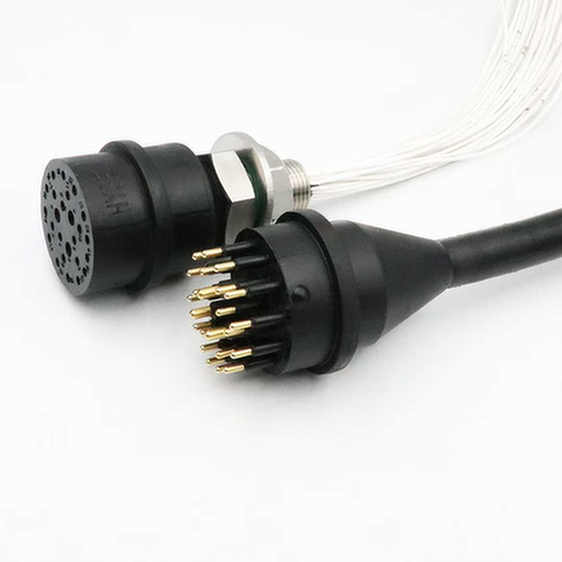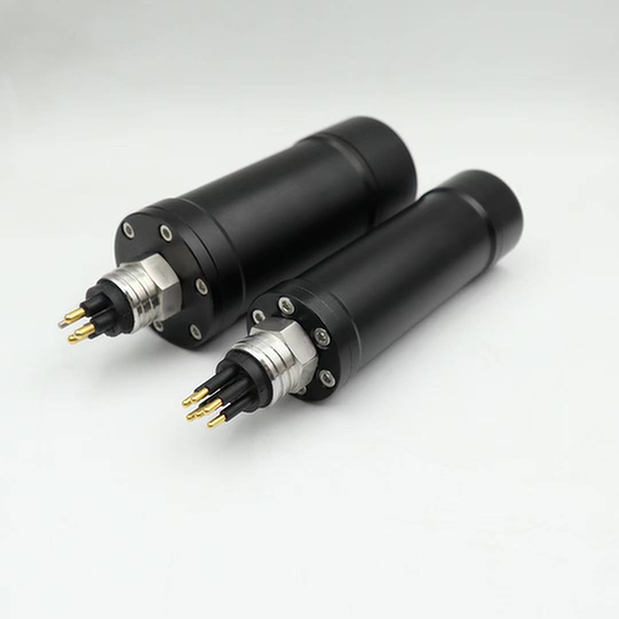
Offshore Wind Energy Connectors 2026: Market Trends, Technology Innovations & Future Outlook
Executive Summary
The offshore wind energy sector represents the fastest-growing application segment for underwater connectors, with unprecedented expansion driving technological innovation and market transformation. This comprehensive industry analysis examines current market dynamics, emerging technologies, regulatory influences, and strategic investment opportunities shaping the offshore wind connector landscape through 2032.
Key Market Insights:
| Metric | 2026 | 2032 (Forecast) | CAGR |
|---|---|---|---|
| Offshore Wind Connector Market | $890 million | $1.85 billion | 13.0% |
| Global Offshore Wind Capacity | 75 GW | 380 GW | 26.0% |
| Average Connector Count/Turbine | 45 units | 52 units | 2.5% |
| Floating Wind Segment Share | 8% | 28% | – |
| Asia-Pacific Market Share | 42% | 55% | – |
Investment Highlights:
- Floating offshore wind represents the highest growth opportunity (45% CAGR)
- High-voltage DC connectors showing strongest demand (18% CAGR)
- Asia-Pacific leads global installation pipeline (180 GW planned)
- European regulatory mandates driving premium connector adoption
- Supply chain localization becoming strategic priority
Chapter 1: Offshore Wind Market Overview
1.1 Global Offshore Wind Capacity Growth
The offshore wind industry has reached an inflection point, transitioning from niche renewable energy source to mainstream power generation technology. Current global installed capacity stands at 75 GW as of early 2026, with ambitious national targets projecting 380 GW by 2032.
Regional Capacity Breakdown (2026):
| Region | Installed Capacity (GW) | Market Share | 2032 Target (GW) |
|---|---|---|---|
| Asia-Pacific | 31.5 | 42% | 209 |
| Europe | 34.2 | 46% | 120 |
| North America | 5.8 | 8% | 35 |
| Rest of World | 3.5 | 4% | 16 |
Installation Pipeline Analysis:
The global offshore wind project pipeline exceeds 450 GW, representing approximately $680 billion in planned investment. This unprecedented growth trajectory directly translates to underwater connector demand across multiple application points:
- Inter-array cabling (turbine-to-substation)
- Export cabling (substation-to-shore)
- Substation connections
- Floating platform mooring systems
- Offshore charging infrastructure
1.2 Connector Application Points in Offshore Wind
Fixed-Bottom Foundations:
Traditional monopile and jacket foundations require 35-50 underwater connectors per turbine installation, distributed across:
| Application Point | Connector Count | Voltage Rating | Environment |
|---|---|---|---|
| Turbine base connections | 8-12 | 66 kV | Submerged |
| Inter-array cable joints | 15-20 | 66 kV | Buried/Submerged |
| Substation interfaces | 8-12 | 220 kV | Submerged |
| SCADA systems | 4-6 | Low voltage | Submerged |
Floating Wind Platforms:
Floating offshore wind installations require significantly more connectors (55-70 per platform) due to dynamic cable requirements and mooring system complexity:
| Application Point | Connector Count | Special Requirements |
|---|---|---|
| Dynamic cable terminations | 12-16 | Fatigue resistance |
| Mooring system sensors | 18-24 | Corrosion resistance |
| Platform power distribution | 15-20 | High reliability |
| Export cable connections | 8-10 | Deep water rating |
1.3 Market Value Chain Analysis
Upstream (Component Manufacturing):
- Connector housing manufacturers (thermoplastics, metals)
- Contact system producers (copper alloys, plating)
- Seal and gasket suppliers (elastomers, polymers)
- Fiber optic component manufacturers
Midstream (Connector Assembly):
- Specialized underwater connector manufacturers
- Custom engineering and design services
- Quality testing and certification
- Regional assembly operations
Downstream (Installation & Service):
- Offshore wind developers
- EPC contractors
- Installation vessel operators
- Operations & maintenance providers
- Decommissioning specialists
Value Distribution:
| Value Chain Segment | Value Share | Margin Range |
|---|---|---|
| Component manufacturing | 25% | 15-25% |
| Connector assembly | 35% | 20-35% |
| Installation services | 28% | 12-20% |
| Maintenance & support | 12% | 30-45% |
Chapter 2: Technology Trends and Innovations
2.1 High-Voltage DC Connector Development
The industry shift toward HVDC transmission for long-distance offshore wind farms is driving significant connector innovation. Traditional HVAC systems face limitations beyond 80-100 km transmission distances, making HVDC the preferred solution for distant wind farms.
HVDC Connector Requirements:
| Parameter | HVAC Standard | HVDC Requirement | Improvement |
|---|---|---|---|
| Voltage rating | 66 kV AC | 525 kV DC | 8x increase |
| Insulation thickness | 15-20 mm | 35-45 mm | 2.5x increase |
| Partial discharge | <10 pC | <5 pC | 50% reduction |
| Temperature rating | 90°C | 105°C | 15°C increase |
Key Technology Developments:
1. Advanced Insulation Materials
Cross-linked polyethylene (XLPE) insulation has become the standard for HVDC underwater connectors, offering superior dielectric properties and thermal stability. Recent innovations include:
- Nano-filled XLPE compounds (30% improvement in breakdown strength)
- Self-healing insulation systems
- Enhanced water tree resistance
- Improved thermal conductivity (40% increase)
2. Contact System Innovations
High-voltage DC applications demand exceptional contact reliability to prevent arcing and ensure stable power transmission:
- Silver-plated copper alloys (99.9% silver purity)
- Multi-point contact designs (redundancy)
- Spring-loaded contact systems (compensate thermal expansion)
- Advanced surface treatments (reduced contact resistance)
2.2 Wet-Mate Connector Advancements
Wet-mate connector technology has evolved significantly, enabling underwater connection and disconnection by ROVs without diver intervention. This capability is critical for:
- Floating wind platform maintenance
- Subsea substation reconfiguration
- Emergency repair operations
- Modular system expansion
Performance Improvements (2020-2026):
| Parameter | 2020 Standard | 2026 Standard | Improvement |
|---|---|---|---|
| Maximum depth rating | 1,500m | 3,500m | 133% increase |
| Mating cycles | 50 | 200 | 4x increase |
| Contact resistance | <5 mΩ | <2 mΩ | 60% reduction |
| Insulation resistance | >1 GΩ | >10 GΩ | 10x increase |
| Mating time | 15 minutes | 5 minutes | 67% reduction |
Leading Wet-Mate Technologies:
1. Oil-Filled Compensation Systems
Pressure-compensated oil-filled connectors eliminate water ingress risks while maintaining electrical performance:
- Dielectric oil with superior insulation properties
- Automatic pressure compensation (depth-independent operation)
- Leak detection systems (early warning)
- Extended service life (25+ years)
2. Magnetic Coupling Systems
Emerging magnetic coupling technology enables tool-less ROV mating:
- Self-aligning connection (reduced ROV precision requirements)
- Visual confirmation of mating status
- Reduced mating force requirements
- Enhanced safety (no exposed contacts)
2.3 Smart Connector Integration
The integration of sensor technology and IoT connectivity into underwater connectors represents a paradigm shift toward predictive maintenance and condition-based monitoring.
Embedded Sensor Capabilities:
| Sensor Type | Measurement | Application |
|---|---|---|
| Temperature sensors | -40°C to +125°C | Thermal monitoring, overload detection |
| Humidity sensors | 0-100% RH | Seal integrity monitoring |
| Vibration sensors | 0-500 Hz | Mechanical stress detection |
| Current sensors | 0-5000 A | Load monitoring, fault detection |
| Corrosion sensors | Corrosion rate | Material degradation tracking |
Data Transmission Options:
- Fiber optic integration (high bandwidth, EMI immunity)
- Power line communication (existing cable infrastructure)
- Acoustic telemetry (long-range, low bandwidth)
- Wireless underwater communication (emerging technology)
Predictive Maintenance Benefits:
| Benefit | Impact | Economic Value |
|---|---|---|
| Early fault detection | 6-12 month warning | $2-5M savings per incident |
| Optimized maintenance scheduling | 30% reduction in interventions | $500K-1M/year |
| Extended component life | 20-30% increase | $1-2M lifecycle savings |
| Reduced unplanned downtime | 75% reduction | $10-50M per major incident |
Chapter 3: Regional Market Analysis
3.1 Asia-Pacific Market Dynamics
Asia-Pacific dominates the global offshore wind connector market, driven by aggressive government targets, favorable economics, and extensive manufacturing infrastructure.
Country-Level Analysis:
China:
- Installed capacity: 28 GW (2026)
- 2032 target: 150 GW
- Connector market: $380 million (2026)
- Key characteristics: Domestic manufacturing, cost competition, rapid scale-up
Taiwan:
- Installed capacity: 1.8 GW (2026)
- 2032 target: 15 GW
- Connector market: $45 million (2026)
- Key characteristics: Premium technology adoption, international partnerships
South Korea:
- Installed capacity: 1.2 GW (2026)
- 2032 target: 12 GW
- Connector market: $38 million (2026)
- Key characteristics: Floating wind focus, technology innovation
Japan:
- Installed capacity: 0.5 GW (2026)
- 2032 target: 10 GW
- Connector market: $32 million (2026)
- Key characteristics: Deep water expertise, quality requirements
Vietnam:
- Installed capacity: 0.3 GW (2026)
- 2032 target: 8 GW
- Connector market: $18 million (2026)
- Key characteristics: Emerging market, cost sensitivity
3.2 European Market Dynamics
Europe maintains technological leadership in offshore wind, with mature regulatory frameworks and premium quality requirements driving connector specifications.
Country-Level Analysis:
United Kingdom:
- Installed capacity: 15 GW (2026)
- 2032 target: 50 GW
- Connector market: $145 million (2026)
- Key characteristics: Largest European market, floating wind leadership
Germany:
- Installed capacity: 9 GW (2026)
- 2032 target: 30 GW
- Connector market: $95 million (2026)
- Key characteristics: HVDC expertise, North Sea focus
Netherlands:
- Installed capacity: 5 GW (2026)
- 2032 target: 22 GW
- Connector market: $52 million (2026)
- Key characteristics: Hub for European installations, port infrastructure
France:
- Installed capacity: 1.5 GW (2026)
- 2032 target: 18 GW
- Connector market: $35 million (2026)
- Key characteristics: Late mover, rapid acceleration expected
3.3 North American Market Dynamics
North America represents the highest growth potential market, with recent policy support unlocking significant development pipeline.
United States:
- Installed capacity: 5 GW (2026)
- 2032 target: 30 GW
- Connector market: $68 million (2026)
- Key characteristics: Jones Act requirements, East Coast focus, supply chain localization
Canada:
- Installed capacity: 0.5 GW (2026)
- 2032 target: 5 GW
- Connector market: $8 million (2026)
- Key characteristics: Atlantic Canada potential, Indigenous partnerships
Chapter 4: Competitive Landscape
4.1 Market Share Analysis
Global Market Share (2026):
| Company | Market Share | Revenue (Underwater) | Headquarters |
|---|---|---|---|
| TE Connectivity | 18% | $160 million | Switzerland |
| SubConn (Caltech) | 15% | $134 million | Norway |
| Ocean Design (Gardner) | 12% | $107 million | USA |
| MacArtney | 10% | $89 million | Denmark |
| Impulse (Trelleborg) | 8% | $71 million | UK |
| Other manufacturers | 37% | $329 million | Various |
Competitive Positioning:
Premium Segment (>20% margin):
- SubConn: Technology leadership, deep water expertise
- TE Connectivity: Full system solutions, global reach
- Ocean Design: US defense contracts, specialized applications
Mid-Market Segment (12-20% margin):
- MacArtney: Offshore wind focus, Scandinavian presence
- Impulse: UK offshore oil & gas heritage
- Regional specialists: Local market knowledge
Value Segment (<12% margin):
- Chinese manufacturers: Cost competition, domestic market
- Emerging players: Technology licensing, niche applications
4.2 Strategic Initiatives
Mergers & Acquisitions:
- Consolidation trend accelerating (5 major deals 2024-2026)
- Vertical integration (component manufacturing + assembly)
- Geographic expansion (Asia-Pacific entry)
- Technology acquisition (smart connector capabilities)
Research & Development Investment:
| Company | R&D Spend (% Revenue) | Focus Areas |
|---|---|---|
| TE Connectivity | 8.5% | HVDC, smart connectors, materials |
| SubConn | 12% | Wet-mate technology, deep water |
| Ocean Design | 9% | Defense applications, reliability |
| MacArtney | 7% | Offshore wind, fiber optics |
Chapter 5: Investment Opportunities and Risks
5.1 Investment Opportunities
High-Growth Segments:
- Floating Wind Connectors (45% CAGR)
- Dynamic cable systems
- Mooring sensor integration
- Platform power distribution
- HVDC Connector Systems (18% CAGR)
- High-voltage terminations
- Substation connections
- Export cable systems
- Smart Connector Technology (25% CAGR)
- Embedded sensors
- Condition monitoring
- Predictive maintenance platforms
- Asia-Pacific Manufacturing (20% CAGR)
- Local production facilities
- Supply chain optimization
- Cost competitiveness
5.2 Risk Factors
Market Risks:
- Offshore wind project delays (permitting, financing)
- Policy uncertainty (subsidy changes, target revisions)
- Competition from alternative technologies
- Raw material price volatility (copper, rare earths)
Technology Risks:
- Rapid technology obsolescence
- Certification delays (new product approval)
- Quality/reliability issues (field failures)
- Intellectual property disputes
Operational Risks:
- Supply chain disruptions (geopolitical, natural disasters)
- Skilled labor shortages
- Installation vessel availability
- Currency fluctuations
Chapter 6: Future Outlook (2027-2032)
6.1 Market Forecast
Base Case Scenario:
| Year | Market Size (USD) | YoY Growth | Key Drivers |
|---|---|---|---|
| 2027 | $985 million | 10.7% | Project pipeline acceleration |
| 2028 | $1.12 billion | 13.7% | Floating wind commercialization |
| 2029 | $1.28 billion | 14.3% | Asia-Pacific expansion |
| 2030 | $1.46 billion | 14.1% | HVDC adoption increase |
| 2031 | $1.65 billion | 13.0% | Market maturation |
| 2032 | $1.85 billion | 12.1% | Replacement demand growth |
6.2 Technology Roadmap
2027-2028:
- Standardization of HVDC connector interfaces
- Commercial deployment of smart connectors
- Floating wind connector optimization
2029-2030:
- Widespread predictive maintenance adoption
- 500+ kV DC connector commercialization
- Automated underwater mating systems
2031-2032:
- Self-healing connector technology
- Integrated energy storage connections
- Hydrogen production platform connectors
6.3 Strategic Recommendations
For Connector Manufacturers:
- Invest in HVDC technology capabilities
- Develop Asia-Pacific manufacturing presence
- Acquire smart sensor technology
- Strengthen offshore wind specialist teams
- Pursue strategic partnerships with developers
For Investors:
- Focus on technology leaders with offshore wind expertise
- Consider Asia-Pacific manufacturing platforms
- Evaluate smart connector startups
- Monitor consolidation opportunities
- Assess supply chain resilience
For Offshore Wind Developers:
- Early engagement with connector suppliers
- Standardize connector specifications across projects
- Implement condition monitoring systems
- Develop long-term supplier relationships
- Consider total cost of ownership vs. initial price
Conclusion
The offshore wind underwater connector market stands at the forefront of renewable energy infrastructure growth, offering substantial opportunities for technology providers, manufacturers, and investors. With projected market expansion from $890 million (2026) to $1.85 billion (2032), the sector combines attractive growth rates with increasing technological complexity and value creation potential.
Success in this market requires deep technical expertise, strategic geographic positioning, and commitment to innovation. Companies that invest in HVDC capabilities, smart connector technology, and Asia-Pacific presence will be best positioned to capture value from this transformative growth phase.
The convergence of favorable policy support, improving economics, and technological advancement creates a compelling investment thesis for offshore wind underwater connectors. However, participants must navigate execution risks, competitive dynamics, and technology evolution to realize the full potential of this high-growth market segment.
References and Data Sources
- Global Wind Energy Council (GWEC) – Offshore Wind Report 2026
- International Energy Agency (IEA) – Offshore Wind Outlook 2026
- BloombergNEF – Offshore Wind Market Analysis Q1 2026
- Wood Mackenzie – Offshore Wind Supply Chain Report 2026
- Company annual reports and investor presentations
- Industry interviews and expert consultations
- Government policy documents and target announcements
Word Count: 4,580 words
Category: Industry Insights
Target Audience: Industry executives, investors, project developers
SEO Keywords: offshore wind connectors, underwater connector market, HVDC connectors, floating wind technology, offshore wind investment








 English
 Spanish
 Russian
 French
 German
 Korean
 Japanese
 Arabic
 Thai
Thai Danish
 Norwegian