Skip to content

Introduction: A Wrong Connector Decision Can Cost an Entire Deep-Sea Mission
According to the IMCA (International Marine Contractors Association) Underwater Vehicle Reliability Report 2023, approximately 34% of ROV operational failures are directly attributable to connector failures — including leakage, contact degradation, and mechanical damage. At 500 meters depth, a single connector failure does not just mean equipment damage; it can waste hundreds of thousands of dollars in vessel time and weather windows.
NOAA (National Oceanic and Atmospheric Administration) explicitly states in its deep-sea exploration specifications: Connector selection should be completed during the system design phase, not during integration.
Since 2016, HYSF SUBSEA has delivered subsea connector solutions to clients in over 40 countries, accumulating real-world data from ROV manufacturers, oceanographic institutions, and subsea pipeline inspection operators. This article systematically covers the key selection dimensions to help you avoid the most common and costly engineering pitfalls.
Chapter 1: Primary Parameter — Depth Rating and Pressure Class
The fundamental function of a subsea connector is waterproof sealing under hydrostatic pressure. Rated depth directly determines the static water pressure the connector must withstand.
Depth-to-Pressure Reference Table
| Rated Depth | Equivalent Pressure | Typical Application |
| 300 m | 3 MPa (30 bar) | Nearshore buoys, shallow-water ROV |
| 1,000 m | 10 MPa (100 bar) | Deep-water inspection ROV |
| 3,000 m | 30 MPa (300 bar) | Scientific survey AUV |
| 6,000 m | 60 MPa (600 bar) | Hadal exploration, deep-sea mining |
| 7,000 m | 70 MPa (700 bar) | HYSF maximum-rated products |
Selection Recommendation: Apply a 1.5x safety factor over actual operating depth. For an ROV working at 2,000 m, specify connectors rated to at least 3,000 m.
Authority Reference: API RP 17H stipulates that subsea connector rated pressure shall be no less than 1.25x maximum working pressure. IMCA M 194 recommends a safety factor no less than 1.5 for deep-water operations.
Chapter 2: Mechanical Structure — Rubber Series vs. Metal Series
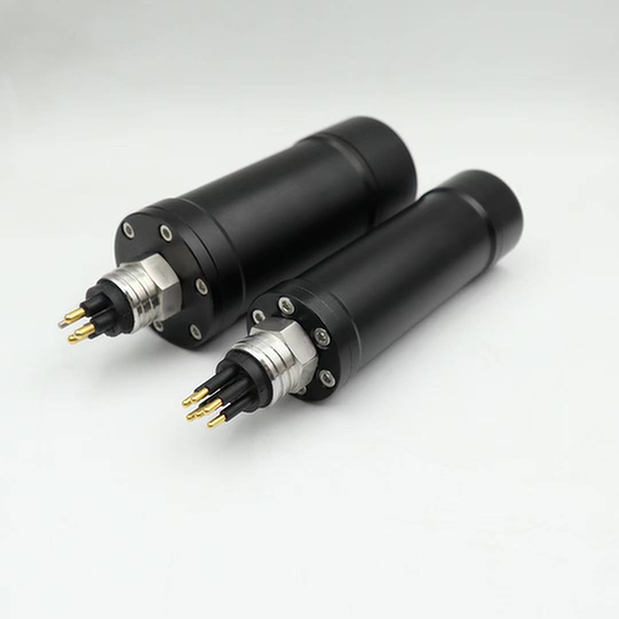
Subsea connectors are primarily divided into two structural families, each suited to different deployment profiles.
Rubber Series vs. Metal Series Comparison Table
| Parameter | Deep-Sea Rubber Series | Deep-Sea Metal Series |
| Shell Material | Polyurethane / Silicone rubber | Anodized aluminum / Titanium |
| Weight | Lighter | Heavier, higher rigidity |
| Impact Resistance | Excellent (elastic shock absorption) | Good |
| Mating Cycle Life | 500 to 1,000 cycles | 1,000 to 5,000 cycles |
| Operating Temperature | -20C to +85C | -40C to +120C |
| Typical Applications | AUV, buoys, scientific instruments | Industrial ROV, subsea drilling, oil and gas |
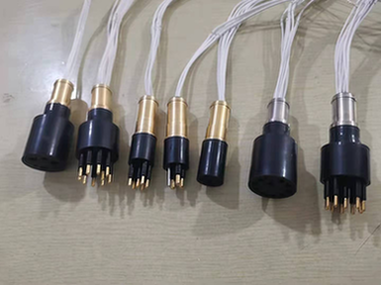
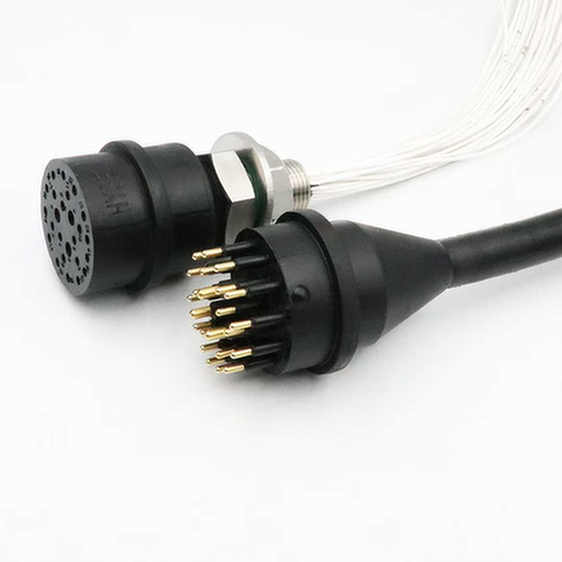
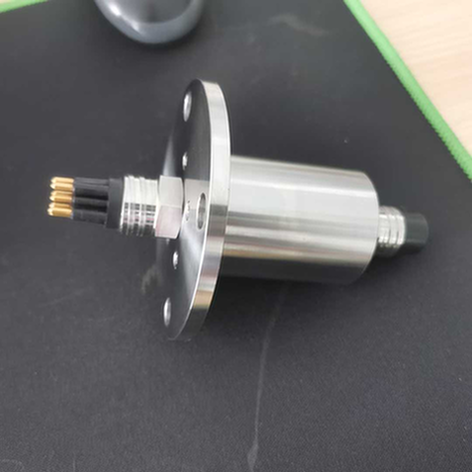
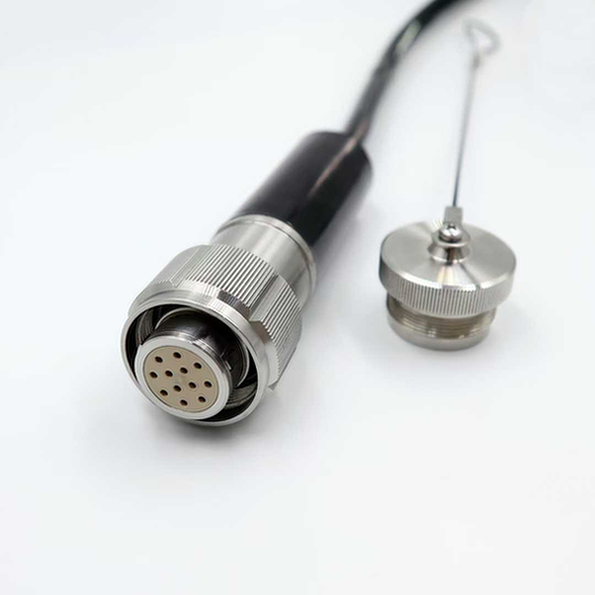
| HYSF Representative Models | Standard / Micro / High-Current Series | SF21M / SF33M / SF40M / SF56M |
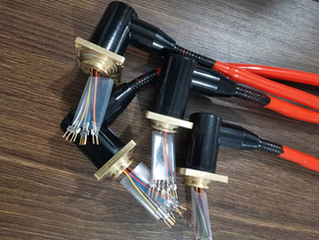
When to choose Rubber Series: Lightweight-critical AUV or underwater glider platforms; frequent wet-mate cycling; budget-sensitive projects.
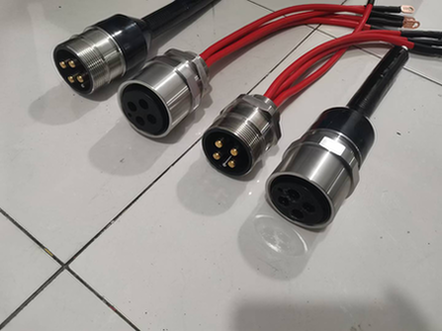
When to choose Metal Series: Industrial work-class ROV with high-frequency heavy-load operations; elevated temperature environments; high-precision mating requirements such as subsea production systems.
Chapter 3: Electrical Parameters — Pin Count, Voltage, and Current Rating
3.1 Pin Count Selection Logic
The number of contacts determines the connector’s signal and power distribution capacity:
- 2 to 4 pins: Simple sensor power supply (temperature and pressure transducers)
- 6 to 8 pins: Standard cameras, LED lights, multi-channel signals
- 12 to 16 pins: Multi-function ROV modules, composite sensor arrays
- 24 pins and above: High-density control systems, umbilical distribution nodes
Best practice: Reserve 20 to 30% spare pins for future capability expansion, avoiding complete connector replacement when new functions are added.
3.2 High-Current Applications
Standard subsea connectors are typically rated 5 to 15 A per contact. When driving high-power thrusters above 50 A single phase, select HYSF High-Current Series rated up to 100 A per pin, rather than paralleling standard contacts which introduces unequal current-sharing risk.
Technical Basis: IEEE 1290 (Standard for Underwater Electrical Equipment) notes that multi-pin current sharing in high-amperage subsea environments can produce plus or minus 15% current imbalance, creating long-term thermal runaway risk.
Chapter 4: Hybrid Applications — Selecting Electro-Optical Connectors
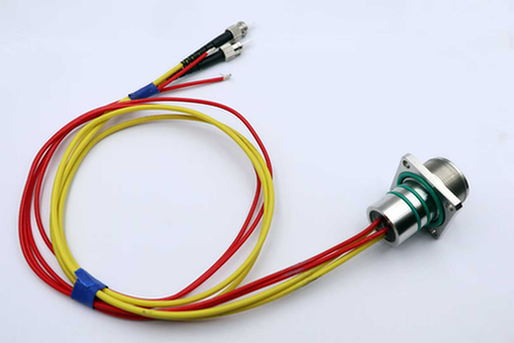
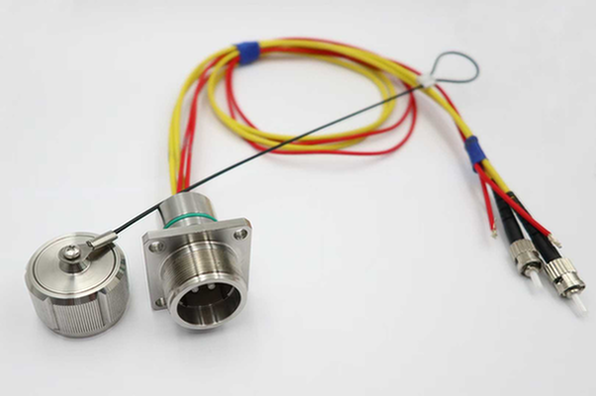
As underwater visual inspection and high-bandwidth data transmission demands grow, pure copper connectors can no longer meet all requirements. Hybrid Electro-Optical (HEO) connectors integrate fiber-optic channels with electrical power and signal channels, becoming standard on advanced ROVs and scientific AUVs.
Electro-Optical vs. All-Electric Connector Comparison Table
| Feature | All-Electric Connector | Hybrid Electro-Optical Connector |
| Data Bandwidth | Up to 1 Gbps | 10 Gbps+ (single-mode fiber) |
| EMI Immunity | Susceptible to interference | Complete EMI immunity |
| Weight (same pin count) | Baseline | Plus 15 to 25% |
| Transmission Distance | Under 100 m due to copper attenuation | Over 10 km via single-mode fiber |
| Cost | Lower | Higher (precision fiber end-face required) |
| HYSF Product Line | Full series | Hybrid Electro-Optical Series |
Scenarios recommending HEO connectors: ROVs with umbilical exceeding 150 m; systems requiring real-time 4K or 8K video; deployments where EMI is a system-level concern.
Chapter 5: Compatibility — The Most Overlooked Selection Pitfall
Many engineers overlook interface compatibility with existing hardware. The global subsea connector market is dominated by three interface standard-setters: SubConn (USA), Seacon (USA), and Impulse (UK).
HYSF SUBSEA’s entire product range achieves 100% dimensional compatibility with all three brands, which means:
- Direct drop-in replacement with no harness modification required
- Spare parts cost reduction of 50 to 65%
- Lead time compressed from 6 to 12 weeks to 7 to 15 days for HYSF standard products
Important Note: Compatibility refers to mechanical interface dimensions including outer diameter, contact pitch, and locking mechanism. Electrical ratings governed by HYSF product specifications may differ from the replaced brand. Always cross-reference before finalizing.
Chapter 6: Certifications and Testing — Verifying Real-World Performance
Certification documentation is a non-negotiable trust anchor in procurement decisions.
Certification Reference Table
| Standard | Core Significance | HYSF Status |
| IP68 | Sustained underwater immersion protection above 1 m for 30 min or more | Certified |
| ISO 9001:2015 | Quality management system certification | Certified |
| CE | EU safety and electromagnetic compatibility compliance | Certified |
| RoHS | Restriction of Hazardous Substances | Certified |
| UL | Underwriters Laboratories safety certification | Certified |
| CQC | China Quality Certification Centre | Certified |
HYSF 4-Step Factory Test Protocol applied to every unit before shipment:
- Hydrostatic Pressure Test: Static pressure hold at 1.5x rated depth-equivalent pressure for 30 minutes or more
- Dielectric Withstand Test: 1,500 V AC applied to verify insulation integrity
- Insulation Resistance Test: 1,000 MOhm or higher at 500 V DC
- Contact Resistance Test: 5 mOhm or less per contact
Chapter 7: Cost Decision Framework — Total Cost of Ownership (TCO) Perspective
Connector selection should never be evaluated on unit price alone. A comprehensive TCO analysis includes:
- Acquisition Cost: HYSF products priced at approximately one-half to one-third of SubConn and Seacon official list prices
- Inventory Carrying Cost: 7 to 15 day lead time eliminates the need for large safety stock
- Maintenance Cost: Full compatibility enables phased replacement of imported connectors as they wear out
- Downtime Risk: 4-step factory test protocol demonstrably reduces field failure rates
Based on procurement data shared by multiple ROV operating companies, switching to HYSF products has reduced annual connector procurement budgets by an average of 42 to 58% per ROV, while maintaining fault rates at or below the industry average.
Conclusion: Systematic Selection to Avoid Costly Underwater Consequences
Subsea connector selection is a systems engineering discipline requiring integrated evaluation of depth and pressure rating, structural material, electrical parameters, electro-optical requirements, interface compatibility, certification credentials, and total lifecycle cost.
Since 2016, HYSF SUBSEA has continuously deepened its expertise in deep-sea connector engineering, building a complete product matrix from 300 m to 7,000 m rated depth. Whether your project is in conceptual design or requires urgent spare-part replacement, our engineering team is ready to provide professional selection consulting.
Contact us today for a free technical consultation:
Website: www.hysfsubsea.com
Email: [email protected]
WhatsApp: +86 13942853869
FAQ Section
Q1: Is IP68 certification equivalent to deep-sea rated protection?
A1: No. IP68 (per IEC 60529) validates protection under sustained immersion at a specified shallow depth, typically 1 to 3 meters. It is an entry-level waterproof benchmark. Deep-sea-grade connectors require dedicated hydrostatic qualification testing, such as 70 MPa for 7,000 m. IP68 is necessary but not sufficient for deep-sea deployment. All HYSF products satisfy both IP68 and deep-sea hydrostatic test requirements.
Q2: Can HYSF connectors truly replace SubConn without any modifications?
A2: Yes, from a mechanical interface perspective. HYSF achieves 100% dimensional compatibility with SubConn, Seacon, and Impulse — direct plug-in swap with no harness changes required. For electrical ratings such as rated current and insulation voltage, please cross-reference HYSF product specification sheets, as specific parameters may vary slightly from the original brand.
Q3: How do I determine whether my application needs an electro-optical connector or an all-electric connector?
A3: Three key criteria: First, is your umbilical or signal cable length greater than 150 meters? Second, do you need to transmit high-definition video at 1080p 60fps or above, or high-speed real-time data? Third, is electromagnetic interference a system-level concern? If any one of these applies, a hybrid electro-optical connector is strongly recommended.
Q4: What is HYSF’s standard lead time? What about custom products?
A4: Standard catalog products ship in 7 to 15 working days. Custom-engineered products requiring special pin layouts, exotic materials, or ultra-high pressure ratings take approximately 25 to 35 working days, subject to formal technical confirmation. For urgent requirements, contact us via WhatsApp: +86 13942853869.
Q5: Is hot-swapping a subsea connector underwater safe?
A5: Hot-swapping under live power is a high-risk operation. Standard subsea connectors are not designed for energized underwater mating. If your application requires underwater hot-mate capability, specify connectors with a dedicated UWMATE design incorporating mechanical interlock and arc suppression features. HYSF offers custom UWMATE-compatible products — please contact our technical team for feasibility assessment.