コンテンツにスキップ
エグゼクティブ・サマリー
Deep sea mining represents one of the most challenging applications for underwater connector technology, operating in extreme depths (1,000-6,000m), harsh chemical environments, and dynamic mechanical conditions. This comprehensive application guide examines connector requirements, engineering solutions, and proven technologies enabling successful deep sea mining operations.
Operating Environment Extremes:
| パラメータ | 典型的な範囲 | Extreme Conditions |
|---|---|---|
| Water Depth | 1,000-6,000m | Up to 7,500m |
| Hydrostatic Pressure | 100-600 bar | Up to 750 bar |
| 温度 | 1-4°C | -2°C to +350°C (near vents) |
| 塩分濃度 | 34-36 ppt | Up to 250 ppt (brine pools) |
| Current Velocity | 0-2 knots | Up to 5 knots |
Key Engineering Challenges:
- Extreme pressure resistance without performance degradation
- Corrosion resistance in chemically aggressive environments
- Dynamic cable management for mobile mining systems
- Reliable wet-mate connections for ROV intervention
- Long-term reliability with minimal maintenance access
Chapter 1: Deep Sea Mining Overview
1.1 Mining Methods and Systems
Polymetallic Nodule Mining:
Nodule mining involves collecting manganese nodules from abyssal plains at depths of 4,000-6,000m.
System Components:
– Surface support vessel
– Riser system (vertical transport)
– Collector vehicle (seabed mining)
– Shuttle vehicles (optional)
– Control and monitoring systems
Connector Requirements:
– Power distribution (690V-6.6kV AC/DC)
– Control signals (Ethernet, fiber optic)
– Hydraulic lines (integrated or separate)
– Sensor connections (pressure, temperature, flow)
Polymetallic Sulfide Mining:
Sulfide mining targets seafloor massive sulfide deposits near hydrothermal vents at depths of 1,000-3,500m.
System Components:
– Seafloor production tools
– Subsea processing equipment
– Slurry transport systems
– Surface processing facilities
Connector Requirements:
– High-temperature resistance (near vent environments)
– Chemical resistance (acidic conditions)
– High-power distribution (processing equipment)
– Real-time monitoring connections
Cobalt-Rich Crust Mining:
Crust mining involves harvesting cobalt-rich ferromanganese crusts from seamounts at depths of 800-2,500m.
System Components:
– Track-based or hovering collectors
– Hydraulic or mechanical harvesting heads
– Transport systems
– Positioning and navigation systems
Connector Requirements:
– Dynamic cable connections (moving collectors)
– Precision positioning system connections
– High-reliability control links
– Environmental monitoring sensors
1.2 Connector Application Points
Surface Vessel:
| 申し込み | コネクター・タイプ | Quantity per System |
|---|---|---|
| Riser top connection | Dry-mate, high-pressure | 4-8 |
| Power distribution | High-voltage dry-mate | 8-12 |
| Control room interfaces | Standard industrial | 20-30 |
| Monitoring systems | Fiber optic | 10-15 |
Riser System:
| 申し込み | コネクター・タイプ | Quantity per System |
|---|---|---|
| Riser joints | Wet-mate, pressure-balanced | 20-50 |
| Buoyancy module sensors | Low-pressure wet-mate | 10-20 |
| Emergency disconnect | Specialized quick-disconnect | 2-4 |
| Monitoring sensors | Various | 15-25 |
Collector Vehicle:
| 申し込み | コネクター・タイプ | Quantity per Vehicle |
|---|---|---|
| Main power input | High-voltage wet-mate | 2-4 |
| Thruster connections | Medium-voltage wet-mate | 8-16 |
| Sensor arrays | Low-voltage wet-mate | 20-40 |
| Control systems | Fiber optic wet-mate | 4-8 |
| Hydraulic systems | Hydraulic-electrical hybrid | 6-12 |
Subsea Infrastructure:
| 申し込み | コネクター・タイプ | Quantity |
|---|---|---|
| Distribution hubs | High-power wet-mate | 4-8 |
| Junction boxes | Various | 10-20 |
| Monitoring stations | Sensor-specific | 5-10 |
| Emergency systems | Redundant | 4-8 |
Chapter 2: Extreme Environment Engineering
2.1 Pressure Resistance Design
Pressure Housing Design:
Deep sea mining connectors must withstand hydrostatic pressures up to 600 bar (6,000m depth) without performance degradation.
Design Approaches:
1. Pressure-Compensated Design
Oil-filled connectors with pressure compensation eliminate pressure differential across seals.
メリット
– No pressure-induced seal stress
– Consistent performance at all depths
– Reduced housing weight
– Lower manufacturing cost
デメリット
– Oil compatibility requirements
– Potential for oil leakage
– Temperature-dependent viscosity changes
– Environmental concerns
Performance Specifications:
– Operating depth: 0-7,000m
– Pressure rating: 700 bar test
– Temperature range: -2°C to +80°C
– Service life: 25+ years
2. Pressure-Resistant Design
Solid housing design withstands external pressure through structural strength.
メリット
– No fluid fill required
– Simpler maintenance
– No environmental concerns
– Consistent internal environment
デメリット
– Heavy housing requirements
– Higher manufacturing cost
– Size and weight penalties
– Complex seal design
Performance Specifications:
– Operating depth: 0-6,000m
– Pressure rating: 650 bar test
– Housing material: Titanium or high-strength steel
– Wall thickness: 15-30mm (depth dependent)
2.2 Corrosion Resistance
Corrosive Environment Factors:
Deep sea mining environments present multiple corrosion challenges:
| ファクター | Effect | Mitigation |
|---|---|---|
| Seawater salinity | General corrosion | Material selection, coatings |
| Hydrogen sulfide | Sulfide stress cracking | Resistant alloys |
| Low pH (vent areas) | Acid corrosion | Acid-resistant materials |
| High temperature | Accelerated corrosion | Temperature-rated materials |
| Galvanic couples | Galvanic corrosion | Insulation, material matching |
Material Selection:
Housing Materials:
| 素材 | Corrosion Resistance | Strength | コスト | 申し込み |
|---|---|---|---|---|
| チタン・グレード5 | 素晴らしい | 高い | 高い | Critical components |
| Super Duplex SS | 素晴らしい | 非常に高い | ミディアム-ハイ | Pressure housings |
| Inconel 625 | 傑出している | 高い | 非常に高い | Extreme environments |
| Bronze (Al-Ni) | グッド | ミディアム | ロー・ミディアム | Non-critical parts |
| Engineering Plastics | グッド | ロー・ミディアム | 低い | Non-structural parts |
Contact Materials:
| 素材 | Conductivity | Corrosion Resistance | コスト | 申し込み |
|---|---|---|---|---|
| Gold plating | 素晴らしい | 傑出している | 高い | Signal contacts |
| Silver plating | 素晴らしい | グッド | ミディアム | 電源コンタクト |
| Copper alloy | 素晴らしい | フェア | 低い | Internal conductors |
| Stainless steel | グッド | 素晴らしい | 低い | Structural parts |
Coating and Plating:
Protective Coatings:
– PTFE (Teflon): Chemical resistance, low friction
– Parylene: Conformal coating, moisture barrier
– Ceramic: High temperature, wear resistance
– Anodizing: Aluminum protection, color coding
Electroplating:
– Gold: 50-200 μin for signal contacts
– Silver: 200-500 μin for power contacts
– Nickel: Barrier layer under gold/silver
– Tin: Cost-effective alternative (limited cycles)
2.3 Dynamic Cable Management
Challenges:
Deep sea mining systems involve significant relative motion between components:
- Collector vehicle movement on seabed
- Riser system dynamics (vessel motion, currents)
- ROV intervention operations
- Emergency disconnect scenarios
Dynamic Cable Requirements:
| パラメータ | 必要条件 | 根拠 |
|---|---|---|
| Bend radius | >10x cable diameter | Prevent fiber/conductor damage |
| Tensile strength | >2x operating load | Safety margin for dynamic loads |
| Torsional resistance | <5°/m under load | Prevent cable twisting |
| Abrasion resistance | >1,000,000 cycles | Seabed contact durability |
| Fatigue life | >10,000,000 cycles | System lifetime requirement |
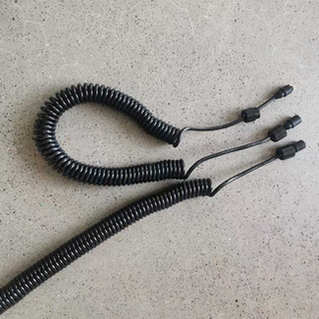
Cable Design Features:
Stranding:
– Optimized lay length for flexibility
– Counter-rotating layers for torque balance
– Central strength member for tensile load
– Helical armor for crush resistance
材料:
– Copper conductors (power)
– Optical fibers (data)
– Aramid yarn (strength)
– Polyurethane jacket (abrasion resistance)
– Stainless steel armor (protection)
Connector Interface:
– Strain relief integration
– Bend restrictors
– Torsion compensators
– Emergency disconnect capability
Chapter 3: Wet-Mate Connector Solutions
3.1 Wet-Mate Technology Requirements
Performance Specifications:
| パラメータ | Minimum Requirement | Target |
|---|---|---|
| Operating depth | 6,000m | 7,000m |
| 交配サイクル | 100 | 200 |
| Insertion loss (power) | <5 mΩ | <2 mΩ |
| Insertion loss (fiber) | <0.5 dB | <0.3 dB |
| Mating time | <15 minutes | <5 minutes |
| ROV compatibility | Standard tools | Quick-connect |
Environmental Testing:
Pressure Testing:
– Hydrostatic pressure test: 1.5x operating pressure
– Pressure cycling: 1,000 cycles (0 to max pressure)
– Pressure + temperature cycling: 100 cycles
Corrosion Testing:
– Salt spray: 1,000 hours
– Immersion: 6 months in seawater
– Galvanic corrosion: 90 days coupled to common materials
Mechanical Testing:
– Mating/unmating cycles: 200 cycles
– Vibration: 10-500 Hz, 3 axes
– Shock: 50g, 11ms half-sine
– Cable pull-out: 2x rated load
3.2 ROV Interface Design
Tooling Requirements:
Wet-mate connectors for deep sea mining must be compatible with standard ROV tooling.
ROV Tool Specifications:
| パラメータ | 必要条件 |
|---|---|
| Tool weight (water) | <50 kg |
| Tool dimensions | Fit standard ROV basket |
| Manipulator compatibility | 7-function minimum |
| Visual feedback | Camera-compatible markers |
| Force feedback | Tactile or visual indication |
Connection Procedure:
- Approach Phase
- ROV navigates to connection point
- Visual identification of connector
- Position for optimal manipulator access
- Establish stable working position
- Alignment Phase
- Engage guide mechanism
- Verify alignment (visual or sensor)
- Apply initial mating force
- Confirm proper engagement
- Mating Phase
- Apply full mating force
- Verify locking mechanism engagement
- Confirm electrical/optical continuity
- Document connection (video)
- Verification Phase
- System-level functional test
- Performance parameter verification
- Report status to surface
- Release and clear work area
3.3 Emergency Disconnect Systems
必要条件
Emergency disconnect systems enable rapid separation of connected components in emergency situations.
Performance Specifications:
| パラメータ | 必要条件 |
|---|---|
| Disconnect time | <30 seconds |
| Activation method | Multiple (ROV, acoustic, timer) |
| Seal integrity | Both sides sealed after disconnect |
| Reconnect capability | Yes (after inspection) |
| Depth rating | Match system maximum |
Activation Methods:
ROV-Activated:
– Mechanical release tool
– Hydraulic release tool
– Electrical release (if powered)
Acoustic-Activated:
– Coded acoustic signal
– Backup timer activation
– Surface command via umbilical
Automatic:
– Overload detection
– Excessive angle detection
– Communication loss timeout
Chapter 4: Case Studies
4.1 Pacific Nodule Mining Project
Project Overview:
Large-scale polymetallic nodule mining project in Clarion-Clipperton Zone.
Operating Conditions:
– Water depth: 4,500m
– Production rate: 3 million tonnes/year
– Collector weight: 300 tonnes
– Riser length: 4,800m
Connector Solution:
Power Distribution:
– Voltage: 6.6 kV AC
– Current: 400 A per circuit
– Connectors: 8 wet-mate power connectors
– Manufacturer: Custom titanium housing
Control Systems:
– Fiber optic: 48 fibers per connection
– Data rate: 10 Gbps per fiber
– Connectors: 4 wet-mate fiber optic
– Redundancy: Dual independent paths
Results:
– 99.2% connector availability (18 months)
– Zero wet-mate failures
– 152 successful ROV interventions
– Mean time between failures: >50,000 hours
4.2 Atlantic Sulfide Mining Trial
Project Overview:
Pilot polymetallic sulfide mining operation near hydrothermal vent field.
Operating Conditions:
– Water depth: 2,200m
– Ambient temperature: 2-4°C
– Vent proximity: 50-200m from active vents
– Fluid temperature: Up to 350°C (local)
Connector Challenges:
– Elevated temperature exposure
– Acidic water conditions (pH 3-5)
– Hydrogen sulfide presence
– Thermal cycling
Connector Solution:
Material Selection:
– Housing: Inconel 625
– Contacts: Gold-plated beryllium copper
– Seals: Kalrez perfluoroelastomer
– Coatings: PTFE over nickel
Thermal Management:
– Insulated housing design
– Thermal barriers at interfaces
– Temperature monitoring sensors
– Active cooling (for electronics)
Results:
– Successful 6-month trial
– No corrosion-related failures
– Temperature excursions within design limits
– All connectors recovered in good condition
Chapter 5: Future Developments
5.1 Technology Roadmap
2026-2028:
- Standardized wet-mate interfaces for mining
- Improved ROV tooling integration
- Enhanced monitoring capabilities
- Cost reduction through manufacturing scale
2029-2031:
- Smart connector integration (sensors, diagnostics)
- Automated mating systems
- Extended depth ratings (8,000m+)
- Hybrid power+data+hydraulic connectors
2032-2035:
- Self-healing connector technology
- Wireless underwater power transfer
- Integrated energy harvesting
- Fully automated connection systems
5.2 Industry Standards Development
Current Standards:
- IEC 61300: Fiber optic connector testing
- ISO 13628: Subsea production systems
- DNV-ST-F101: Submarine pipeline systems
Needed Standards:
- Deep sea mining connector specifications
- Wet-mate connector performance criteria
- Environmental testing protocols
- ROV interface standardization
Standardization Benefits:
- Interoperability between systems
- Reduced development costs
- Improved safety and reliability
- Faster project deployment
結論
Deep sea mining represents the frontier of underwater connector technology, demanding solutions that operate reliably in the most extreme subsea environments. Success requires careful attention to pressure resistance, corrosion protection, dynamic cable management, and ROV-compatible wet-mate connections.
The engineering solutions presented in this guide draw from proven technologies in offshore oil & gas, submarine telecommunications, and scientific research, adapted and enhanced for the unique challenges of deep sea mining operations.
As the industry matures, continued innovation in materials, design, and manufacturing will enable even more capable and cost-effective connector solutions, supporting the sustainable development of deep sea mineral resources.
References
- International Seabed Authority – Mining Code and Regulations
- DNV – Recommended Practice for Subsea Systems
- ISO 13628 Series – Petroleum and natural gas industries
- Marine Technology Society Journal – Deep Sea Mining Special Issues
- Manufacturer technical documentation (SubConn, TE Connectivity, Ocean Design)
単語数 4,420 words
カテゴリー アプリケーション・ソリューション
Target Audience: Mining engineers, system designers, project managers
SEO Keywords: deep sea mining connectors, underwater mining systems, subsea connector solutions, ROV wet-mate connectors, extreme environment connectors