Quick Answer
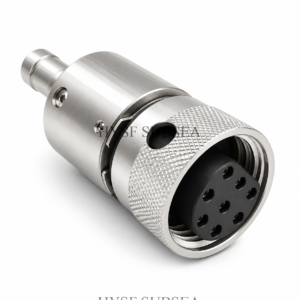
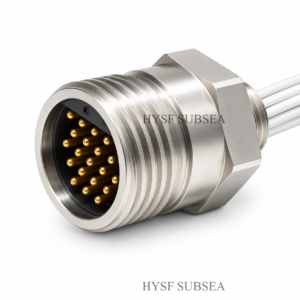
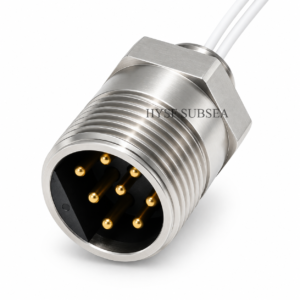
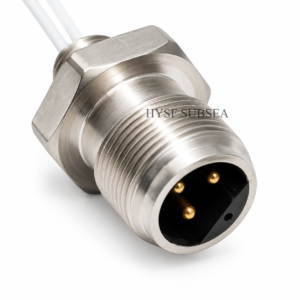
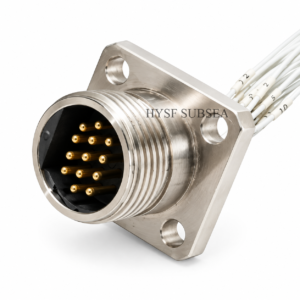
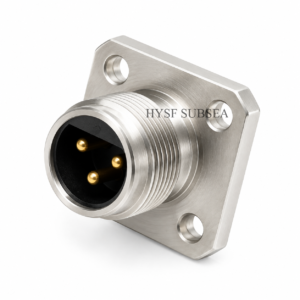
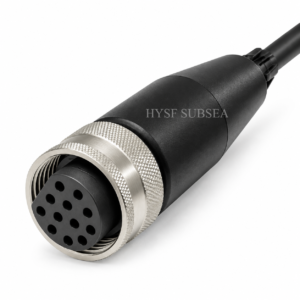
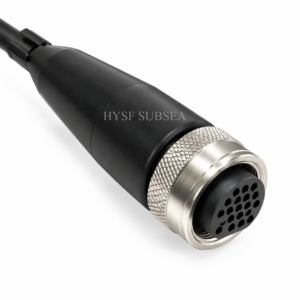
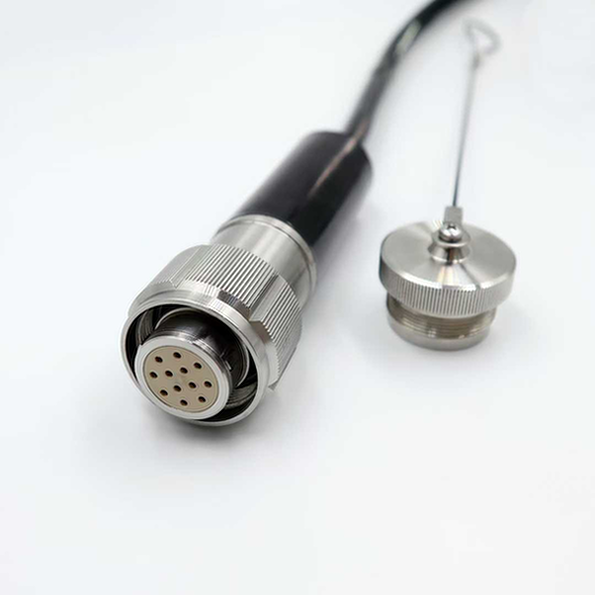
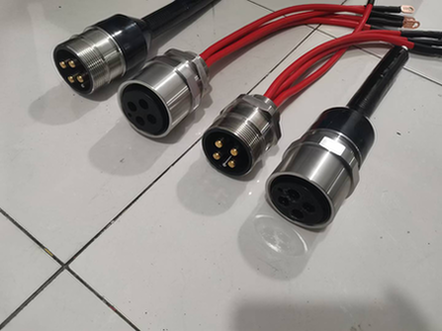
HYSF connectors exceed IP68 – they’re rated by depth (meters/bar), not just IP. IP68 means continuous immersion, but doesn’t specify depth. Our connectors are pressure-tested: 100m, 300m, 500m, 1000m, 3000m+. Always check depth rating, not just IP rating, for underwater applications.
Understanding IP Ratings
What IP68 Means
- IP6: Dust-tight (complete protection)
- IPX8: Continuous immersion beyond 1m
- Limitation: Depth and duration defined by manufacturer
- Problem: IP68 could mean 1.5m or 100m – no standard!
Why IP68 Isn’t Enough for Subsea
- ❌ Doesn’t specify maximum depth
- ❌ Doesn’t account for pressure cycling
- ❌ Doesn’t test dynamic conditions
- ❌ No duration specification
HYSF Depth Rating System
| Depth Rating | Pressure | IP Equivalent | Applications |
|---|---|---|---|
| 100m | 10 bar | >IP68 | Shallow water, pools, aquaculture |
| 300m | 30 bar | >IP68 | Commercial diving, shallow ROV |
| 500m | 50 bar | >IP68 | Standard ROV/AUV operations |
| 1000m | 100 bar | >IP68 | Deep water inspection, research |
| 3000m | 300 bar | >IP68 | Deep sea exploration, oil & gas |
| 6000m | 600 bar | >IP68 | Hadal zone, extreme depth |
Pressure Testing Standards
HYSF Testing Protocol
- Initial inspection: Visual and dimensional check
- Dry testing: Electrical continuity verification
- Pressure cycling: 100 cycles at rated pressure
- Hold test: 24 hours at 1.5x rated pressure
- Post-test inspection: Leak detection, electrical test
- Certification: Test report with serial number
Test Conditions
- Test medium: Deionized water or synthetic seawater
- Temperature: 5°C to 40°C (simulating real conditions)
- Pressure accuracy: ±2% of set point
- Leak detection: Pressure decay and visual inspection
Real-World vs Lab Ratings
Derating Factors
| Condition | Derating | Example |
|---|---|---|
| Temperature extremes | -10% | 300m → 270m effective |
| Dynamic pressure (waves) | -15% | 500m → 425m effective |
| Multiple mating cycles | -5% per 100 cycles | After 500 cycles: -25% |
| Aging (5+ years) | -20% | 1000m → 800m effective |
Industry Standards Comparison
| Standard | What It Tests | Relevance to Subsea |
|---|---|---|
| IP68 (IEC 60529) | Ingress protection | Basic – not depth-specific |
| IEC 60079 | Explosive atmospheres | For hazardous locations |
| MIL-DTL-24308 | Military connectors | Harsh environment |
| DNV-RP-F101 | Subsea equipment | Highly relevant |
| API 17F | Subsea production | Oil & gas specific |
Choosing the Right Depth Rating
Application Guidelines
- Pool testing: 10m rating sufficient
- Recreational diving: 40-50m rating
- Commercial diving: 100-200m rating
- ROV operations: Match max operating depth + 20% safety margin
- AUV missions: Match max dive depth + 30% safety margin
- Fixed installations: Water depth + 50% safety margin
Safety Margins
Recommended safety factors:
- Standard applications: 1.25x (25% margin)
- Critical missions: 1.5x (50% margin)
- Long-term deployments: 2.0x (100% margin)
Contact Us
Depth rating questions: [email protected]